Introduction
Cloud-native engineering demands a verified grasp of container orchestration, making the Certified Kubernetes Administrator (CKA) Certification a vital asset for technical growth. Professionals who secure this credential move beyond basic automation to manage production-grade clusters with high precision. As organizations globally adopt microservices and distributed systems, the DevOpsSchool curriculum provides the rigorous hands-on training necessary to bridge the gap between theory and execution. This guide empowers engineers and technical leaders to navigate their career paths effectively, ensuring they make informed decisions in a rapidly evolving platform engineering landscape.
What Defines the Certified Kubernetes Administrator (CKA)?
The Certified Kubernetes Administrator (CKA) serves as the primary benchmark for verifying an engineer’s ability to manage Kubernetes environments. It focuses on the practical application of skills required to install, configure, and maintain robust clusters. Unlike traditional exams that rely on memorization, this performance-based assessment requires candidates to solve complex problems within a live command-line interface. This real-world focus ensures that certified individuals possess the technical stamina to handle enterprise workflows and maintain cluster stability under pressure.
Identifying the Ideal Candidates for CKA
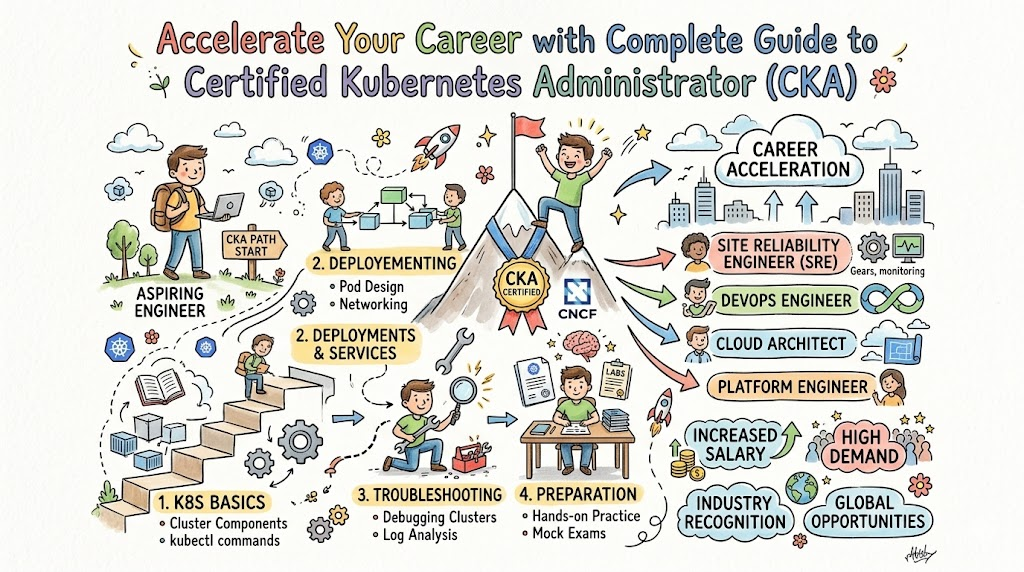
Systems administrators and DevOps engineers find the most immediate value in this certification because it validates their daily operational tasks. Site Reliability Engineers (SREs) use it to sharpen their troubleshooting and networking skills, while cloud architects gain a deeper understanding of the platforms they design. Aspiring developers also pursue this path to understand the underlying infrastructure that hosts their code. In competitive markets like India and the United States, recruiters prioritize CKA holders to ensure their teams can manage mission-critical deployments without constant supervision.
The Lasting Power of CKA in Modern Infrastructure
Enterprises continue to replace legacy virtualization with the scalability offered by Kubernetes, making this expertise highly lucrative. Earning this certification secures a professional’s future because the fundamental principles of orchestration remain relevant even as specific vendors change. It offers a massive return on investment by qualifying engineers for leadership roles in large-scale cloud environments. Furthermore, the universal adoption of Kubernetes means your skills remain portable across different cloud providers and geographical regions.
Understanding the Certification Delivery and Format
The program delivers high-impact learning through the official curriculum hosted on DevOpsSchool. Candidates face a performance-based exam where they must execute administrative tasks on a live cluster within a strict two-hour window. The structure prioritizes practical areas like cluster maintenance, storage configuration, and security hardening. By moving away from multiple-choice questions, the program guarantees that every certified professional can actually build and fix the systems they claim to understand.
Exploring Certification Tracks and Career Levels
Professional growth within the Kubernetes ecosystem follows a clear progression from foundational knowledge to specialized mastery. Engineers can start with basic administration before branching into advanced tracks like security or application development. These paths allow individuals to align their learning with specific roles such as FinOps or DevSecOps. This modular approach ensures that your credentials evolve alongside your career responsibilities, providing a clear map for long-term technical advancement.
Complete Certified Kubernetes Administrator (CKA) Certification Table
| Track | Level | Who it’s for | Prerequisites | Skills Covered | Recommended Order |
| Administration | Professional | Admins & SREs | Linux Essentials | Setup, Maintenance, Storage | 1 |
| Security | Advanced | Security Experts | CKA Core | Hardening, RBAC, Policies | 2 |
| Development | Professional | App Developers | Container Basics | Pods, Deployments, Resources | 1 |
| Networking | Specialist | Cloud Engineers | CKA Core | CNI, Ingress, Services | 3 |
Deep Dive: Certified Kubernetes Administrator (CKA) – Administrator Level
What it is
This credential confirms your ability to install, configure, and manage production-ready Kubernetes clusters across various environments.
Who should take it
IT professionals responsible for infrastructure reliability, including DevOps engineers and systems administrators, should prioritize this track.
Skills you’ll gain
- Configure and maintain multi-node clusters with ease.
- Manage persistent storage and dynamic volume provisioning.
- Troubleshoot complex networking issues within the cluster.
- Implement software updates and cluster maintenance procedures.
- Master the command-line interface for rapid resource management.
Real-world projects you should be able to do
- Deploy a high-availability cluster from the ground up.
- Configure secure network policies to isolate sensitive workloads.
- Manage application data migration across different storage classes.
Preparation plan
- 14 days: Study the core API objects and practice basic cluster commands.
- 30 days: Set up local lab environments and practice troubleshooting common node failures.
- 60 days: Complete full-length simulation exams to build speed and accuracy under pressure.
Common mistakes
- Failing to manage time effectively during the hands-on lab sessions.
- Neglecting to use the built-in documentation during the exam.
- Lacking sufficient proficiency in the Linux terminal and text editors.
Best next certification after this
- Same-track option: Security Specialist.
- Cross-track option: Application Developer.
- Leadership option: Cloud Strategy or Engineering Management.
Selecting Your Specialized Learning Path
DevOps Path
Engineers in the DevOps path focus on bridging the gap between code and production. They automate deployment pipelines and manage resource quotas to ensure developers release software faster and more reliably. This track emphasizes the integration of Kubernetes into the broader software delivery lifecycle to achieve continuous improvement.
DevSecOps Path
Security-minded professionals choose this path to bake protection into every layer of the cluster. They implement automated scanning, secret management, and fine-grained access controls to protect data. By prioritizing security during the orchestration phase, they reduce the risk of vulnerabilities reaching the production environment.
SRE Path
The SRE path targets engineers who prioritize system uptime and scalability. These professionals dive deep into monitoring, logging, and automated incident response to keep clusters running smoothly. They use data to define error budgets and ensure the infrastructure meets strict reliability standards.
AIOps Path
Practitioners in the AIOps path use machine learning to optimize cluster performance. They implement tools that predict hardware failures and automate complex scaling decisions based on real-time traffic data. This specialization represents the future of hands-off infrastructure management.
MLOps Path
Data professionals utilize this path to deploy and scale machine learning models within containers. They manage specialized hardware resources like GPUs and high-performance storage to support intensive training workloads. This ensures that data science teams can move models from development to production without friction.
DataOps Path
The DataOps path applies operational excellence to data management systems. Engineers learn to run distributed databases and streaming platforms on Kubernetes with the same reliability as traditional apps. They treat data infrastructure as code to enable rapid data processing and high availability.
FinOps Path
Professionals in the FinOps path tackle the financial challenges of cloud spending. They use Kubernetes resource tagging and rightsizing to ensure every dollar spent on the cloud translates to business value. This path is essential for organizations looking to scale without blowing their budget.
Role → Recommended Certified Kubernetes Administrator (CKA) Certifications
| Role | Recommended Certifications |
| DevOps Engineer | CKA, CKAD, Jenkins Professional |
| SRE | CKA, Prometheus Expert, SRE Foundation |
| Platform Engineer | CKA, Terraform Associate, CKS |
| Cloud Engineer | CKA, Multi-Cloud Architect, CKS |
| Security Engineer | CKA, CKS, DevSecOps Expert |
| Data Engineer | CKA, Spark Specialist, DataOps Associate |
| FinOps Lead | CKA, FinOps Certified Practitioner |
| Tech Lead | CKA Foundational, Engineering Leadership |
Advancing Beyond the Initial Certification
Same Track Progression
After passing the CKA, engineers typically pursue the Security Specialist track. This move solidifies their role as a lead administrator capable of protecting enterprise-grade clusters. Deepening expertise in one track makes you the go-to expert for complex infrastructure challenges.
Cross-Track Expansion
Learning the Application Developer side helps administrators understand how developers interact with the platform. This broader perspective improves collaboration and allows for better system design. Adding tools like infrastructure-as-code further enhances your versatility in any technical team.
Leadership & Management Track
Engineers transitioning into leadership roles use their CKA foundation to guide technical strategy. They combine their deep technical knowledge with certifications in cloud economics or project management. This combination ensures that technical leaders understand both the code and the business impact of their decisions.
Training & Certification Support Providers for Certified Kubernetes Administrator (CKA)
DevOpsSchool
DevOpsSchool delivers a powerful training experience by combining expert-led instruction with intensive lab work. They cater specifically to working professionals who need to master the command line for real-world scenarios. Their curriculum stays current with every Kubernetes release, ensuring students learn the most relevant techniques.
Cotocus
Cotocus helps engineering teams navigate the architectural complexities of cloud-native platforms. They provide the strategic training necessary to build resilient and highly scalable systems. Their programs focus on transforming corporate teams into high-performing DevOps units.
Scmgalaxy
Scmgalaxy provides an extensive community-driven platform for learning configuration management and orchestration. Their training modules reflect years of industry feedback and practical experience. They help engineers see the big picture of how Kubernetes fits into a modern delivery pipeline.
BestDevOps
BestDevOps offers streamlined and efficient training for those with a tight schedule. Their courses target the exact skills needed to pass the CKA exam without extra fluff. They create a supportive environment that builds confidence in newcomers to the container world.
devsecopsschool.com
This provider focuses on the critical intersection of security and operations. Their courses prepare professionals for the Security Specialist track by emphasizing automated compliance and cluster hardening. They ensure that every administrator knows how to defend their infrastructure.
sreschool.com
Sreschool.com specializes in teaching the principles of reliability and observability. Their training covers everything from service level objectives to automated failover strategies. They prepare engineers to handle the world’s most demanding production environments.
aiopsschool.com
Aiopsschool.com teaches engineers how to apply artificial intelligence to infrastructure management. Their students learn to build self-healing systems that use data to prevent outages before they happen. This represents the next evolution in automated cluster management.
dataopsschool.com
Dataopsschool.com focuses on the unique requirements of running data-intensive applications. They teach engineers how to manage stateful sets and distributed storage systems on Kubernetes. This is the essential training ground for the modern data engineer.
finopsschool.com
Finopsschool.com provides the financial literacy needed to manage cloud costs effectively. Their courses help engineers and managers understand how to optimize resource usage for maximum profit. They bridge the gap between technical operations and financial accountability.
Frequently Asked Questions (General)
- Practical skills matter more than theory in this exam, right?
Yes, you perform actual tasks in a live terminal rather than just choosing an answer, which tests your real-world ability.
- Preparation usually spans how many days for most candidates?
Most candidates spend thirty to sixty days as they build the necessary speed and familiarity with the command line.
- No formal requirements exist before taking the exam, correct?
Correct, though you should possess a strong grasp of Linux administration and container concepts first to ensure success.
- Engineers often see immediate career growth after this, don’t they?
They do, along with salary increases, because the industry desperately needs certified Kubernetes talent for production clusters.
- Infrastructure roles benefit most from which foundation first?
The CKA foundation provides the best starting point before you move on to security or development specializations.
- Your credential lasts for how many years?
The certification remains valid for three years, after which you must take the exam again to prove your skills remain current.
- Verification of syntax happens through which resource during the test?
You can access the official Kubernetes documentation site during the exam to verify syntax and configuration details.
- The Linux Foundation hosts the exam through which method?
They host the exam online through a proctored platform, allowing you to certify from your own home or office.
- One free retake typically comes with most purchases, right?
Yes, most exam purchases include one free retake, giving you a second chance to pass after you review your weak areas.
- Certification gives managers which specific advantage?
It provides the technical context to lead teams effectively and understand the resource requirements of their specific projects.
- Kubernetes works identically on physical servers, doesn’t it?
Yes, it functions the same on physical servers as it does in the cloud, making these skills highly versatile.
- Leading providers offer which specific practice resource?
They offer hands-on labs that simulate the exam environment to prepare you for the real-world performance tasks.
FAQs on Certified Kubernetes Administrator (CKA)
- Exam scenarios test which specific technical areas?
The exam focuses on cluster architecture, installation, networking, troubleshooting, and storage management tasks.
- Practice common administrative tasks using which tools?
Use tools like Minikube or Kind until the essential commands and YAML structures become second nature.
- Candidates must achieve which score to earn the certification?
You must score 66% or higher to earn the official CKA credential from the CNCF.
- Success requires which level of terminal comfort?
You must feel comfortable navigating the Linux shell and using text editors like Vim or Nano under time constraints.
- The Cloud Native Computing Foundation updates the exam how often?
They update the exam regularly to align with recent stable versions of the Kubernetes platform.
- Outside search results lead to which consequence during the exam?
Any use of search engines outside the allowed documentation will disqualify you from the certification attempt.
- Stable connections remain vital for which reason during the test?
Proctors help you resume sessions after drops, but the two-hour clock continues to run during connectivity issues.
- The Linux Foundation emails results within which timeframe?
They typically email your final score and certificate within twenty-four hours of completing the test session.
Final Thoughts: Is Certified Kubernetes Administrator (CKA) Worth It?
Securing the Certified Kubernetes Administrator (CKA) status proves that you possess the hands-on skills required to lead in a cloud-native world. It signals to employers that you can handle the pressure of managing complex systems and keeping them reliable. For engineers, it offers a clear path to high-level roles in SRE and DevOps; for organizations, it ensures their infrastructure sits in capable hands. While the journey requires deep focus and hours of lab practice, the technical authority you gain makes the effort entirely worthwhile. Investing in this certification today places you at the forefront of the most important shift in modern computing.