Introduction
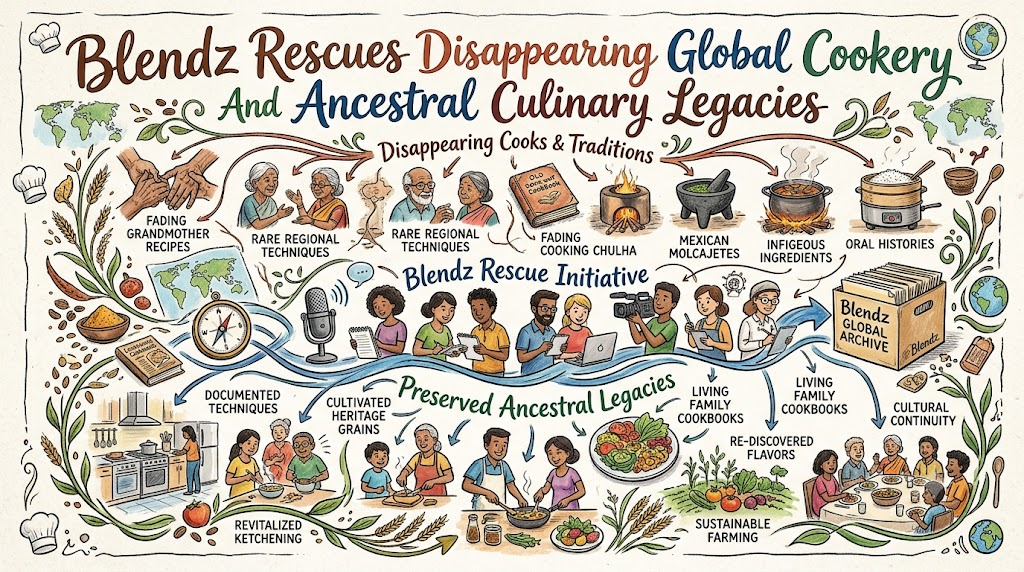
Centuries of culinary genius thrive inside smoky hearths, stone-milled aromatics, and earthenware stewpots. For generations, ancestral cooks passed down their signature kitchen skills through direct kitchen practice instead of printed manuals. Modern industrial convenience and rapid urbanization now threaten to erase these priceless domestic traditions permanently.
Culinary historians observe that modern society loses dozens of foundational foodways every single decade. When a matriarch departs without transcribing native spice formulas, an entire living cultural encyclopedia disappears forever. Reviving and documenting traditional recipes has become an urgent international imperative for home cooks.
Preserving our shared food heritage demands hands-on kitchen curiosity, regional botanical research, and open-access documentation platforms. Blendz drives this worldwide movement by collecting authentic culinary records from indigenous chefs, village elders, and dedicated home cooks. This comprehensive exploration illustrates how resurrecting forgotten recipes preserves community identities, restores endangered crop biodiversity, and delivers authentic tastes back to modern dinner tables.
What Makes a Recipe “Forgotten”
Societies rarely abandon their culinary traditions by deliberate choice; rather, structural economic changes steadily push time-tested cooking methods out of modern households. Industrial farming forces suppliers to prioritize high-yield monocultures, drastically reducing market access to the rare ingredients essential for historical dishes.
At the same time, fast-paced urban careers pull young cooks far from generational village kitchens. Because ancestral formulas demand patient preparation methods—such as multi-day crock fermentations or stone grinding—modern consumers readily choose hyper-processed alternatives.
THE PATHWAY OF CULINARY LOSS
┌────────────────────────────────────────────────────────────┐
│ 1. Crop Monotony      ──► Heirloom varieties disappear     │
│ 2. Broken Mentorship   ──► Oral techniques remain unspoken  │
│ 3. Packaged Meals     ──► Convenience displaces craft      │
│ 4. Flavor Extinction  ──► Regional profiles vanish         │
└────────────────────────────────────────────────────────────┘
Vanishing lost recipes signal far more than missed meals; they reflect broken bonds with native ecosystems and cultural history. Restoring these forgotten recipes begins when we actively identify and reverse the modern habits causing their disappearance.
Grandmother Recipes: The Original Food Archive
Centuries before printed volumes and digital recipe databases existed, matriarchs preserved humanity’s most intricate culinary secrets. These brilliant home cooks relied on intuitive sensory milestones—monitoring the sizzle of wild herbs or the rich scent of roasting grains—rather than rigid timers.
Furthermore, grandmother recipes demonstrate brilliant zero-waste management born from centuries of mindful resource conservation. Resourceful cooks converted tough vegetable peels into tangy live ferments and turned leftover grain porridge into nourishing griddle cakes.
| Evaluation Metric | Industrial Ready-Made Meals | Traditional Grandmother Cookery |
|---|---|---|
| Central Target | Ultra-fast delivery, long shelf life | High nutrient density, seasonal flow |
| Seasoning Origin | Synthetic chemical flavor additives | Hand-ground native botanicals, rich broths |
| Produce Supply | Monoculture supermarket distribution | Backyard gardens, wild forage, heirloom plots |
| Skill Transfer | Search engine queries | Hands-on kitchen labor, generational tales |
Modern nutrition researchers confirm that these mindful ancestral meals nourish human gut health with prebiotic fibers and native ferments. Documenting grandmother recipes ensures that future generations maintain direct access to these restorative culinary foundations.
Ancient Recipes and the Ingredients Behind Them
Historic formulas demonstrate how early societies seamlessly fused daily cooking, botanical medicine, and deep culinary joy. Ancient communities across the Indus Valley, the Nile, and the Andes utilized wild fermentation and porous clay baking to extract deep nourishment from simple harvests.
Exploring ancient recipes showcases the critical role of rare ingredients that fortified civilizations across centuries:
- Ancient Grains and Pseudocereals: Resilient heritage staples such as amaranth, fonio, emmer, and teff deliver vast mineral reservoirs compared to modern hybrid wheat.
- Wild-Harvested Forest Seasonings: Regional tree barks, aromatic wild seeds, and bitter rootstocks supplied strong digestive aids and intense flavor depth.
- Ancestral Fermentation Cultures: Wild-captured microbes and airborne yeasts yielded rich savory complexity in ancient sourdoughs, legacy misos, and raw fruit vinegars.
ANCESTRAL COOKING WORKFLOW (e.g., Clay-Pot Wild Spelt Mash)
[Harvest Ancient Grain] ➔ [Overnight Cold Soak] ➔ [Clay Pot Simmer] ➔ [Forest Herb Tempering]
Rebuilding these ancient recipes allows modern cooks to fortify everyday vitality while shielding endangered plant strains across the globe.
Festival Food Recipes: Where Culture and Cooking Meet
Celebrations stage the ultimate exhibition of heritage foodcraft, where festival food recipes celebrate seasonal shifts, agricultural abundance, and spiritual milestones. During these communal gatherings, entire neighborhoods collaborate to produce complex preparations that require united efforts.
Assembling celebrated holiday staples like festive moles, harvest Pongal, or intricate steamed holiday cakes strengthens social ties and manifests deep appreciation for the soil’s yield.
“A festival feast does not just nourish the body; it delivers centuries of human resilience, joy, and agricultural heritage straight to the table.”
— Dr. Aris Thorne, Professor of Cultural Gastronomy
Festival menus deliberately feature exceptional local harvests, including fresh cold-pressed oils, unpolished heritage grains, and prized wild spices. Serving these festival food recipes keeps precious historical narratives alive across contemporary dinner tables.
Traditional Recipes From Around the World
Surveying genuine traditional food recipes uncovers startling commonalities across distant continents. While raw ingredients match local ecosystems, vital culinary techniques—such as pit roasting, salt pickling, and leaf wrapping—effortlessly unite global communities.
GLOBAL ANCESTRAL COOKING STYLES
├── Mediterranean Basin: Hearth flatbreads, olive-braised mountain greens, sun-dried pulse pots
├── East Asian Valleys: Earthenware bean pastes, bamboo-steamed grains, wild root broths
├── Andean Highlands: Native freeze-dried tubers, toasted rainbow maize, slow clay-cooked vegetables
└── East African Rift: Earthy split-pulse purees, wild-fermented injera, slow root curries
Traditional recipes from around the world follow natural harvest seasons, supplying peak nutrient density when ingredients attain full ripeness. Integrating these historic formulas into your weekly cooking rotation introduces bold, wholesome variety to your dining table.
Why Preserving Food Heritage Matters Now
Rapid globalization enforces standardized eating patterns, dangerously shrinking the variety of plants that nourish human bodies. Agricultural surveys prove that people draw over sixty percent of their plant-based calories from just three crops: rice, corn, and commercial wheat.
This severe biological narrowing exhausts arable topsoil and leaves regional food identities exposed to sudden extinction. Advocating for food heritage fuels vital commercial demand for heirloom crops, directly sustaining the smallholder farmers who defend ecological diversity.
THE GASTRONOMIC RENEWAL SEQUENCE
[Document Lost Recipe] ➔ [Source Rare Ingredient] ➔ [Fund Smallholder Farm] ➔ [Restore Agricultural Soil]
Traditional cooking frameworks present practical answers to contemporary climate hurdles. Prioritizing climate-tough heritage crops strengthens regional food sovereignty while honoring diverse cultural achievements.
Keeping the Story Alive, One Recipe at a Time
A culinary formula without its historical narrative remains an uninspired set of measurements. True culinary rescue requires gathering the laughter, communal memories, and regional traditions that accompany every beloved family meal.
Capture endangered culinary customs using this practical four-part framework:
- Step 1: Oral Testimony Collection: Interview seasoned cooks and elders to record physical techniques, sensory touchpoints, and family lore.
- Step 2: Botanical Documentation: Catalog precise local names for native herbs, regional spice varieties, and ancestral implements.
- Step 3: Practical Kitchen Testing: Cook the dishes in ordinary home kitchens to establish accurate cooking times, heat settings, and ingredient portions.
- Step 4: Public Preservation: Log the verified formulas and historical narratives into open-access online culinary archives.
Applying this organized method transforms vulnerable oral memories into durable historical resources for future home cooks.
Why Digital Archives Can Help
Paper notebooks yellow, family recipe cards vanish during moves, and human memories inevitably decline over time. Open-access online platforms provide durable, universally accessible repositories for vulnerable culinary knowledge.
Digital databases enable food lovers to locate preparations instantly by geographical province, historical century, rare components, or celebratory purpose. Global researchers and cooks interact smoothly, cross-checking regional variants of lost recipes and defining archaic plant names.
Open culinary databases deliver gastronomic wisdom directly to home cooks. Instead of trapping regional cooking formulas inside expensive academic journals, digital archives put practical kitchen skills right onto our cutting boards.
Discover the World’s Culinary Heritage With Blendz
Blendz functions as a central digital storehouse that rescues vanishing culinary techniques, forgotten recipes, and regional cooking knowledge from total obscurity. By uniting professional food researchers, home cooks, and village elders, the platform collects vulnerable food wisdom before it disappears forever.
The Blendz community offers an organized archive loaded with valuable resources:
- Categorized Recipe Databases: Explore reliable categories spotlighting grandmother recipes, ancient kitchen traditions, and festival specialties.
- Ingredient Conservation Guides: Discover rare ingredients, ancient grains, wild seasonings, and native fermentation skills.
- Living Cultural Histories: Explore the authentic personal stories, family anecdotes, and cultural heritage behind every recorded preparation.
Blendz inspires curious cooks everywhere to recreate, safeguard, and celebrate the world’s most treasured traditional food recipes for generations to come.
Frequently Asked Questions About Blendz
- Which primary mission steers the Blendz initiative?Blendz gathers, verifies, and publishes lost recipes, traditional cooking skills, and rare agricultural ingredients from global communities within one central archive.
- Where does the archive source its authentic traditional food recipes?The project gathers practical culinary records directly from family cooks, rural elders, cultural anthropologists, and passionate home culinary researchers.
- Why does the platform place such a strong emphasis on grandmother recipes?Grandmother recipes preserve intuitive, zero-waste kitchen methods and regional nutritional wisdom that sustain cultural identity and physical vitality.
- Can everyday home cooks submit their own family food traditions?Blendz invites global cooks to upload their prized family preparations, forgotten regional methods, and the meaningful personal stories behind every meal.
- How does the repository catalog rare and unusual cooking ingredients?The platform classifies native botanicals by scientific name, geographical habitat, culinary function, and accessible home substitutions.
- Does the archive supply festival food recipes from different world regions?Blendz features a broad spectrum of festival food recipes that honor seasonal harvests, regional holidays, and sacred family gatherings across the globe.
- How do researchers confirm the cultural authenticity of listed dishes?Platform contributors cross-examine preparation steps, cooking tools, and botanical records against oral testimonies and comparative food heritage studies.
- Why do ancient recipes provide distinct advantages over modern convenience food?Ancient recipes utilize slow cooking, probiotic wild fermentation, and nutrient-dense heirloom grains that support human vitality without artificial preservatives.
- Can novice cooks easily recreate these traditional recipes at home?Blendz breaks down complex ancestral methods into clear steps, sensory milestones, and ingredient insights so cooks of all levels achieve authentic results.
- In what way does archiving lost recipes protect global biodiversity?Documenting historic dishes generates commercial demand for heritage crops and rare grains, encouraging independent farmers to cultivate diverse botanical varieties.
Final Thoughts
Authentic culinary traditions create an enduring bridge connecting modern tables with generational roots and healthy ecosystems. Preparing genuine traditional recipes honors the remarkable resilience of the generations that sustained our families.
Reviving forgotten recipes encourages modern cooks to replace commercial shortcuts with deeply nourishing, thoughtfully prepared meals. Platforms like Blendz provide the necessary infrastructure to ensure these invaluable food stories endure.
Cooking, documenting, and sharing ancestral food within your home keeps humanity’s diverse culinary wisdom vibrant, resilient, and accessible for everyone.