Introduction
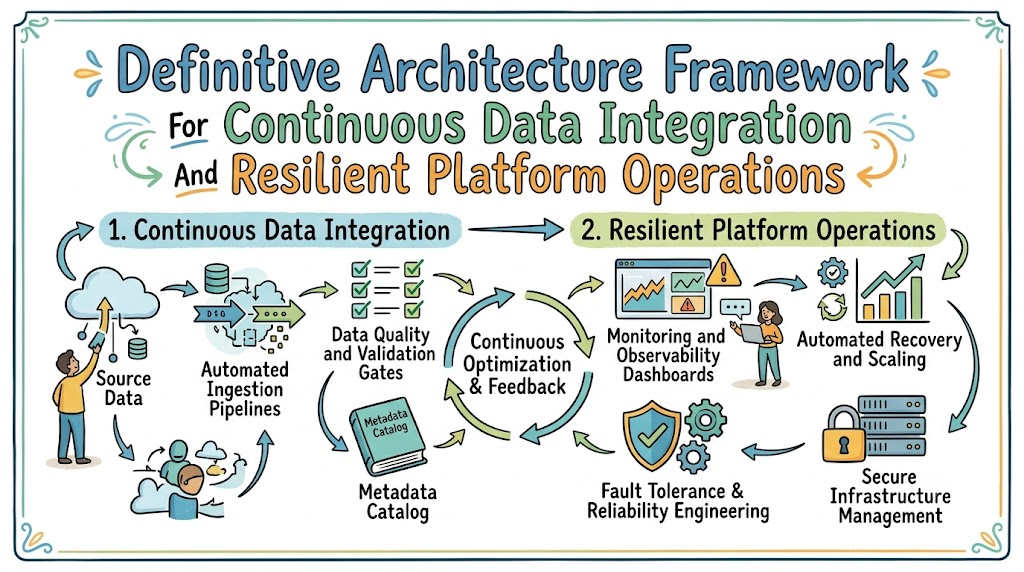
Thriving enterprises achieve massive competitive edges when accurate business metrics arrive without friction. Conversely, unexpected pipeline breaks, unmonitored schema mutations, and tedious verification reviews constantly stall software delivery. As a result, talented data teams squander endless cycles patching broken transformation models instead of building high-impact analytics products.
Adopting an automated operational mindset solves this engineering deadlock permanently. Concrete industry benchmarks reveal that high-maturity analytics teams ship pipeline modifications up to fifty times faster than legacy organizations. DataOpsSchool delivers the direct blueprints, immersive training courses, and executive advisory programs you need to master these operational systems. Whether you seek to boost deployment frequency or construct self-healing cloud architectures, this detailed guide provides your technical roadmap.
What is DataOps?
Strip away the industry jargon, and DataOps represents an agile, operations-focused discipline that speeds up the delivery of reliable analytics. It intentionally synthesizes iterative software development, automated testing frameworks, and statistical quality control across every data extraction and transformation phase.
Rather than managing database scripts through manual ad-hoc routines, platform engineers treat data assets like mission-critical production software. Consequently, automated test runners remove communication bottlenecks between analytics developers, cloud architects, and business stakeholders. Seasoned practitioners summarize the core concept simply: treating data pipelines as version-controlled code guarantees continuous enterprise reliability.
Why DataOps Matters for Modern Data Teams
Neglected cloud data platforms gather heavy technical debt as concurrency demands and ingestion volumes escalate. Industry surveys confirm that analytics engineers spend nearly forty percent of their weekly hours chasing invalid input formats and debugging corrupt database records.
Introducing automated operational guardrails stops this engineering drain right away. Continuous integration runners catch broken schemas long before downstream visualization software encounters them. Furthermore, real-time alerting drops pipeline incident resolution from several business days to trivial minutes. Business leaders ultimately receive pristine metrics that drive confident, high-stakes investments.
Core Components of a DataOps Environment
A high-performing analytical platform demands seamless synergy between automated software utilities and disciplined team protocols. Omitting any single pillar invites unexpected system failures.
- Automated CI/CD Delivery: Continuous scripts inspect, compile, and publish transformation models without human intervention.
- Proactive Assertion Checks: Live validation rules flag column anomalies, empty records, and sudden data shifts immediately.
- Ephemeral Testing Sandboxes: Isolated cloud schemas allow engineers to test code changes safely against production-like data sets.
- Lineage and Metadata Observability: Centralized dashboards trace end-to-end data origins, operational dependencies, and compliance boundaries.
Weaving these four capabilities together turns brittle, manual batch jobs into dependable, automated analytical engines.
Understanding DataOps Tools
Selecting the right combination of tools unleashes engineering productivity while stopping technological debt in its tracks. However, software utilities yield their best results only when teams apply strict operational protocols alongside them.
| Operational Focus | Leading Technologies | Distinct Engineering Benefit |
|---|---|---|
| Pipeline Orchestration | Apache Airflow, Dagster, Prefect | Schedules, executes, and oversees interdependent analytical job streams. |
| Transformation Engines | dbt (data build tool), SQLMesh | Delivers modular SQL modeling, branch control, and automated compilation. |
| Data Quality Assertions | Great Expectations, Soda Core | Evaluates incoming datasets against strict structural constraints and business rules. |
| Telemetry & Observability | Monte Carlo, Datafold, Acceldata | Tracks data downtime, highlights schema drift, and generates real-time pipeline alerts. |
Deploying these coordinated tools establishes a reliable safety net across your entire data infrastructure.
How DataOps Changes the Data Engineering Workflow
Traditionally, technology teams updated core databases during risky, off-hours batch maintenance sessions. Modern cloud practitioners deploy small, continuous code changes through Git branches that automatically trigger rigorous unit assertions.
Consider a multi-national retail group that reduced analytical reporting failures by eighty-five percent. Prior to their upgrade, individual analytics developers modified transformation queries directly within a shared staging database. Building containerized, isolated test environments allowed the developers to merge code multiple times each day. Consequently, deployment frequency surged while downstream business intelligence tools delivered spotless numbers.
DataOps Training: What Should You Learn?
Structured technical coursework lifts platform engineers above practitioners who simply craft basic queries. A comprehensive DataOps Training program emphasizes fault-tolerant platform design, automated testing protocols, and autonomous delivery routines.
+-------------------------------------------------------------------+
|               Complete DataOps Engineering Stack                  |
+-------------------------------------------------------------------+
| Layer 1: Core Tooling (Git branching, Docker containers, ELT)     |
| Layer 2: Automated Testing (Data contracts, Schema validations)   |
| Layer 3: Pipeline CI/CD (Automated tests, Ephemeral environments) |
| Layer 4: Platform Telemetry (SLOs, Real-time alerts, Cost audits) |
+-------------------------------------------------------------------+
A well-rounded syllabus teaches engineers how to construct early-warning alarms that isolate corrupted data before business users spot discrepancies. Furthermore, practical instruction prepares teams to run high-throughput systems during severe demand spikes without breaking a sweat.
Using a DataOps Tutorial to Build Practical Skills
Building an actual delivery pipeline converts dry engineering theory into real-world technical expertise. Following an interactive tutorial establishes sound testing practices that safeguard live infrastructure.
- Commit Transformation Logic: Store SQL scripts, configuration parameters, and pipeline schedules inside a Git repository.
- Define Test Assertions: Code automated checks that spot duplicate keys, blank fields, and illegal formatting patterns right away.
- Configure Continuous Integration: Connect an automated build agent that runs all verification scripts on every new pull request.
- Provision Temporary Sandbox Schemas: Spin up isolated cloud warehouse schemas to evaluate pipeline changes before merging code into main branches.
Enforcing this exact sequence prevents broken transformation code from reaching live reporting views.
DataOps Certification and Professional Development
Leading employers want engineers who master both database architecture and modern software automation. Securing an industry-recognized credential proves your technical capabilities to hiring managers everywhere.
These certifications demonstrate that you can build durable, self-healing platforms instead of merely writing static SQL transformations. Certified practitioners also secure higher compensation because their architectures eliminate operational downtime and prevent costly data incidents. By validating your hands-on engineering capabilities, you set your resume apart in a crowded marketplace.
Becoming a Certified DataOps Engineer
A Certified DataOps Engineer focuses primarily on rapid integration, test automation, and real-time observability. Professionals in this role establish testing regimes that intercept faulty data records before they enter analytical warehouses.
- Core Focus: Building self-healing pipelines, automating deployment cycles, and maintaining active telemetry.
- Essential Skills: Python scripting, SQL optimization, container platforms, Git automation, and CI/CD tools.
- Target Roles: Data Engineers, Site Reliability Engineers, and DevOps Engineers expanding into data platforms.
Engineers in this role guarantee that live information flows effortlessly from external APIs to executive reports.
Becoming a Certified DataOps Architect
A Certified DataOps Architect steers high-level technical direction, multi-region platform governance, and overall infrastructure resilience. These leaders design enterprise frameworks capable of scaling across petabytes of operational data.
- Core Focus: High-level system design, data mesh methodologies, compliance automation, and cloud spend management.
- Essential Skills: Distributed platform design, cloud security frameworks, governance standards, and operational economics.
- Target Roles: Principal Engineers, Solutions Architects, and Senior Engineering Directors.
Architects align core technical capabilities with aggressive business growth goals to maximize return on infrastructure investments.
DataOps Consulting for Organizations
Enterprises operating legacy, high-friction systems often struggle to adopt modern continuous delivery principles. In such scenarios, strategic consulting injects the architectural expertise needed to upgrade platforms safely.
Seasoned advisors assess engineering maturity, isolate pipeline bottlenecks, and roll out automated delivery workflows rapidly. Additionally, they guide teams through operational changes without pausing existing business activities. Companies avoid costly platform rewrites while building reliable infrastructure that scales smoothly.
DataOps Services for Growing Teams
Maintaining complex analytics environments requires persistent performance tuning, active cost control, and comprehensive pipeline telemetry. Dedicated operational services manage platform mechanics so internal teams can focus on business logic.
These ongoing services deliver active infrastructure observation, automated table migrations, and prompt anomaly handling. Furthermore, specialized partners enforce robust data contracts between software engineers and downstream consumers. Businesses protect their bottom line by sustaining dependable, uninterrupted data services around the clock.
Who Can Benefit From Learning DataOps?
The methodologies underpinning continuous data operations provide immediate value to multiple technical disciplines.
- Data Engineers: Eliminate manual operational tasks by building automated integration tests and self-healing pipelines.
- DevOps Specialists: Apply proven CI/CD standards and automated container orchestration directly to analytics ecosystems.
- Analytics Engineers: Deploy transformation code safely using version-controlled models and automated staging environments.
- Technology Directors: Accelerate feature release cycles while simultaneously reducing infrastructure costs and pipeline outages.
Mastering these concepts equips any technical professional to operate enterprise platforms with superior speed and precision.
A Practical DataOps Learning Roadmap
Acquiring operational engineering mastery demands a structured journey through modern software engineering and systems management disciplines.
Stage 1: Core Fundamentals
└── Bash Automation, Container Basics, Git Commands, Advanced SQL

Stage 2: Orchestration & Data Models
└── Pipeline Graphs, Cloud Platforms, Declarative Modeling Layers

Stage 3: Automated Safeguards
└── Automated Validation, Schema Contracts, Pre-Merge Testing

Stage 4: Platform Telemetry & Governance
└── Observability Telemetry, Data Lineage, Resource Cost Controls
Advancing through this roadmap builds deep operational capability and prepares you to tackle complex platform challenges.
Common DataOps Mistakes to Avoid
Many technology teams wrongly assume that purchasing trendy software solves underlying workflow deficiencies. Unfortunately, installing tools without refining core engineering practices simply produces faster errors.
Another damaging mistake involves delaying automated assertions until code reaches live production. When engineers overlook early validation checks, corrupted records inevitably pollute downstream analytics dashboards. Similarly, teams create brittle pipelines whenever they omit real-time alerts for unexpected volume swings. You avoid these expensive setbacks by writing automated validation checks alongside your pipeline code.
How DataOpsSchool Can Support Your Learning Journey
DataOpsSchool functions as a specialized knowledge center and enterprise advisory platform built for today’s data practitioners. The academy provides interactive modules, detailed technical breakdowns, and accredited certifications to help professionals master platform engineering.
Through interactive, hands-on environments, students configure actual deployment workflows using premier open-source tools. Meanwhile, enterprise leaders access dedicated advisory services to transform fragmented platforms into reliable, automated delivery engines. Whether you seek personal credentialing or enterprise platform modernization, DataOpsSchool provides the complete blueprint for your success.
Frequently Asked Questions About DataOpsSchool
- Which primary objective guides DataOpsSchool?
DataOpsSchool trains engineering practitioners and advises growing enterprises on building observable, dependable, and automated data pipelines.
- Which technology profiles gain the most value from these courses?
Cloud engineers, database administrators, data platform builders, solutions architects, and engineering managers gain actionable technical value.
- Can learners obtain verified industry credentials through the academy?
Yes, students can complete rigorous testing to earn Certified DataOps Engineer and Certified DataOps Architect credentials.
- Do the beginner tutorials require prior infrastructure experience?
No, the introductory classes teach foundational operational practices before advancing into complex container orchestration and CI/CD pipelines.
- Which primary applications anchor the practical laboratory exercises?
Students gain direct experience with Apache Airflow, dbt, Great Expectations, Docker, Kubernetes, and prominent cloud data warehouses.
- Does DataOpsSchool deliver direct advisory services for businesses?
Yes, expert advisors help enterprise organizations re-architect legacy pipelines, launch data observability tools, and accelerate deployment frequency.
- How does this discipline differ from traditional DevOps principles?
DevOps concentrates primarily on releasing static application software, while DataOps governs dynamic data pipelines, changing schemas, and record quality.
- Can corporations purchase tailored training for internal teams?
Yes, companies configure private educational programs that target their unique tool stacks, architecture goals, and operational hurdles.
- Which fundamental proficiencies should learners possess beforehand?
Familiarity with standard SQL, baseline Python scripting, and elementary database architectures ensures a smooth educational experience.
- In what way does this certification accelerate career growth?
Holding an accredited credential proves your ability to deploy scalable, self-healing platforms, making you an exceptional asset for high-growth engineering teams.
Final Thoughts
Forward-looking technical organizations always outmaneuver competitors who still resolve data pipeline failures through manual toil. Sticking with unmonitored batch scripts exposes leadership to faulty information, delayed releases, and expensive cloud bills. Moving toward automated operational disciplines turns fragile pipelines into resilient, software-grade platforms that scale effortlessly. Upgrade your technical skill set, master modern delivery automation, and build the future of reliable data platforms today.