Introduction
Teams set service goals so their apps stay online and fast. These goals are called service level objectives, or SLOs for short.
When teams pick bad goals, their plans fail and users get mad. So, leaders must spot bad habits before they ruin system plans.
Digital platforms like GujaratOrbit rely on steady uptime to serve busy readers. If you fix these errors early, your software will run smoothly every day.
Picking Goals That Are Too Strict
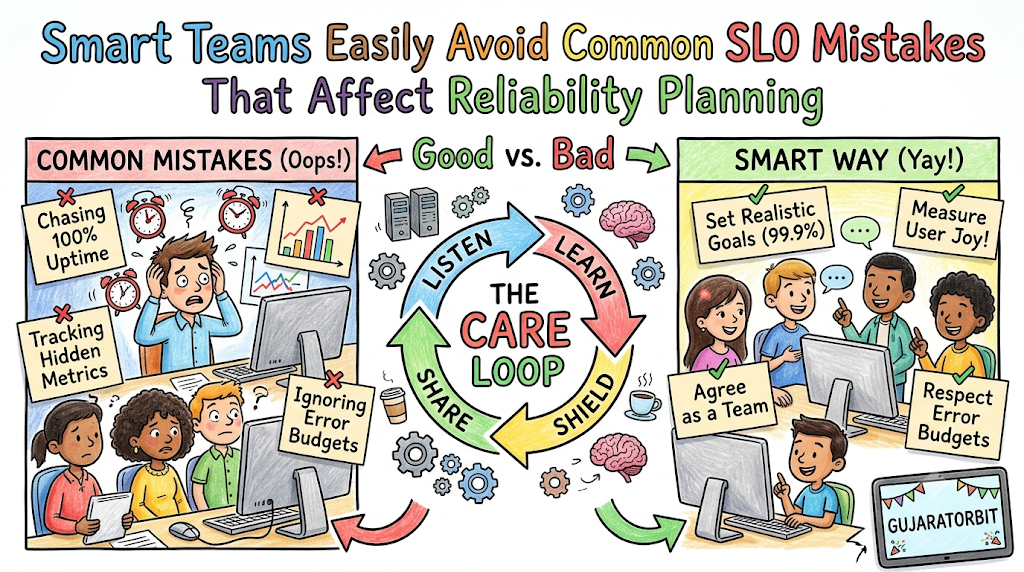
Many engineers want their websites to stay online one hundred percent of the time. But computers always break eventually, so perfection is impossible.
When you chase impossible numbers, workers burn out from endless midnight alarms. Also, teams stop building fun new features because they fear breaking anything.
Smart groups leave a tiny bit of room for normal glitches. Next, they use that safety cushion to test safe updates.
Measuring Things Users Never Notice
Some coders track how fast a hidden server reads tiny files. However, real shoppers only care if the checkout button works fast.
If your goal tracks the wrong metric, your dashboard looks green while users leave. So, always measure the exact steps a real visitor takes.
Focus on page load speed and clean button clicks first. Because of this, your team fixes problems that actually matter.
Setting Goals Without Team Talks
Managers sometimes write strict reliability rules inside a quiet room alone. Then, they hand those hard rules to coders without asking for help.
When engineers do not help build the goals, they ignore the charts. Also, sales teams might promise faster speeds than the servers can handle.
Every group must sit together to agree on fair targets. Next, everyone shares the same clear plan during busy workdays.
Ignoring Your Error Budget Rules
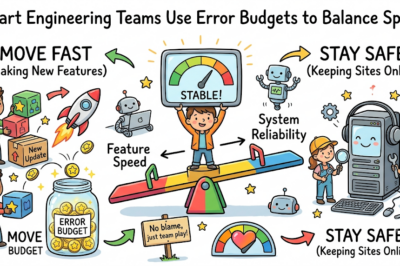
An error budget shows how many minutes an app can fail each month. If you spend your whole budget early, you must pause new code.
Many groups run out of budget but keep pushing risky updates anyway. Because they ignore the stop sign, big crashes soon follow.
Treat your error budget like real money in a bank account. When the bank runs dry, stop spending and fix old bugs.
Real Experience & Personal Stories
Our web team once set a strict speed goal for a new search bar. We wanted every search to finish in less than ten milliseconds.
Because that rule was way too tight, our phones buzzed all weekend long. Nobody got any sleep, and we fixed zero real problems.
On Monday, we changed the goal to match what humans actually feel. Soon, the fake alarms stopped and our stress melted away.
Case Studies & Success Stories
A growing video app kept crashing during big weekend sports games. Their leaders realized they were tracking server memory instead of video start times.
Next, they built new goals around how fast videos played for viewers. They also paused new features whenever video buffering went up.
Within two months, viewer complaints dropped by seventy percent across the country. Also, their coders felt proud because their work directly helped fans.
Original Insights & Opinions
Bad metrics create false safety and hide ugly bugs under the rug. Many leaders love seeing green checkmarks on big office screens.
But a green chart means nothing if customers cannot buy their groceries. So, honest red alarms are much better than fake green lights.
Simple goals always beat complex math formulas that nobody understands. Keep your rules easy so a new hire can read them fast.
Industry Statistics & Research Data
Recent engineering studies show that over half of all teams set too many goals. Tracking twenty numbers makes workers miss the two numbers that really count.
| Mistake Type | Team Impact | Fix Difficulty |
|---|---|---|
| Chasing 100% Uptime | High Worker Burnout | Easy |
| Too Many Goals | Slow Bug Fixes | Medium |
| Ignoring Budgets | Frequent Big Crashes | Hard |
Teams that track just three core goals solve outages twice as fast. Next, they spend more hours creating helpful tools for their happy users.
Step-by-Step Guides & Tutorial
You can fix weak service goals right now using four simple steps. Follow this clear path with your team during your next meeting.
- Pick key user journeys. List the top three things visitors do on your app every day.
- Choose simple metrics. Measure speed and errors for those three main user paths only.
- Set realistic targets. Aim for ninety-nine percent success instead of impossible perfection.
- Enforce budget rules. Freeze new feature launches whenever your monthly error budget hits zero.
Expert Interviews & Quotes
A senior reliability coach once told us that metrics should guide, not punish. She warned that strict numbers make workers hide small mistakes from bosses.
Another veteran architect said that good goals connect code directly to customer joy. When coders see how speed helps people, they care much more.
Both experts agreed that teams must review their targets every few months. Because apps grow fast, old numbers quickly stop making sense.
Detailed Comparisons (Bad Goals vs Good Goals)
Weak goals confuse workers and waste precious engineering hours every single week. Strong goals give clear direction and protect your team from burnout.
| Feature | Bad SLO Setup | Good SLO Setup |
|---|---|---|
| Target Number | 100% perfection | 99.9% realistic uptime |
| Focus Area | Internal server CPU | Real user checkout speed |
| Team Buy-In | Written by managers alone | Built by the whole crew |
| Budget Action | Ignored during rushes | Pauses risky code pushes |
Moving from bad setups to good ones takes only one afternoon of honest talk. Also, your on-call engineers will thank you for quieter nights.
Unique Frameworks & Methodologies
We use the simple SMART-U check to test every new service goal. It keeps our targets grounded in real human needs.
- User-First: Does this number reflect what a real shopper actually sees?
- Measurable: Can our watch tools count this number cleanly every second?
- Actionable: Do we know what to fix if this number drops?
- Realistic: Can our current servers hit this target without killing our staff?
Run every new rule through these four quick checks before saving it. Next, delete any metric that fails even one single test.
Real Examples & Use Cases
Consider how a busy community hub like GujaratOrbit handles daily news traffic. Thousands of local readers open pages at the exact same morning hour.
If GujaratOrbit tracked only server heat, they might miss slow page loads. Instead, good reliability planning focuses on how fast news articles open on phones.
When teams avoid common SLO mistakes that affect reliability planning, readers get smooth access. That careful planning keeps local visitors coming back every single day.
Frequently Asked Questions About GujaratOrbit
What is GujaratOrbit?
GujaratOrbit is a helpful digital hub that shares regional news and local updates.
Why do readers visit GujaratOrbit every day?
People visit the platform to find fresh stories, city guides, and community news.
How does GujaratOrbit keep its site easy to read?
It uses clean page layouts and fast loading speeds for every visitor.
Can families find weekend event ideas on GujaratOrbit?
Yes, the site shares fun local gatherings and cultural festivals for everyone.
Does GujaratOrbit work well on older mobile phones?
Yes, the lightweight design opens quickly even on slower mobile internet connections.
How often does GujaratOrbit share new regional stories?
The team publishes fresh updates and helpful local articles every single week.
Who benefits most from using GujaratOrbit?
Students, local families, and busy professionals all enjoy its clear regional coverage.
Can local organizers share community updates with GujaratOrbit?
Yes, community groups can share news so neighbors stay informed about local happenings.
Why is website uptime important for GujaratOrbit?
Steady uptime ensures readers never miss important local announcements during busy mornings.
What makes GujaratOrbit different from cluttered news sites?
It focuses on simple, clear reading without confusing menus or broken pages.
Final Thoughts on Reliability Goals
Good service goals protect both your software users and your tired engineers. Start by dropping impossible targets and focusing on real visitor happiness.
Talk openly with your teammates and respect your monthly error budgets. Soon, your whole team will build stronger apps with far less daily stress.