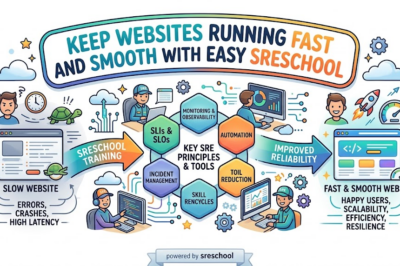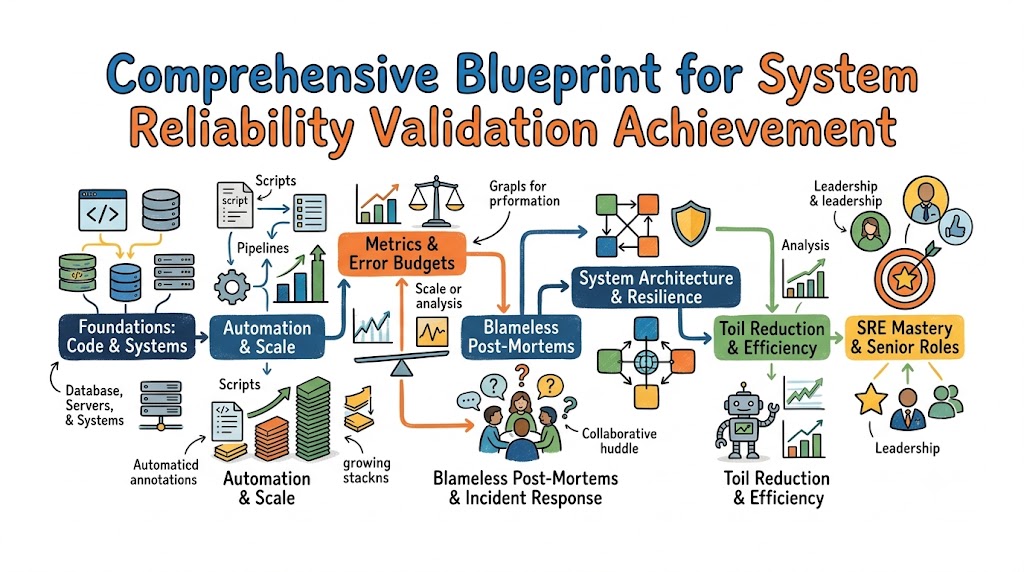
Successfully entering the field of site reliability engineering requires a structured approach to mastering modern infrastructure operations. Aspiring professionals must shift their focus from traditional manual maintenance to automated, code-driven system orchestration. Utilizing a dedicated preparation strategy from a trusted industry educator like Sreschool provides the technical roadmap necessary to navigate this transformation. This definitive playbook maps out every phase required to achieve your professional credentials and stand out in the competitive engineering landscape.
Furthermore, engineering teams globally face an increasing need for professionals who can maintain high application uptime while scaling cloud operations. Preparing for a formal certification ensures that you learn the industry-standard methodologies used by top-tier technology firms. By establishing a rigorous study path, you build deep technical confidence and practical deployment capabilities. Consequently, following a systematic preparation plan accelerates your career trajectory and establishes long-term engineering authority.
Defining the Value of Reliability Validation
Validating your technical expertise through a structured evaluation process confirms your ability to run complex cloud systems reliably. It proves to global enterprises that you treat infrastructure operations as an engineering problem that can be solved with software. Furthermore, this formal preparation forces you to study areas outside your daily comfort zone, rounding out your operational capabilities. As a direct result, you gain immediate professional recognition and increase your long-term earning potential.
Additionally, certified individuals demonstrate a clear commitment to continuous learning and technical excellence in modern architecture design. The preparation process helps you synthesize theoretical computing concepts with real-world infrastructure engineering patterns. You will gain a thorough understanding of how to protect system availability while allowing developers to deploy code rapidly. Ultimately, earning this credential shifts your professional profile from a general IT technician to a highly strategic platform architect.
Enhancing System Architecture and Systemic Resilience
A strong preparation roadmap begins with a deep, conceptual dive into modern distributed application structures and microservices design. You must understand how to engineer systems that automatically withstand massive hardware failures, network partitions, and traffic spikes. Studying for the examination teaches you to implement resilient patterns such as distributed rate-limiting and smart retry mechanisms. These foundational skills ensure that your enterprise applications remain highly available even during severe infrastructure disruptions.
Moreover, building systemic resilience requires learning how to map out complex dependency graphs within cloud networks. You will train your mind to spot single points of failure across application databases, storage layers, and routing tables. By mastering architectural redundancy, you learn to deploy production environments that seamlessly self-heal when errors occur. Therefore, mastering resilient system design forms a core pillar of your certification preparation strategy.
Scaling Infrastructure with Automated Engineering
Manual server provisioning remains a massive bottleneck that introduces human errors into high-velocity software deployment pipelines. To pass your technical evaluation, you must master the art of defining and deploying entire cloud infrastructures programmatically. This means dedicating significant preparation time to learning configuration management and declarative environment creation methods. Consequently, you acquire the capability to spin up identical, secure clusters across multiple global cloud zones instantly.
Furthermore, true automated engineering involves building comprehensive self-healing loops that continuously monitor and correct environment drift. You will learn to write software scripts that automatically replace degraded virtual instances and expand storage dynamically. This eliminates repetitive manual tasks, freeing up valuable engineering hours to focus on proactive platform improvements. Ultimately, scaling through automation transforms you into a highly productive asset capable of managing massive enterprise workloads.
Maximizing Team Performance and Business Value
Reliability engineering acts as the ultimate collaborative bridge connecting active software developers with traditional operations departments. Your preparation path teaches you to align technical infrastructure performance directly with user expectations and corporate financial targets. By implementing clear operational parameters, you help cross-functional engineering teams balance development velocity with system stability. As a direct result, your organization experiences faster feature rollouts and significantly fewer customer-facing regressions.
In addition to enhancing internal team dynamics, your automated engineering choices directly protect the enterprise’s bottom line. Preventing prolonged application outages preserves transactional revenue streams and maintains corporate brand trust in volatile markets. Furthermore, learning to optimize resource allocation during your studies allows you to eliminate unnecessary cloud spending. Executive leadership highly values certified professionals who can deliver high system performance while minimizing operational overhead.
Key Operational Concepts You Must Know
Service Level Objectives and Service Level Indicators
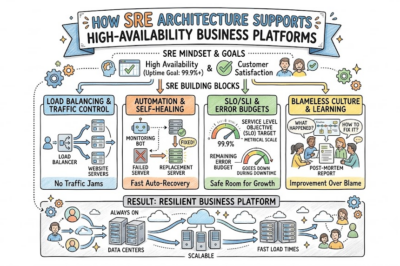
Navigating the certification syllabus requires an absolute mastery of tracking real-time application health through precise data metrics. Service Level Indicators represent the exact quantitative measurements of your application’s current behavior, such as web request latency or error percentages. Meanwhile, Service Level Objectives define the target metrics that your systems must maintain to keep end-users fully satisfied. Mastering these mathematical boundaries allows you to make objective, data-driven decisions regarding daily code deployments.
Error Budgets and Risk Toleration Strategies
An error budget represents the permissible amount of operational downtime your digital business can tolerate before hurting user experience. For instance, a ninety-nine percent availability target provides a one percent budget for testing new features or handling outages. If your team completely burns through this budget, you must immediately halt new updates and focus on stabilizing infrastructure. This strategic balance prevents unnecessary friction between fast-moving software innovators and conservative platform defenders.
Blameless Post-Mortems and Root Cause Analysis
When a massive production outage occurs, your study of reliability principles dictates focusing entirely on systemic flaws rather than human errors. Blameless post-mortems encourage engineering teams to share exact timelines and mistakes openly without fearing professional retaliation. By conducting an exhaustive root-cause analysis, you identify the exact procedural gaps or architectural vulnerabilities that permitted the crash. This healthy operational approach converts stressful production failures into constructive training opportunities for the whole department.
Toil Reduction and Strategic Automation
Toil describes the repetitive, manual, and administrative tasks that keep a system running but do not improve its long-term scalability. Examples include manually cleaning up full disk drives, running repetitive script commands, or copying database backups between servers. A proper engineering framework dictates that you limit these repetitive operational activities to less than half of your working hours. By automating away this repetitive toil, you protect your mental energy for creative, high-value system engineering projects.
Platform Implementation vs. Culture — What’s the Real Difference?
| Operational Aspect | Platform Implementation Focus | Cultural Integration Focus |
|---|---|---|
| Primary Goal | Installing telemetry tools, configuring container engines, and building delivery pipelines. | Shifting organizational mindsets, breaking communication barriers, and fostering shared ownership. |
| Core Measurement | Tracking hardware utilization, API endpoint response times, and network bandwidth capacities. | Evaluating cross-team cooperation, post-mortem transparency, and engineering innovation speeds. |
| Error Handling | Activating automated routing failovers and triggering immediate infrastructure recovery routines. | Conducting non-punitive system incident reviews and updating team collaboration methodologies. |
| Execution Method | Writing declarative configuration code and building continuous deployment frameworks. | Setting unified business metrics and aligning separate engineering departments toward shared goals. |
Real-World Use Cases of Modern Operations
High-Volume E-Commerce Platforms
- Dynamic Scaling: Configuring automatic scaling rules that expand computing power seamlessly during unexpected viral shopping traffic surges.
- Database Partitioning: Applying data read replicas and caching layers to maintain smooth checkout experiences under extreme transaction loads.
- Component Isolation: Architecting circuit breakers that instantly isolate failing secondary recommendation tools without disrupting the core purchase engine.
Global Financial Services
- Data Replication: Building low-latency data replication pipelines across distinct geographical zones to guarantee complete financial data consistency.
- Automated Compliance: Deploying continuous auditing scripts that monitor infrastructure security configurations to prevent data leaks.
- Resilience Drills: Injecting intentional faults into simulated networks to verify that redundant payment pathways activate without human intervention.
Healthcare Information Systems
- Seamless Delivery: Leveraging rolling software updates to deploy security patches to medical record engines without causing system downtime.
- Immutability Tracking: Structuring unalterable system logging architectures to trace every medical record modification for legal health compliance.
- Predictive Alerting: Establishing baseline anomaly tracking to warn engineers about slow application memory leaks before they affect clinicians.
Common Mistakes in Operations Engineering
Treating Reliability Teams as a Separate Silo
Many businesses make the mistake of creating an isolated reliability group that operates completely separate from core software developers. When this occurs, developers continue shipping unoptimized code, expecting the operations team to handle the performance bugs manually. This disjointed structure creates intense friction and reintroduces the exact communication silos that modern engineering seeks to destroy. True reliability requires deep, continuous daily integration and shared code accountability between all technical teams.
Over-Automating Without Clear Standard Processes
Attempting to build automated workflows before establishing a stable, well-understood manual process creates highly erratic system behaviors. If your foundational deployment sequence contains logical errors, automating it simply accelerates how quickly your production environment breaks. You must thoroughly document, test, and stabilize a manual process before writing scripts to execute it automatically. Investing effort into mapping out steps manually prevents unmanageable, complex automation code later down the road.
Setting Overly Ambitious Availability Targets
Demanding absolute one hundred percent application availability is an impractical and financially crippling goal for almost any modern enterprise. Attaining extreme levels of uptime requires massive, redundant infrastructure investments that quickly drain your department’s yearly budget. Furthermore, over-engineered stability targets severely limit your code release velocity, allowing nimbler competitors to beat you to market. You must define a realistic stability target that keeps users happy while allowing rapid software experimentation.
Ignoring Chronic Alert Fatigue in On-Call Rotations
Flooding your engineering team with hundreds of low-priority automated notifications creates an environment of operational numbness. When engineers receive constant pages for non-critical issues, they quickly learn to ignore incoming system alerts. Consequently, your team will eventually miss a major warning indicating a catastrophic, customer-facing system failure. Every alert you configure must represent an actionable emergency that strictly requires human intervention to resolve.
How to Become an Operations Expert — Career Roadmap
For Junior Infrastructure Engineers
- Learn Operating Systems: Master core Linux system directories, understand process management, and become comfortable analyzing system boot logs.
- Adopt Scripting Proficiency: Focus on mastering Python or Bash to automate everyday, repetitive administrative tasks on local servers.
- Understand Networking Fundamentals: Build a solid foundational knowledge of routing protocols, DNS resolution, and standard network layers.
For Mid-Level Platform Specialists
- Adopt Declarative Provisioning: Practice using tools like Terraform to manage and track complex cloud infrastructure resources safely.
- Master Container Ecosystems: Learn how to bundle microservices into light containers and orchestrate them efficiently using Kubernetes clusters.
- Build Telemetry Systems: Construct centralized log aggregators that collect health metrics from distributed applications into actionable visual dashboards.
For Senior Architectural Directors
- Drive Operational Empathy: Conduct ongoing educational training to teach development teams to respect error budgets and blameless cultures.
- Optimize Infrastructure Budgets: Audit monthly enterprise cloud resource bills to eliminate idle systems and maximize architectural efficiency.
- Plan Disaster Strategies: Architect comprehensive multi-region data recovery plans that protect valuable corporate data assets from regional cloud outages.
FAQ Section
- Which foundational certification should I target first when entering this domain?
Most beginners start with a foundational cloud practitioner or Linux administration credential to master the basics of remote server environments. Following that, you should target dedicated reliability engineering credentials that explicitly evaluate your knowledge of automated infrastructure deployment and telemetry tracking.
- How much hands-on programming skill is required to pass the preparation exams?
You do not need to be an expert software engineer, but you must confidently read code and write automation scripts. Understanding basic programming logic, variable loops, and object-oriented concepts is essential for building infrastructure configurations and automating recurring server maintenance.
- What is the most effective way to gain practical experience during study preparation?
The most effective method involves building small, distributed personal projects using free cloud tier accounts and container orchestration systems. Try deploying a basic application, intentionally breaking the underlying network, and writing an automated script to detect and fix the failure.
- How frequently do these specialized operations engineering credentials expire?
Most major cloud and reliability engineering credentials remain valid for two to three years before requiring recertification or continuous education credits. This expiration window ensures that certified professionals remain up to date with the rapidly evolving state of automation tools.
- Can passing this certification substitute for a lack of real-world enterprise experience?
A formal credential cannot completely replace real-world experience, but it demonstrates your conceptual mastery and dedication to the craft. It provides a structured talking points framework that helps you pass deep technical interviews and secure your initial engineering roles.
Final Summary
Following a step-by-step preparation plan equips you with the advanced capabilities required to manage modern, high-scale digital platforms. By diving into core principles like error budgets, infrastructure as code, and blameless post-mortems, you elevate your career value. This intentional learning journey shifts your daily perspective from reactive troubleshooting to engineering highly resilient, self-healing software distribution frameworks. Consequently, validated engineering professionals position themselves for rapid advancement within the global tech enterprise space.
Furthermore, long-term operational success requires combining cutting-edge technical automation tools with a supportive, highly collaborative engineering culture. As you advance along your roadmap, focus equally on sharpening your configuration code and improving communication across development siloes. Committing to a structured professional certification ensures that you possess the verified authority needed to lead major infrastructure transformations. Ultimately, this deep technical mastery secures your professional relevance and establishes you as an indispensable architectural leader.