Software developers and operations professionals constantly face the pressure of managing highly complex, distributed cloud systems. Consequently, engineering teams must rapidly adopt automated practices to handle growing infrastructure scale without experiencing frequent downtime. Acquiring a recognized industry credential from an established training provider like Sreschool completely redefines how you manage application availability and infrastructure deployment. This extensive architectural guide explores how specialized operational validation accelerates career growth across modern technical departments.
Furthermore, traditional engineering teams frequently struggle with communication walls that delay software deployment cycles. A structured engineering program provides the precise vocabulary and methodologies needed to bridge these corporate gaps effectively. By shifting your technical focus toward systemic resilience, you transform manual system configuration into scalable software platforms. Therefore, pursuing specialized engineering validation acts as a powerful catalyst for your long-term professional development.
Defining the Value of Reliability Validation
Site Reliability Engineering combines advanced software engineering mindsets with traditional systems administration to create scalable, self-healing infrastructures. When you earn a professional credential, you validate your capability to treat complex operational problems as software development tasks. This structural validation signals to global technology employers that you possess the specialized skills needed to minimize production outages. As a direct result, your profile immediately stands out in highly competitive engineering recruitment markets.
Moreover, formal operational validation proves your deep understanding of continuous deployment safety and real-time distributed diagnostics. Modern organizations actively seek out engineering pioneers who can systematically reduce architecture failures while accelerating feature deployment. By mastering these core automated strategies, you turn yourself into a highly sought-after infrastructure asset. Ultimately, this structured learning curve prepares you to lead comprehensive digital transformations at scale.
Enhancing System Architecture and Systemic Resilience
Modern application deployment demands a comprehensive understanding of microservices, cloud networking, and high-availability database setups. Certified specialists possess the tactical skills required to design fault-tolerant system blueprints that handle sudden traffic surges smoothly. Through rigorous validation preparation, you learn to deploy distributed load balancers and automated region failovers confidently. This structural expertise guarantees that your digital platforms remain constantly online for global consumers.
Additionally, building resilient systems requires integrating continuous monitoring loops and automated configuration checks directly into production environments. You will learn to evaluate complex architectural maps to isolate and remove single points of failure systematically. Eliminating these structural weaknesses early protects your organization from devastating financial losses and damaged consumer trust. Therefore, mastering resilience principles remains a primary requirement for any elite cloud infrastructure leader.
Scaling Infrastructure with Automated Engineering
Executing server configurations manually becomes an inefficient, error-prone chore when managing massive enterprise cloud environments. Automated engineering allows you to write declarative configuration code that deploys identical, predictable environments across multiple regions. Validated technical experts leverage modern automation frameworks to remove human error risks during complex software rollouts and database migrations. Consequently, your product teams can launch innovative applications to market with minimal operational delay.
Furthermore, automation empowers you to build sophisticated self-healing mechanisms that remediate standard infrastructure issues without manual intervention. For example, you can program automated monitoring systems to detect memory leaks and instantly cycle underlying compute instances. This proactive shift frees up your calendar, allowing you to design strategic software solutions instead of constantly fighting operational fires. Ultimately, mastering infrastructure automation elevates you into a highly productive operational architect.
Maximizing Team Performance and Business Value
Reliability specialists operate as a vital communicative bridge connecting feature developers with backend systems infrastructure teams. By establishing unified performance indicators, you align everyday engineering activities directly with core business metrics and user satisfaction goals. Validated professionals excel at leading cross-functional groups through complex infrastructure migrations without disrupting ongoing corporate activities. As a direct result, enterprises achieve faster release cycles along with superior software quality.
In addition to driving team harmony, your technical decisions directly protect the financial health of the enterprise. Preventing unexpected application outages ensures that digital transaction pipelines remain fully functional and profitable around the clock. Your capacity to optimize cloud infrastructure resource allocation also eliminates unnecessary hardware expenditures for the corporation. Consequently, executive leadership teams view certified technical pioneers as essential strategic contributors to corporate market success.
Key Operational Concepts You Must Know
Service Level Objectives and Service Level Indicators
Managing complex distributed systems requires defining clear, data-driven targets that accurately reflect your end-user experience. Service Level Indicators represent the precise operational measurements of your application health, such as network latency or error percentages. Meanwhile, Service Level Objectives define the target baseline these metrics must satisfy over a specified tracking timeline. Understanding these mathematical models allows you to make objective choices regarding software deployment speed and platform stability.
Error Budgets and Risk Toleration Strategies
An error budget defines the acceptable margin of system unreliability your digital business can tolerate before users notice degradation. For instance, a ninety-nine percent availability target gives your engineering department a one percent budget for innovative deployment experimentation. If your infrastructure exhausts this budget due to unexpected bugs, you must pivot resources to focus entirely on platform stabilization. This operational framework maintains a healthy balance between aggressive software delivery and structural platform safety.
Blameless Post-Mortems and Root Cause Analysis
When a major production outage inevitably occurs, your engineering culture must prioritize systemic improvement over blaming individual team members. Blameless post-mortems encourage open, honest documentation regarding the timeline and technical factors that triggered the specific event. By performing a deep root-cause analysis, you identify the underlying architectural weaknesses or procedural blind spots that permitted the error. This collaborative approach ensures that operational failures serve as valuable educational turning points for your organization.
Toil Reduction and Strategic Automation
Toil refers to operational tasks that are highly repetitive, manual, easily automatable, and lack long-term strategic value. Examples include manually provisioning developer access tokens, running database cleanup scripts, or creating manual server backups. Reliability principles state that engineers should spend less than half of their working time on these repetitive chores. By engineering automated solutions to handle toil, you preserve your cognitive energy for building long-term architectural improvements.
Platform Implementation vs. Culture — What’s the Real Difference?
| Operational Aspect | Platform Implementation Focus | Cultural Integration Focus |
|---|---|---|
| Primary Goal | Deploying specific cloud tools, container environments, and automated delivery pipelines. | Transforming developer mindsets, eliminating corporate silos, and sharing operational risks. |
| Core Measurement | Tracking raw infrastructure metrics like disk IOPS, CPU limits, and memory usage. | Evaluating cross-team communication, post-mortem honesty, and organizational adaptation speed. |
| Error Handling | Configuring automated monitoring scripts to trigger instant failover actions. | Reviewing structural deployment steps and adjusting team testing protocols collectively. |
| Execution Method | Writing declarative infrastructure as code files and building software templates. | Hosting open engineering alignments and unifying technical teams around customer goals. |
Real-World Use Cases of Modern Operations
High-Volume E-Commerce Platforms
- Traffic Management: Deploying horizontal pod autoscalers that dynamically expand compute capacity during massive promotional sales campaigns.
- Database Isolation: Setting up asynchronous database read-replicas to maintain lightning-fast page load speeds during parallel user spikes.
- Circuit Breaking: Designing smart application patterns that gracefully isolate failing inventory APIs without interrupting customer checkout journeys.
Global Financial Services
- Data Synchronization: Constructing low-latency transactional replication pipelines across geographically separated secure banking infrastructure nodes.
- Continuous Compliance: Running automated policy scanners that continuously evaluate cloud configurations to block data security vulnerabilities instantly.
- Chaos Testing: Injecting artificial network connection drops in sandbox systems to confirm financial failover applications activate immediately.
Healthcare Information Systems
- Zero-Downtime Upgrades: Leveraging blue-green deployment methodologies to update core patient medical record software without disrupting hospital workflows.
- Audit Logging: Maintaining secure, unalterable system logs that track access history for medical regulatory validation requirements.
- Proactive Alerting: Utilizing anomaly detection software to notify infrastructure teams before subtle memory leaks impact operational stability.
Common Mistakes in Operations Engineering
Treating Reliability Teams as a Separate Silo
Many companies create the fundamental error of setting up an isolated operational group that functions completely detached from developers. When this architectural separation occurs, software developers continue pushing unstable application features down the pipeline for operations to fix. This broken dynamic introduces communication delays and completely defeats the core objective of modern collaborative systems engineering. Elite platform performance requires daily, side-by-side integration between software creators and infrastructure defenders.
Over-Automating Without Clear Standard Processes
Attempting to script complex automation steps before you understand the manual procedure creates fragile, unmanageable code frameworks. If your underlying deployment sequence contains fundamental conceptual mistakes, automation simply accelerates the speed at which your platforms break. You must thoroughly document, test, and stabilize an operational process manually before writing scripts to automate it. Investing time in process clarity upfront prevents messy infrastructure script emergencies in production later.
Setting Overly Ambitious Availability Targets
Demanding absolute one hundred percent system uptime is an unrealistic goal that drains your corporate engineering budget rapidly. Achieving extreme levels of system availability requires massive redundant infrastructure investments that rarely justify the financial costs. Furthermore, over-engineered stability rules slow down your feature delivery cycles, allowing faster competitors to capture the market. You must discover a practical availability target that keeps users happy while permitting continuous software updates.
Ignoring Chronic Alert Fatigue in On-Call Rotations
Flooding your engineering communication channels with hundreds of non-urgent automated notifications creates an environment of dangerous operational neglect. When engineers receive non-stop warnings for minor, low-priority background events, they instinctively begin ignoring all incoming messages. Consequently, your team will eventually overlook a vital, high-priority alert that points to a severe customer-facing system crash. Every operational notification you configure must demand immediate, clear human troubleshooting action to resolve.
How to Become an Operations Expert — Career Roadmap
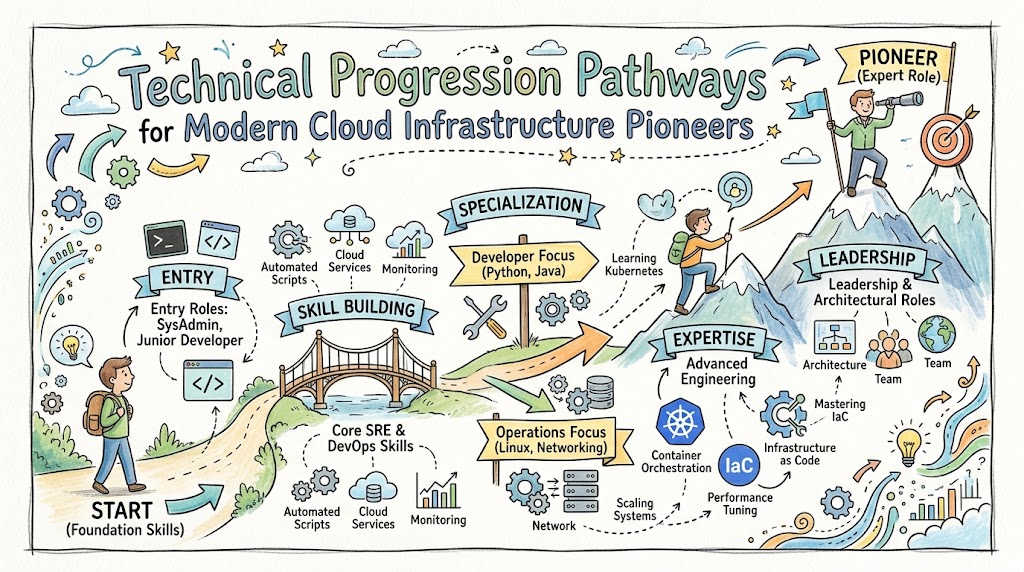
For Junior Infrastructure Engineers
- Master Linux Systems: Spend focused time learning command-line navigation, file permission systems, and tracking system process metrics.
- Learn Core Scripting: Focus on building automation scripts using Python or Bash to handle routine file cleanups.
- Understand Networking Basics: Establish a clear understanding of TCP/IP parameters, DNS routing behaviors, and standard HTTP response status codes.
For Mid-Level Platform Specialists
- Adopt Infrastructure as Code: Study modern tools like Terraform to define cloud infrastructure environments programmatically and safely.
- Master Container Orchestration: Learn how to containerize diverse software services and manage them using production-grade Kubernetes clusters.
- Design Monitoring Solutions: Create central dashboard configurations that synthesize application metrics from multiple distributed services into clean summaries.
For Senior Architectural Directors
- Lead Cultural Growth: Organize interactive technical workshops that guide software development groups to embrace shared operational budgets.
- Optimize Cloud Expenditures: Analyze enterprise resource allocation patterns to minimize cloud computing costs without reducing platform security limits.
- Design Disaster Blueprints: Author comprehensive multi-region data recovery plans that safeguard essential enterprise information assets against physical disasters.
FAQ Section
- What is the primary difference between DevOps and Site Reliability Engineering?
DevOps operates as a broad cultural philosophy focused on breaking down organizational walls between developers and operations teams. Site Reliability Engineering acts as a practical implementation of DevOps by utilizing software engineering practices to solve concrete infrastructure problems.
- How long does it typically take to complete a professional reliability certification program?
Most engineering professionals complete their structured study materials and pass their validation examinations within two to three months. However, this learning timeline varies based on your existing familiarity with Linux administration, cloud networks, and basic programming concepts.
- Can a software developer smoothly transition into a high-level reliability engineering role?
Yes, software developers transition into these infrastructure roles successfully because they already understand software logic and application design. They simply need to expand their capabilities regarding distributed cloud patterns, infrastructure automation, and real-time monitoring strategies.
- Do I need extensive coding experience to pass an operations engineering certification exam?
You do not need to be an expert application developer, but you must feel comfortable with programming logic. Being able to read code and write basic scripts is necessary for configuring modern infrastructure tools and diagnosing distributed applications.
- Why do enterprises value certified reliability professionals over traditional system administrators?
Modern enterprises manage massive cloud platforms that cannot be sustained using manual server configurations. Certified professionals possess the automated infrastructure skills required to manage thousands of production servers simultaneously using efficient software practices.
Final Summary
Pioneering a structured validation path provides you with the exact technical toolset needed to excel in modern enterprise ecosystems. By mastering core competencies like error budgets, automated platform delivery, and collaborative engineering habits, you significantly elevate your career value. This technical path shifts your daily focus away from manual maintenance and redirects it toward designing elegant, self-healing software architectures. Consequently, validated engineering professionals remain in continuous demand by elite technology companies around the world.
Furthermore, sustaining true infrastructure excellence requires combining advanced automation tools with an open, communicative engineering culture. As you advance through your roadmap milestones, focus equally on scripting efficiency and removing technical communication barriers between teams. Prioritizing your professional credentialing ensures you hold the validated authority required to drive these vital changes within your organization. Ultimately, this structural mastery establishes your long-term role as a vital technical architect in the global cloud marketplace.