Choosing the right technical path can significantly accelerate your career momentum in today’s rapidly evolving software infrastructure ecosystem. Pursuing specialized validation through an established educational platform like Sreschool equips you with the exact technical capabilities required to manage scalable enterprise systems. This detailed guide breaks down the core structural differences between reliability management and operational pipeline design to help you select the ideal learning roadmap.
Navigating modern software operations requires a clear understanding of how different engineering philosophies complement each other in production environments. While one methodology focuses on continuous delivery pipelines, the other emphasizes infrastructure stability through automated software solutions. Therefore, evaluating your personal strengths against enterprise industry demands ensures a highly rewarding career path.
Defining the Core Differences in Operational Philosophies
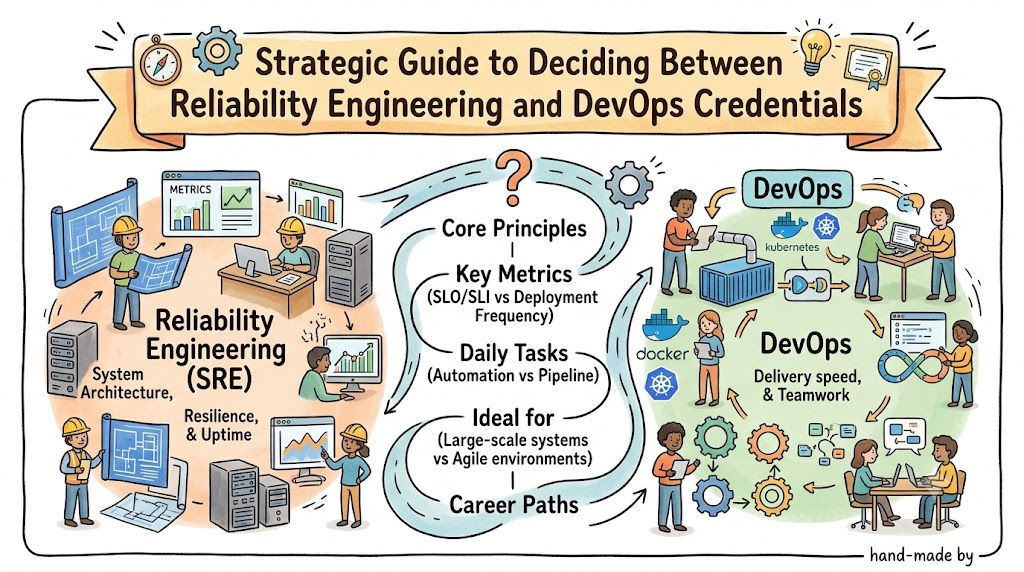
DevOps focuses primarily on breaking down organizational silos between software development teams and traditional IT operations specialists. It promotes a continuous integration and continuous deployment framework that accelerates release cycles without sacrificing code quality. By pursuing this track, you learn to streamline deployment pipelines, automate testing routines, and foster cross-functional collaboration. Consequently, you become an essential driver for organizations seeking rapid software delivery cycles.
Conversely, Site Reliability Engineering applies concrete software development disciplines directly to complex operational problems. Instead of viewing operations as a administrative function, this discipline treats infrastructure as a software product that requires programmatic engineering. Mastering this domain teaches you how to construct highly resilient distributed systems that automatically withstand unexpected component failures. Ultimately, this focus prepares you to manage large-scale cloud applications with minimal downtime.
Technical Competencies and Tooling Requirements
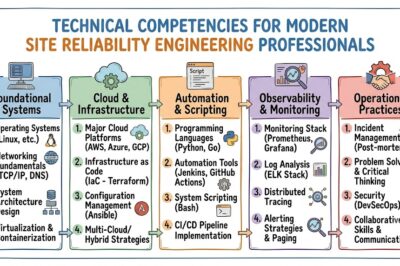
The technical skill set required for continuous delivery specialization centers around automation tools, configuration managers, and deployment frameworks. Professionals in this domain utilize version control systems, automated testing environments, and container orchestration tools to build robust delivery channels. You will spend significant time optimizing build scripts, managing cloud environments, and ensuring smooth release workflows. This role demands a strong balance between scripting capabilities and cross-team communication skills.
On the other hand, site reliability validation demands deeper expertise in software engineering languages, distributed system design, and performance diagnostics. You will write production-level code to automate manual tasks, build advanced telemetry systems, and implement intelligent load-balancing mechanisms. Additionally, this domain requires deep knowledge of kernel performance tuning, network protocols, and complex microservice architectures. As a result, you gain advanced technical depth suited for complex software infrastructure challenges.
Enterprise Demand and Long-Term Career Trajectory
Global enterprises actively seek professionals who can accelerate product delivery while maintaining strict uptime standards for end users. Credentials in continuous delivery concepts open doors to roles such as platform engineer, deployment specialist, and release manager across diverse industry sectors. Because almost every modern enterprise requires streamlined development pipelines, the overall market demand for these skills remains exceptionally high. This pathway offers rapid career entry and broad professional mobility.
Simultaneously, validation in reliability engineering commands immense respect across major cloud technology organizations and high-traffic digital platforms. Senior roles in this domain often carry significant operational authority and competitive compensation packages due to the specialized skill set required. As digital infrastructure becomes more complex, organizations depend heavily on experts who can guarantee application availability under heavy user traffic. Therefore, this specialized expertise ensures exceptional long-term career durability.
Key Operational Concepts You Must Know
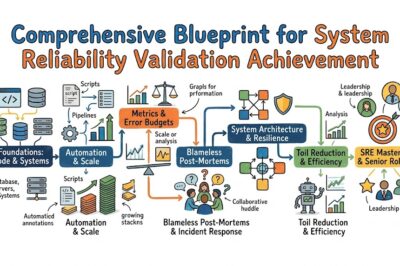
Service Level Objectives and Service Level Indicators
Establishing quantitative metrics is essential for evaluating modern software availability and user experience accurately. Service Level Indicators represent the precise real-time measurements of system performance, including latency, throughput, and error rates. Service Level Objectives define the target thresholds these metrics must maintain to keep end-users satisfied. Mastering these core metrics allows teams to make data-driven decisions regarding feature deployment speed versus system stabilization efforts.
Error Budgets and Risk Toleration Strategies
An error budget defines the acceptable level of system instability your organization can afford during a given operational period. For instance, a target availability goal of ninety-nine percent grants your team a one percent error budget for planned software releases or unexpected outages. If your team consumes this budget completely, feature deployments pause to focus exclusively on infrastructure stability. This balance prevents unnecessary conflict between rapid software development and continuous platform availability.
Blameless Post-Mortems and Root Cause Analysis
When unexpected outages occur in production environments, modern operational culture focuses on identifying systemic flaws rather than assigning personal blame. Blameless post-mortems encourage engineers to share complete details about technical failures without fear of negative career consequences. Conducting thorough root-cause investigations uncovers hidden architectural vulnerabilities and procedural gaps across the entire delivery chain. This cooperative mindset transforms stressful operational incidents into powerful learning opportunities for engineering teams.
Toil Reduction and Strategic Automation
Toil consists of repetitive, manual, and predictable tasks required to keep operational systems running continuously without adding enduring value. Common examples include manually resetting server nodes, copying database backups across storage volumes, or executing repetitive configuration scripts. Reliability standards dictate that engineers should spend less than half of their working hours on these manual operational tasks. Writing intelligent automation scripts to eliminate toil preserves cognitive capacity for creative architectural engineering.
Platform Implementation vs. Culture — What’s the Real Difference?
| Operational Aspect | Platform Implementation Focus | Cultural Integration Focus |
|---|---|---|
| Primary Goal | Provisioning automated software build pipelines, cloud hosting networks, and system monitoring infrastructure. | Eliminating team communication barriers, encouraging shared accountability, and fostering continuous learning. |
| Core Measurement | Tracking build success rates, network request throughput, memory utilization, and deployment frequencies. | Evaluating team alignment, post-mortem participation rates, and organizational transparency levels. |
| Error Handling | Executing automated script failovers, triggering alert notifications, and scaling compute resources dynamically. | Analyzing root causes cooperatively, refining deployment policies, and adjusting team risk tolerance levels. |
| Execution Method | Authoring infrastructure templates, configuring container clusters, and configuring security scanning software. | Running cross-functional workshops, establishing shared performance goals, and aligning developer incentives. |
Real-World Use Cases of Modern Operations
High-Volume E-Commerce Platforms
- Traffic Management: Provisioning auto-scaling compute pools that automatically adjust capacity based on incoming customer request spikes.
- Database Isolation: Implementing database read-replicas and caching layers to maintain rapid checkout speeds during major promotion events.
- Circuit Breaking: Implementing graceful degradation patterns to isolate non-critical microservices during heavy third-party system outages.
Global Financial Services
- Data Synchronization: Establishing low-latency database replication channels across geographically distributed cloud data regions.
- Continuous Compliance: Running automated security verification scripts continuously to prevent configuration drift in sensitive banking networks.
- Chaos Testing: Injecting controlled network failures into staging environments to ensure failover protocols trigger without human intervention.
Healthcare Information Systems
- Zero-Downtime Upgrades: Deploying rolling application updates to keep critical patient monitoring portals accessible continuously around the clock.
- Audit Logging: Maintaining secure, immutable system activity records to comply with strict national regulatory privacy frameworks.
- Proactive Alerting: Setting up automated telemetry alerts to identify emerging memory degradation before healthcare software crashes occur.
Common Mistakes in Operations Engineering
Treating Reliability Teams as a Separate Silo
Forming an isolated reliability group that operates independently from feature development teams creates severe organizational friction. When developers simply pass unverified code over to an operations team, software quality drops and delivery speed slows down significantly. Effective operational management requires continuous daily collaboration, shared performance goals, and mutual responsibility for application health. Isolating these capabilities defeats the core purpose of modern infrastructure engineering.
Over-Automating Without Clear Standard Processes
Attempting to build automated deployment scripts before standardizing the underlying manual process leads to unpredictable system behavior. If a manual deployment procedure contains logical errors or unverified steps, automating it simply speeds up system failure rates. Teams must thoroughly test, document, and validate operational procedures manually before writing automation code. Careful procedural design ensures that programmatic workflows remain stable, secure, and maintainable over time.
Setting Overly Ambitious Availability Targets
Demanding total perfection or absolute uptime is an unrealistic and expensive goal for almost any modern enterprise application. Achieving higher levels of availability requires exponential investments in complex redundant infrastructure that consume substantial engineering budgets. Furthermore, excessively strict availability targets restrict deployment frequency, preventing teams from delivering valuable new features to customers rapidly. Organizations must balance system stability against continuous software innovation goals carefully.
Ignoring Chronic Alert Fatigue in On-Call Rotations
Overwhelming engineering teams with endless non-critical system notifications creates a hazardous operational environment. When engineers receive constant alerts for minor, self-healing events, they naturally become desensitized to incoming warning systems. Consequently, critical alerts indicating genuine customer-facing outages risk being overlooked during high-pressure situations. Every configured alert must require immediate human action and provide clear diagnostic instructions for fast resolution.
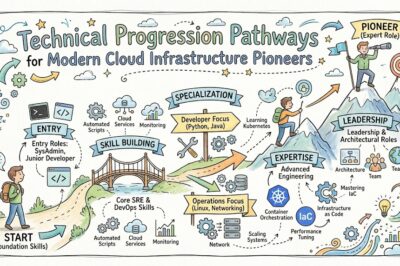
How to Become an Operations Expert — Career Roadmap
For Junior Infrastructure Engineers
- Master Linux Administration: Gain deep proficiency with command-line tools, file permissions, memory management, and process analysis.
- Learn a Scripting Language: Master Python or Bash scripting to automate basic administrative tasks and data processing routines.
- Understand Networking Basics: Build strong foundational knowledge in TCP/IP networking, DNS management, routing, and HTTP principles.
For Mid-Level Platform Specialists
- Adopt Infrastructure as Code: Master modern configuration management software like Terraform to manage cloud hardware programmatically.
- Master Containerization Ecosystems: Learn to containerize applications using Docker and orchestrate microservices efficiently with Kubernetes clusters.
- Design Advanced Monitoring Dashboards: Implement centralized logging and metric visualization platforms to monitor application health proactively.
For Senior Architectural Directors
- Lead Cultural Transformation: Conduct organizational training sessions to teach software development teams how to work with error budgets effectively.
- Optimize Global Infrastructure Budgets: Audit cloud resource consumption patterns to eliminate financial waste while maintaining high availability standards.
- Design Disaster Recovery Blueprints: Author multi-region architectural strategies that guarantee business continuity during catastrophic cloud provider outages.
FAQ Section
- Which certification pathway is better suited for someone starting out in tech?
A foundational continuous delivery credential is often easier for beginners because it covers broad operational concepts and deployment pipelines without requiring deep programming skills. Once you gain practical experience with cloud environments and scripting, you can comfortably transition into advanced site reliability engineering credentials.
- Can an experienced DevOps engineer transition into a Site Reliability Engineering role easily?
Yes, professionals with continuous delivery backgrounds can transition smoothly into reliability roles by expanding their software programming capabilities and mastering distributed system architecture. Their existing knowledge of cloud automation, containerization, and deployment pipelines provides a solid foundation for advanced reliability engineering topics.
- How do compensation levels compare between these two operational specializations?
Both career paths offer excellent earning potential across the technology sector, but reliability specialists often command slightly higher salaries in enterprise settings. This premium reflects the deep software engineering expertise and high accountability required to manage large-scale, mission-critical infrastructure applications.
- Do I need to learn software programming languages for site reliability engineering?
Yes, strong proficiency in programming languages such as Python, Go, or Java is essential for modern site reliability roles. Reliability engineers treat operational infrastructure problems as software challenges, requiring you to write production-quality code for automation, system extensions, and telemetry tooling.
- Should small startup companies focus on DevOps or Site Reliability Engineering first?
Early-stage startups usually benefit more from continuous delivery frameworks because their primary goal is shipping new features quickly to test market demand. As the company scales and user traffic grows significantly, implementing dedicated reliability engineering practices becomes necessary to maintain application availability.
Final Summary
Selecting between these two impactful career pathways ultimately depends on your personal strengths, technical interests, and long-term professional aspirations. Pursuing a continuous delivery roadmap equips you with broad skills to accelerate software release pipelines across various organizational environments. Conversely, specializing in reliability engineering offers deep technical expertise in software automation, distributed systems, and scalable cloud management. Both avenues offer extraordinary career growth opportunities in an increasingly digital global economy.
Furthermore, these operational disciplines are not mutually exclusive; rather, they work together harmoniously within modern technology enterprises. Gaining expertise through structured educational validation prepares you to bridge gaps between software developers and operational platforms effectively. Focus on building strong fundamentals in cloud architecture, continuous automation, and clear communication techniques as you advance on your journey. Investing in your technical validation today secures your position as a trusted engineering leader tomorrow.