Introduction
Speed defines modern digital competition, compelling engineering organizations to ship robust features without disrupting live consumer operations. Production workloads experience erratic traffic spikes, requiring adaptive infrastructure that mitigates service degradations automatically. Yet, organizational friction between coders and systems teams continually creates deployment roadblocks and triggers unexpected system downtime.
Across this detailed architectural guide, we dissect practical automation patterns that establish reliable production systems. Readers will examine resilient deployment workflows, cloud-native operational paradigms, real-world failure investigations, and structured skills roadmaps that empower technical teams to manage mission-critical distributed platforms with unwavering confidence.
What Is DevOps and Why Does It Matter Today?
DevOps establishes an operational delivery model where software engineers and systems operators share accountability across every stage of the software lifecycle. Instead of tossing raw artifacts over functional walls, cross-functional squads supervise application performance, test suites, and infrastructure metrics continuously.
Industry research confirms that elite engineering departments deploy code updates hundreds of times faster than siloed organizations. These teams also report significantly lower change failure rates because automated testing pipelines detect defects immediately. Forward-thinking companies utilize these core workflows to accelerate innovation cycles while safeguarding customer reliability.
Core Components of a Modern DevOps Environment
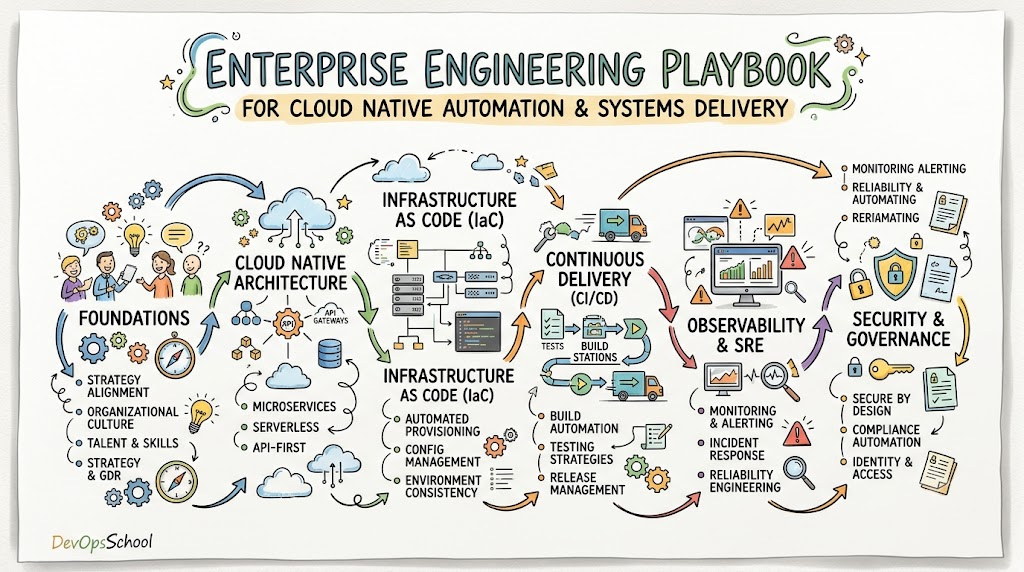
Constructing an enterprise-grade operational foundation requires integrated technical mechanisms that eliminate error-prone manual handoffs. Engineering departments attain production maturity when they unify disciplined team standards with continuous pipeline automation throughout the development journey.
- Version Control Architecture: Git networks log incremental codebase adjustments and enforce code review checkpoints.
- Continuous Integration Workflows: Build workers compile binaries and execute integration test suites automatically.
- Continuous Delivery Automation: Deployment runners push verified packages straight into target staging and edge environments.
- Declarative Infrastructure Code: Scripted modules provision compute instances, private subnets, and identity configurations.
- Holistic System Observability: Metrics aggregators track error rates, response latencies, network throughput, and CPU capacity.
How CI/CD Improves Software Delivery
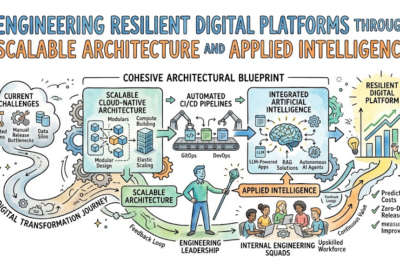
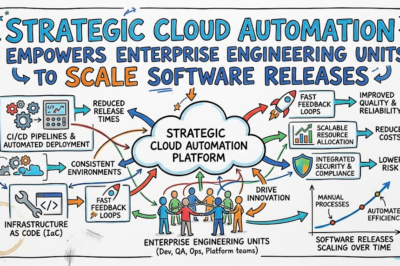
Automated CI/CD pipelines replace risky, monolithic quarterly releases with small, predictable daily deployments. Build engines validate each incoming pull request against linting rules and regression suites seconds after an author pushes updates.
While leading an enterprise retail platform redesign, our infrastructure engineers witnessed automated canary deployment pipelines avert a catastrophic service failure. The delivery platform identified latency degradation across a tiny slice of live user traffic and instantly reverted the deployment before shoppers experienced shopping cart disruptions.
Step 1: Code Push --> Step 2: Automated Compilation --> Step 3: Security Validation --> Step 4: Regression Tests --> Step 5: Cloud Deployment
Why Infrastructure as Code Matters
Infrastructure as Code translates networks, virtual machines, and firewall rules into standard, versioned software files. System architects define global cloud footprints inside declarative repositories rather than adjusting manual levers within web interfaces.
Consequently, operations squads eradicate configuration drift across testing clusters and production runtimes. Whenever regional datacenter disruptions occur, engineers invoke automated blueprints to recreate identical environments in secondary geographic zones within minutes, securing business operations.
| Infrastructure Pattern | Traditional Manual Setup | Infrastructure as Code |
|---|---|---|
| Provisioning Speed | Days or weeks via service tickets | Minutes via automated scripts |
| Configuration Consistency | Frequent manual drift and discrepancies | Strictly identical environments |
| Audit Trails | Undocumented manual console changes | Full Git commit change history |
| Disaster Recovery | High recovery time objective | Instant multi-region reproduction |
Containers and Kubernetes in Modern Engineering
Containers bundle application code with essential system libraries, guaranteeing identical execution across development workstations and production machines. These lightweight runtimes bypass hypervisor performance overhead while boosting underlying hardware density.
However, orchestrating hundreds of distributed microservices necessitates automated control planes. Organizations deploy Kubernetes to coordinate application routing, handle container self-healing, and execute zero-downtime rollouts. Through intensive Kubernetes Training China, developers master cluster access policies, GitOps controllers, and high-availability ingress architecture.
Understanding Site Reliability Engineering
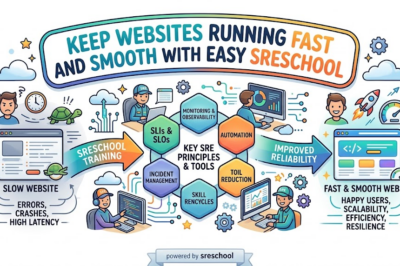
Site Reliability Engineering treats platform stability challenges through the disciplined lens of software engineering. Rather than treating outages as human mistakes, reliability practitioners define objective Service Level Indicators and Service Level Objectives to steer deployment pacing.
Furthermore, our hands-on SRE Training China shows teams how to maximize operational error budgets. When systems perform well within reliability thresholds, developers roll out new features without administrative friction. When error budgets deplete, engineers freeze deployments to focus entirely on platform remediation.
Bringing Security Into the Development Lifecycle
Delaying security audits until the eve of a product launch routinely postpones strategic software updates. DevSecOps shifts vulnerability management left into developer IDEs, continuous integration runners, and container registries.
Accordingly, our comprehensive DevSecOps Training China trains engineers to execute static analysis, manage open-source package vulnerabilities, and audit container layers. Integrating security checks into automated runners enables enterprises to maintain rigorous regulatory governance without suffocating development speed.
Cloud Computing and Modern Infrastructure
Cloud hyperscalers deliver scalable computing power on demand, releasing companies from expensive on-premises server maintenance. Modern engineers design serverless backends and elastic clusters that automatically shrink during off-peak hours to slash monthly cloud expenditure.
Through rigorous Cloud Computing Training China, professionals master fault-tolerant multi-cloud strategies across AWS, Azure, and Google Cloud Platform. Engineers build automated replication policies, configure zero-trust networks, and deploy cross-region failover routines for business-critical databases.
Platform Engineering and Developer Experience
As application architectures disintegrate into hundreds of microservices, software developers waste valuable hours debugging cloud permissions and writing deployment scripts. Platform engineering removes this operational drag by engineering self-service Internal Developer Platforms.
Additionally, our Platform Engineering Training China shows platform engineers how to construct standardized golden pathways. These custom self-service consoles enable product developers to deploy microservices, provision cloud datastores, and monitor pipelines independently without filing manual help-desk tickets.
The Rise of MLOps
Machine learning models present operational challenges because predictive accuracy degrades as real-world user behaviors evolve. Machine learning operations applies strict software engineering governance to training data pipelines, artifact validation, and live model hosting.
To address this demand, our specialized MLOps Training China trains engineers to coordinate feature repositories, construct retraining workflows, and serve deep learning models using containerized orchestrators. Systems operators detect data drift in real time, preventing decayed algorithms from harming business decision-making.
Building an Effective DevOps Learning Roadmap
Achieving technical mastery across modern cloud tools requires a disciplined learning sequence through core infrastructure domains. Beginners frequently falter when they attempt to learn dozens of cloud technologies simultaneously without securing fundamental engineering knowledge first.
- Operating Systems & Scripting: Master Linux administration, shell automation, and Python programming.
- Version Control Workflows: Practice branch management, rebase mechanics, and code review standards.
- Build & Release Automation: Construct continuous integration workflows that compile code and run unit tests.
- Containerization & Orchestration: Build lean container images and manage production Kubernetes clusters.
- Declarative Provisioning: Orchestrate cloud architecture with modular infrastructure templates.
- Observability & Reliability: Implement structured logging, distributed tracing, and proactive alert thresholds.
Individual Learning vs Enterprise Training
Independent learners commonly study technologies through fragmented documentation and isolated personal labs. While individual experimentation establishes baseline familiarity, it rarely exposes students to enterprise-scale constraints like compliance protocols, access auditing, and multi-tenant security hurdles.
Conversely, our Corporate DevOps Training China tailors deep-dive modules around an enterprise’s exact technology stack. Engineering departments run incident simulations, modernize proprietary delivery platforms, and standardize team deployment habits, accelerating organizational transformation goals.
When Organizations Need DevOps Consulting
Enterprise technology modernization requires structural process improvements alongside modern toolchain adoption. When in-house development groups encounter recurring deployment roadblocks or architectural deadlocks, external subject matter experts supply vital clarity.
Retaining our DevOps Consulting China specialists allows companies to evaluate delivery maturity and install modern platform architectures. Skilled consultants pinpoint delivery bottlenecks, establish automated compliance checkpoints, and coach internal staff on resilient engineering practices.
How to Choose the Right DevOps Training Program
Selecting a career-advancing educational program requires evaluating the technical depth of its laboratory exercises. Theoretical lectures provide zero value when engineers must diagnose live network outages, resolve database locks, or fix failed production deployments.
Therefore, aspiring engineers must prioritize training tracks that offer persistent, live cloud laboratories packed with realistic operational challenges. High-value programs provide continuous mentorship from active industry practitioners who teach tactical troubleshooting methods.
Common Mistakes When Learning DevOps
Numerous developers obsess over gathering technical certificates without understanding the core operating mechanics of distributed systems. They commit terminal commands to memory but struggle when diagnosing network partitions, DNS failures, or exhausted memory pools.
- Tool Chasing: Collecting software tools without learning underlying delivery concepts.
- Bypassing Core Mechanics: Skipping foundational networking, process management, and storage principles.
- Underestimating Security: Hardcoding private access tokens inside public code repositories.
- Neglecting Automated Tests: Skipping automated unit tests to push features faster.
Practical Skills That Matter in Production
Operating production environments requires analytical calm during system disruptions. Successful engineers inspect network packets, parse kernel trace logs, and resolve resource starvation across container nodes during high-severity incidents.
Equally important, platform specialists communicate operational risks with clarity. Engineers who translate technical system failures into concrete business revenue figures gain stakeholder support and direct incident resolutions smoothly.
DevOps Career Opportunities in China
Fast-paced technology markets generate substantial demand for systems engineers capable of automating infrastructure, microservices, and cluster scalability. Thriving industries spanning financial tech, autonomous robotics, and global digital commerce actively recruit talent capable of balancing deployment speed with platform reliability.
Because production infrastructures expand constantly, certified platform specialists enjoy distinct employment advantages. Earning an authentic DevOps Certification China credential verifies an engineer’s technical ability to manage mission-critical infrastructure under demanding enterprise conditions.
Why Practical Learning Is Important
Software documentation usually demonstrates ideal execution paths where dependencies install without conflicts and network connections remain pristine. Real-world enterprise environments, however, feature complex legacy codebases, erratic network routes, and restrictive corporate firewall rules.
Hands-on lab simulations teach engineers to troubleshoot configuration collisions, debug microservice communication failures, and recover damaged storage volumes under time limits. Real-world practice creates the tactical competence engineers need to manage mission-critical clusters.
DevOpsSchool Learning With a Practical Focus
DevOpsSchool delivers intensive training curricula designed by veteran systems architects who solve complex engineering challenges every day. Students build within cloud-hosted sandbox clusters, constructing production-grade operational environments from the ground up.
Furthermore, our comprehensive DevOps Training China courses prepare engineers to dismantle legacy silos, automate repetitive toil, and ship code faster. Students acquire the hands-on engineering capabilities necessary to steer organizational cloud modernization programs successfully.
Frequently Asked Questions About DevOpsSchool
- What baseline technical proficiencies should an applicant possess?
Candidates start smoothly when they understand Linux terminal fundamentals, directory management, and basic networking principles. Instructors introduce shell automation and infrastructure scripting early to prepare learners for advanced deployment scenarios.
- How do trainees complete practical assignments in the curriculum?
Students execute lab exercises inside dedicated cloud accounts that recreate real-world deployment challenges. You write declarative templates, deploy containerized microservices, and remediate simulated infrastructure outages directly within live environments.
- Does the program content reflect modern enterprise engineering standards?
Active industry architects regularly update every syllabus module to reflect modern corporate environments. Learners build end-to-end continuous integration pipelines, monitor production-grade clusters, and automate multi-cloud deployments from scratch.
- Can working technical professionals balance study hours with employment duties?
Weekend sessions and recorded evening presentations give working engineers complete schedule flexibility. Participants revisit recorded lectures, documentation repositories, and mentorship discussion channels throughout the entire course.
- Where does Site Reliability Engineering branch off from baseline DevOps?
DevOps targets automated delivery pipelines and fast software releases. In contrast, Site Reliability Engineering manages error budgets, system telemetry, automated healing policies, and post-mortem incident documentation.
- Which specific security safeguards does the DevSecOps curriculum feature?
Students implement automated static analysis, scan dependencies for vulnerabilities, and inspect container images during the build phase. You embed automated security rules directly inside deployment workflows to intercept vulnerabilities.
- How does an internal developer platform eliminate administrative bottlenecks?
Platform engineering provides self-service cloud templates, eliminating ticket backlogs and manual provisioning delays. Software developers spin up compliant microservices, testing databases, and pipelines on their own without waiting for administrator approval.
- Does the MLOps syllabus explain model serving on container clusters?
Yes, the coursework covers model serialization, automated pipeline retraining, and scalable inference hosting using Kubernetes orchestration. Students also configure observability monitors to detect real-time feature drift.
- Can your instructors tailor corporate modules to our existing infrastructure?
Our consulting architects examine your organization’s internal toolsets, security constraints, and deployment bottlenecks prior to training. We then calibrate all classroom labs around your engineering team’s unique operational challenges.
- Why should an engineer pursue a formal certification credential?
A formal credential offers objective validation that your technical competencies meet enterprise operational standards. It proves your capability to automate build pipelines, secure multi-cloud architectures, and maintain resilient production platforms.
Final Thoughts
Sustaining rapid software innovation requires disciplined automation, transparent collaboration, and resilient infrastructure design. By implementing robust deployment pipelines, observability standards, and internal developer platforms, engineers transform into vital organizational drivers who ensure lasting platform stability.