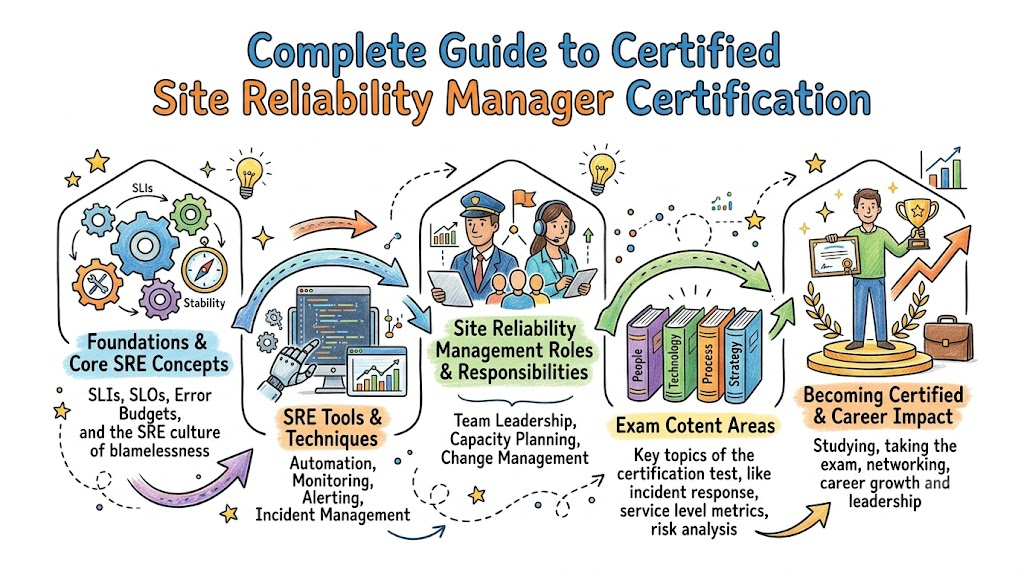
Every big website needs to stay online all the time. When a website crashes, people cannot buy items or watch videos. Site reliability managers lead the teams that keep these online systems fast and safe. You can earn a badge to prove your leadership skills with Sreschool today. This guide explains everything you need to know about this leadership test.
Also, leaders guide teams through big computer problems every single day. They teach engineers how to build strong computer systems that do not crash. Good training turns messy work into calm, planned teamwork. Next, we will look closely at what this test teaches you.
What Is a Site Reliability Manager?
A site reliability manager leads engineers who protect large computer systems. These managers do not just write code all day. Instead, they guide people, set big goals, and fix team roadblocks.
Because websites are complex, teams need a strong leader to direct them. The manager makes sure everyone works on the most helpful tasks. So, they keep the business happy and the computer systems running.
Why Should You Get Certified?
A certification is a special paper and badge that proves your skills. It shows bosses that you understand how to guide engineering teams.
- Better trust: Bosses trust you to handle big team emergencies.
- Higher pay: Many companies offer more money to trained team leaders.
- Clear skills: You learn simple ways to lead large engineering projects.
- Career growth: You can move up from an engineer to a true leader.
Also, studying for this test teaches you the best industry tricks. You learn how top tech firms run their daily work without chaos. Next, you can bring those helpful ideas directly to your own team.
Key Terms You Need to Know
Before you take this test, you must learn key terms. These terms are simple tools that help leaders track work quality.
First, you have Service Level Indicators, or SLIs. These are numbers that measure how well a system works. For example, an SLI tracks how fast a web page opens.
Next, you have Service Level Objectives, or SLOs. An SLO is a clear goal you set for your team. You might say, “Our website must stay up ninety-nine percent of the time.”
Finally, managers use an Error Budget. This is the small amount of downtime your system can safely afford. If your team breaks the system too much, you must stop making new features. Then, you spend time making the system strong again.
How Managers Handle Stressful Outages
Computer systems break down unexpectedly from time to time. A certified manager knows how to guide the team during emergencies.
First, the manager picks one person to lead the live rescue. Next, they assign other workers to find the main broken part. This clear setup stops panic and keeps everyone focused on the fix.
Also, the manager talks directly to customers and bosses during the fix. This keeps everyone calm while the engineers solve the problem. So, good managers act like a shield for their hard-working teams.
Learning from Mistakes Without Blame
After a crash happens, teams hold a special meeting called a post-mortem. A post-mortem is a talk where the team studies what went wrong.
Good leaders always run blameless post-mortems. This means you never punish a worker for an honest mistake. Instead, you look for bad computer setups and missing safety steps.
When people do not fear punishment, they tell the truth about mistakes. Because they share facts openly, the team learns faster. Then, they fix the real problem so it never happens again.
Cutting Down Boring Work
Engineers hate doing the same manual chores every day. In this field, people call repetitive, boring work toil.
Toil includes jobs like resetting passwords or clicking the same buttons every morning. These tasks eat up precious time and tire out your best workers.
- Find the chores: List every boring task your team repeats each week.
- Write quick tools: Build small computer scripts to do the work automatically.
- Protect creative time: Make sure workers spend most of their day building new tools.
A certified manager sets a strict rule for toil. They make sure teams spend less than half their time on chores. That leaves plenty of time for fun and creative projects.
What Does the Exam Cover?
The test checks both your people skills and your technical knowledge. You must answer questions about real problems that teams face every day.
| Exam Subject Area | What You Will Learn |
|---|---|
| Team Leadership | How to hire good workers and build happy, calm teams. |
| System Goals | How to pick realistic goals using error budgets and SLIs. |
| Emergency Steps | How to organize workers during major website crashes. |
| Smart Automation | How to use computer tools to replace slow, manual work. |
The exam asks multiple-choice questions based on real workplace stories. So, you must pick the best answer to guide the company toward success.
Who Should Take This Test?
This certification helps many different kinds of technology workers. You do not need to be a manager yet to take it.
- Senior engineers: Workers who want to step up into team leadership roles.
- Project managers: Leaders who want to understand tech systems more deeply.
- DevOps leads: Engineers who want to bring reliability tools into their workplace.
- Support managers: Workers who want to stop repeating the same support tickets.
Because the lessons focus on clear thinking, anyone with tech experience can learn quickly. It gives you the exact skills you need to lead others.
How to Prepare for the Exam
Getting ready for your test takes steady practice each week. You can follow these simple steps to build your confidence:
- Read the main guides: Study books on reliability leadership and team culture.
- Practice setting goals: Write real SLOs and error budgets for your daily work.
- Run practice drills: Practice fake computer breakdowns with your coworkers.
- Take practice quizzes: Test your memory with sample questions online.
Because practice builds confidence, study for thirty minutes every day. You will quickly master every concept on the test.
Tips for Passing on Your First Try
You can pass the test easily if you stay calm and plan ahead. Use these helpful tips during your test day:
- Read questions slowly: Make sure you spot every detail in the question prompt.
- Pick the calm choice: The best answer usually avoids panic and blame.
- Focus on the user: Choose answers that protect the customer experience first.
- Watch your clock: Do not spend too much time on any single hard question.
If a question confuses you, skip it and come back later. Then, review all your answers before you finish the test.
Taking Your Next Step in Tech Leadership
Earning your manager badge opens up great new job opportunities. Companies need smart, kind leaders who know how to protect complex systems.
Also, you will gain the skills to help your teammates grow every day. You can stop frantic emergencies and build a peaceful workplace. Start your study journey today and take control of your engineering career.