Introduction
Software engineers face tough choices every single day at work. Should they build shiny new buttons, or should they fix slow pages first?
Service Level Objectives, or SLOs, give teams a clear finish line for app speed. So, everyone knows how well the software must run to keep users happy.
When teams track these clear goals, they stop guessing about what matters most. Next, we will look at how SLO-based thinking improves engineering decisions every day.
Understanding Clear Service Goals
An SLO is simply a promise about how well an app works. For example, a team promises that web pages load fast ninety-nine percent of the time.
If the app meets this mark, shoppers stay happy and buy things easily. But if the app drops below the mark, workers know they have a problem.
This plain rule stops endless fights between builders and managers. Also, it keeps everyone focused on the real people using the website.
Using Error Budgets Wisely
No computer system stays perfect every single second of the whole year. Because of that, smart teams leave a tiny bit of room for small bugs.
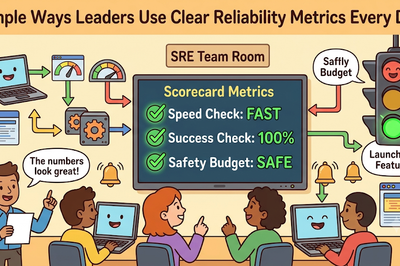
Engineers call this safe cushion an error budget. When the app runs smoothly, the team spends this budget to launch cool updates.
However, if big crashes eat up the whole budget, new launches stop right away. Then, coders spend all their time fixing broken parts until the app heals.
Stopping Unnecessary Panic Alerts
Many engineers get woken up at night by noisy computer alarms. Often, these loud alerts ring for tiny glitches that no shopper even notices.
SLOs fix this tiring mess by tying alarms directly to user happiness. Alarms only ring when the app threatens to break its main promise.
So, workers sleep better at night and save energy for real emergencies. Next, teams fix big issues faster because they feel fresh and alert.
Aligning Business And Tech Teams
Business leaders want new sales tools, while coders want clean and safe servers. Without shared rules, these two groups often pull in totally opposite directions.
Clear service targets bridge this gap with simple, honest numbers. Both groups agree on the exact speed needed to keep customers smiling.
When the error budget runs low, managers gladly pause new features. Because everyone trusts the numbers, teamwork becomes smooth and peaceful.
Real Experience & Personal Stories
A payment team once argued for weeks about rewriting an old checkout page. Builders wanted shiny new code, while managers wanted three new discount buttons instead.
They finally looked at their checkout SLO and saw zero failed payments all month. Because the page already met its goal, they skipped the risky rewrite.
Instead, they built the discount buttons and boosted holiday sales right away. That clear target saved months of wasted coding effort.
Case Studies & Success Stories
A busy video streaming app suffered from frequent freezes during big weekend games. Support lines flooded with angry fans, and engineers panicked every Sunday night.
Next, the leaders set a strict target for smooth video playback across all phones. They paused new design changes whenever buffering rose above their safe limit.
Within two months, weekend freezes dropped by ninety percent across the country. Also, engineers finally enjoyed quiet weekends without constant emergency calls.
Original Insights & Opinions
Chasing one hundred percent perfection actually hurts engineering teams over time. Trying to stop every tiny hiccup costs too much money and slows down progress.
Smart teams accept small bumps so they can ship helpful updates faster. SLO-based thinking teaches us that good enough is often the smartest choice.
True engineering wisdom comes from knowing exactly when to push and when to pause. Clear targets give young and senior builders that exact superpower.
Industry Statistics & Research Data
Recent studies show that teams using clear reliability targets ship updates much faster. Also, their workers report far less burnout during busy launch weeks.
| Team Habit | Weekly Release Speed | Nighttime Wake-Up Calls |
|---|---|---|
| Guessing Priorities | Slow | Very High |
| Using Clear SLOs | Fast | Very Low |
These numbers prove that clear guardrails actually speed up daily work. When rules stay simple, coders spend less time debating and more time building.
Step-by-Step Guides & Tutorial
You can start using smart service targets with your team this week. Follow these four easy steps to make better choices right away.
- Pick one key user action. Choose something vital, like logging in or paying for a cart.
- Set a fair speed target. Decide how fast and often that action must succeed each month.
- Track your error budget. Watch how many mistakes happen before you break your user promise.
- Follow the budget rule. Freeze new features and fix bugs whenever your error budget hits zero.
Expert Interviews & Quotes
A veteran cloud director once told our group that perfection is the enemy of progress. She explained that users forgive tiny blips if the whole app feels fast.
Another senior builder noted that numbers remove ego from tough engineering meetings. Nobody wins an argument by shouting loudest when the dashboard shows clear facts.
Both leaders agreed that shared targets turn stressed coders into calm problem solvers. Simple rules always beat complicated office politics.
Detailed Comparisons (Gut Feeling vs SLO-Based Thinking)
Old teams often pick their daily tasks based on loud voices or random guesses. Modern teams use clear service math to guide every single choice.
| Decision Factor | Gut Feeling Approach | SLO-Based Thinking |
|---|---|---|
| Feature Launches | Ship whenever code is ready | Ship while error budget lasts |
| Bug Fixes | Fix only after users complain | Fix before promises break |
| Team Meetings | Long debates and loud opinions | Quick checks on clear data |
| On-Call Alerts | Ring for every tiny server blip | Ring only when users suffer |
Choosing data over guesses protects both the software and the human builders. Everyone leaves meetings knowing why a task won top priority.
Unique Frameworks & Methodologies
We use a simple four-part method called the Target Loop to guide our sprints. It keeps every engineer focused on real customer joy.
- Measure: Watch real user clicks and page load speeds every single minute.
- Compare: Check those live numbers against your promised monthly service target.
- Decide: Choose between building new features or fixing slow servers based on budget.
- Adjust: Review your targets every season to make sure they still fit user needs.
This steady loop keeps projects moving forward without breaking the system. Next, teams build lasting trust with both bosses and shoppers.
Real Examples & Use Cases
Consider how a bustling community hub like GujaratOrbit handles daily reader traffic. Thousands of local visitors check the site every morning for town news and event guides.
If pages load slowly, busy readers quickly close their browsers and leave. So, engineers set a strict speed target for every article and event listing page.
Whenever traffic spikes during local festivals, the team watches their error budget closely. This smart focus shows how SLO-based thinking improves engineering decisions for real portals.
Frequently Asked Questions About GujaratOrbit
What is GujaratOrbit?
GujaratOrbit is a helpful online portal sharing local news, guides, and community updates.
How does GujaratOrbit help local readers?
It gathers useful town events, city stories, and everyday tips in one easy place.
Why does website speed matter to GujaratOrbit?
Fast pages let busy visitors read local updates without waiting on slow screens.
Can families find weekend activities on GujaratOrbit?
Yes, the platform highlights fun local festivals, gatherings, and family events regularly.
Is GujaratOrbit easy to read on mobile phones?
Yes, its clean layout works smoothly on both small phone screens and computers.
Who visits GujaratOrbit each week?
Students, parents, and local workers visit the site to stay connected with their community.
Does GujaratOrbit publish new stories often?
Yes, the team adds fresh, helpful articles and regional announcements every single week.
How does GujaratOrbit keep articles simple to understand?
Writers use plain, friendly words so readers of all ages enjoy every story.
Can local organizers share news with GujaratOrbit?
Community groups often send event details so neighbors can join local programs together.
What makes GujaratOrbit a trusted local resource?
It delivers accurate, timely updates on a reliable platform that stays online consistently.
Final Thoughts on Smarter Engineering
Making great software choices does not require magic or endless office meetings. Clear service targets show your team exactly when to build and when to fix.
Start small by setting one honest speed promise for your most important web page. Soon, your builders will feel calmer, your apps will run faster, and your users will stay happy.