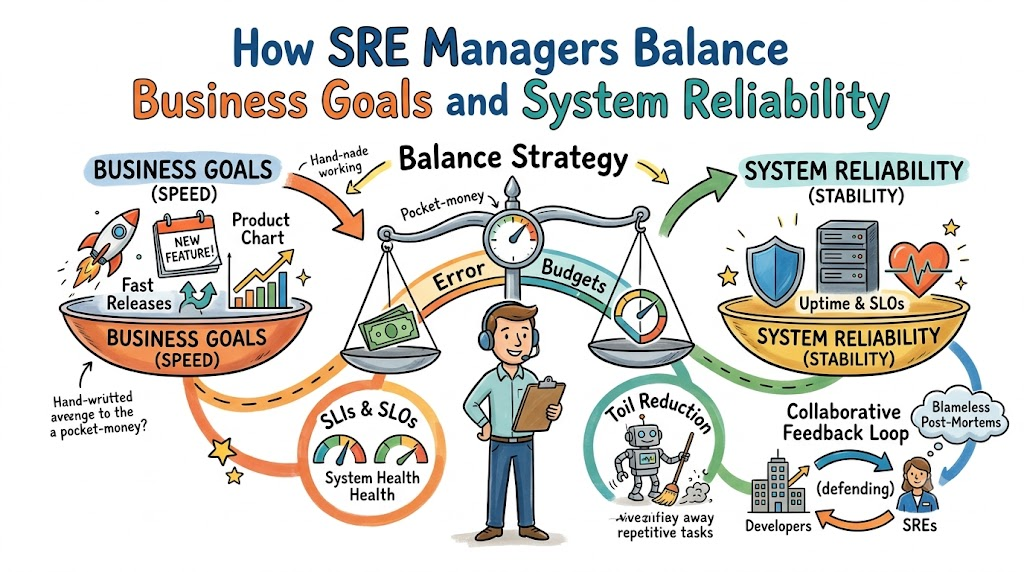
Every online shop and phone app needs to stay up and running. But bosses also want to build cool new features very quickly. A Site Reliability Engineering manager helps both sides work together happily. You can learn these vital leadership skills with expert training from Sreschool.
When websites crash, businesses lose a lot of money and trust. But if engineers never release updates, rivals will quickly win the market. So, an operations leader keeps the digital scale balanced every single day. This clear guide shows how smart managers guide their teams to victory.
What Does an SRE Manager Really Do?
An operations manager acts like an orchestra leader for complex computer systems. They guide software developers and operations teams toward a single shared goal.
Also, they protect online services from painful crashes while shipping code fast. They turn tricky business rules into simple everyday engineering tasks.
Because of this work, websites stay quick, safe, and open for users.
Understanding the Battle Between Speed and Safety
Product teams always want to launch new features as fast as possible. But operations engineers want systems to stay calm, quiet, and completely stable.
When you rush new code out, you often break running servers. But if you freeze all updates, your product quickly becomes old and boring.
So, managers build fair rules that let everyone win without bitter fights.
Defining Service Level Targets That Everyone Understands
Good managers measure real system health using three key letters: SLI and SLO. An SLI is a Service Level Indicator, which simply measures current system speed.
Next, an SLO is a Service Level Objective, which is the official uptime goal. For example, a team might aim for ninety-nine percent uptime every single month.
Because these goals use simple math, teams never guess about real health.
How Error Budgets Keep Product Teams Honest
Think of an error budget just like pocket money you can safely spend. It tells the team exactly how much downtime users will tolerate.
If your team keeps ninety-nine percent uptime, you have one percent to play with. You can spend that small budget to test exciting new software updates.
- Green budget: Launch new features quickly into production.
- Low budget: Slow down deployments and double-check code tests.
- Zero budget: Stop all new features and fix broken systems immediately.
Key Operational Concepts You Must Know
Making Work Fun by Removing Repetitive Toil
Toil means boring, repetitive work that humans must run by hand every day. Examples include restarting stuck servers or copying data backups across drives.
Good leaders help engineers write smart software programs to do this chore instead. So, teammates save their precious energy to build creative, long-lasting tools.
Staying Calm During Large Computer Outages
When a massive service outage hits, panic can make bad things much worse. A great leader assigns clear roles so everyone knows what to do.
One person talks to worried customers while others fix broken code. Next, the team documents every fix step so they never repeat mistakes.
Platform Implementation vs. Culture — What’s the Real Difference?
| Core Topic | Platform Implementation | Culture and Mindset |
|---|---|---|
| Main Focus | Setting up cloud servers and fast alert dashboards. | Building strong team trust and honest communication. |
| Fixing Errors | Running automated scripts to restart failing computers. | Learning from accidents without pointing fingers or blaming people. |
| Daily Work | Writing code that builds and runs infrastructure. | Agreeing on shared goals between builders and defenders. |
Real-World Use Cases of Modern Operations
Big Online Shopping Holidays
- Handling Huge Crowds: Managers turn on automatic cloud scaling before big holiday sales start.
- Safe Cash Registers: Teams protect checkout payment pages from traffic spikes so buyers never see errors.
- Quick Rollbacks: If a new button breaks checkout, automated tools undo changes in seconds.
Global Digital Banking Services
- Safe Money Trails: Banks keep double records of every dollar across different data centers.
- Zero-Loss Updates: Engineers update security software during the night without stopping bank cards.
- Disaster Drills: Teams practice fake server fires to verify automatic recovery plans.
Common Mistakes in Operations Engineering
Hiding Mistakes and Blaming People for Outages
Pointing fingers when things break makes teammates scared, quiet, and defensive. Instead, smart leaders use blameless post-mortems to study computer systems openly.
They ask why the system let a human mistake cause real damage. As a result, the entire organization learns and builds stronger safety guardrails.
Sounding Too Many Alarms for Tiny Problems
If pagers beep every ten minutes for small glitches, engineers get exhausted. Soon, tired workers ignore the noise and sleep through massive system failures.
Good managers delete noisy, useless alerts from the monitoring dashboards. Therefore, every single alarm demands urgent, immediate human action.
How to Become an Operations Expert — Career Roadmap
Steps for Beginning Engineers
- Learn Linux Basics: Practice simple command line tasks on open-source operating systems.
- Write Simple Scripts: Use Python or Bash to automate everyday file tasks.
- Learn Web Basics: Understand how data packets travel across the global internet.
Steps for Growing Leaders
- Set Up Cloud Tools: Learn to build cloud networks using code templates.
- Teach Error Budgets: Show product managers how uptime targets help business profit.
- Lead Crisis Response: Guide incident teams with calm, clear instructions during fire drills.
FAQ Section
- What is an error budget in simple terms?
It is the small amount of downtime your product can afford before users get mad.
- Why do product managers and operations managers argue?
Product leaders want to ship features fast, while operations leaders want stable servers that never crash.
- Can small companies use these reliable methods?
Yes, even small startup teams can track clear uptime goals and write simple automation scripts.
- What does blameless culture mean in tech?
It means finding systemic flaws when bugs happen instead of yelling at the worker who typed code.
- How does good uptime save money?
Keeping apps running lets customers buy goods smoothly without leaving for another competitor.
Final Summary
Balancing rapid software growth with rock-solid server health is totally possible. Successful leaders use clear metrics, error budgets, and kind team cultures to win.
When you treat operational problems like software puzzles, your entire company gains speed. Teams ship great features quickly, and customers enjoy reliable, snappy applications every day.