Modern companies run on software. When apps break, businesses lose happy users and money. Therefore, an SRE manager leads teams to keep every app running smoothly. You can learn these leadership skills directly at Sreschool today.
Next, these leaders teach teams how to write code to protect servers. They act like coaches on a sports field. Also, they make sure all parts of a company work well together.
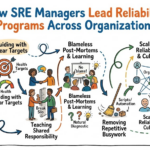
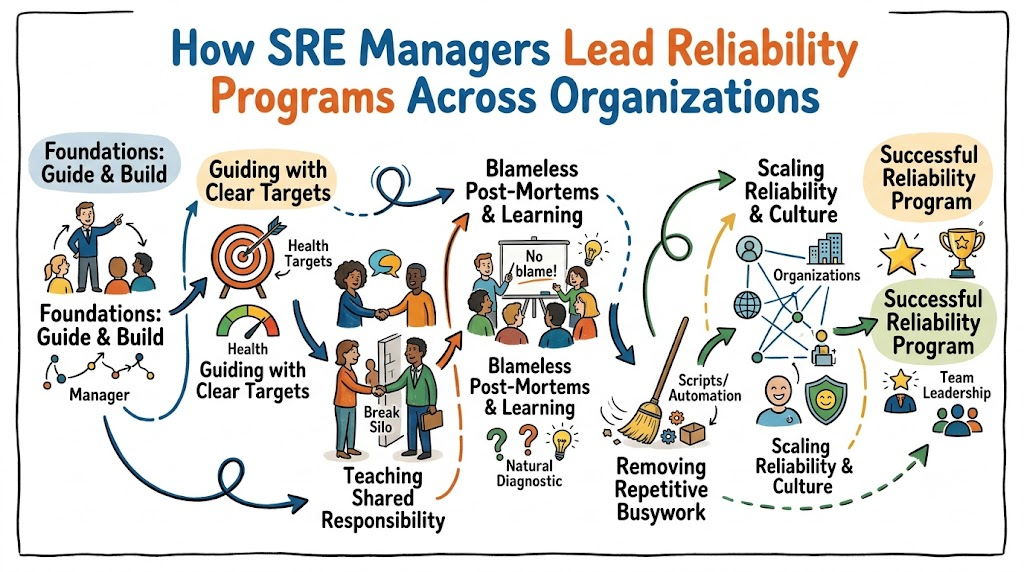
Guiding Teams with Clear Reliability Targets
An SRE manager helps teams pick clear goals for system health. First, they check how fast apps load. Next, they track how often errors pop up on screens.
Because of this work, teams know when systems run well. They do not guess. Instead, they look at real numbers every single morning.
Teaching Teams to Share Responsibility
Sometimes, software coders move too fast and break production tools. But a good manager brings coders and operators into one room.
So, everyone agrees on how much downtime is safe. Nobody hides mistakes. Next, both sides share the work of keeping software safe and stable.
Removing Repetitive Manual Busywork
Managers hate watching their engineers do boring, manual tasks every day. So, they tell their teams to write smart scripts.
These scripts fix small bugs on their own. Next, the team has free time to build cool new features. Because of this, engineers stay happy and never burn out.
Running Honest Lessons After Outages
Systems will crash from time to time. When a crash happens, good managers do not point fingers or blame people.
Instead, they sit down and ask what broken tool caused the problem. Next, they fix the broken process so it never happens again. This makes the whole company much stronger over time.
Key Operational Concepts You Must Know
Setting Clear Service Health Targets
Engineers use special scores to see if a system is healthy. First, they measure response speed and error counts.
Next, they set a target number like ninety-nine percent. If the score stays high, users stay happy. So, managers use these numbers to guide everyday engineering work.
Using Safe Risk Budgets
No system stays up every second of every day. So, managers create a small budget for planned downtime.
Teams can use this budget to launch shiny updates. But if the app breaks too much, updates pause. Next, everyone works together to fix the system first.
Learning from Failures Without Blame
When apps crash, people often feel scared. But great teams never blame a single human worker.
Instead, they study the machine flaw that allowed the bug to happen. Next, they write down clear steps to stop future mistakes. Because of this safe culture, engineers speak up early and honestly.
Cutting Down on Daily Toil
Toil means boring work that does not add lasting value. Examples include restarting servers by hand or typing simple reset commands.
So, managers set a hard rule for their workers. Engineers must spend less than half their day on toil. Next, they use code to make computers do the boring work.
Platform Implementation vs. Culture — What’s the Real Difference?
| Operational Part | Platform Focus | Cultural Focus |
|---|---|---|
| Main Goal | Set up monitoring tools and fast cloud servers. | Help people talk kindly and work as one team. |
| How to Measure | Check CPU heat, memory space, and disk limits. | Check team trust, honest notes, and learning speed. |
| Handling Bugs | Run automated scripts to reboot broken virtual machines. | Talk through mistakes without blaming any single person. |
| Daily Work | Write clean code that builds cloud networks automatically. | Teach teams to balance fast updates with system safety. |
Real-World Use Cases of Modern Operations
Online Shopping Stores
- Handling Big Crowds: Adding extra web servers automatically when huge holiday sales begin.
- Safe Checkout Lines: Keeping customer payment pages open even when photo servers freeze.
- Quick Rollbacks: Turning off broken website updates in seconds before shoppers notice errors.
Banking and Money Apps
- Real-Time Data Copies: Saving balance records across three data centers at the exact same moment.
- Constant Safety Checks: Running automated tests to block bad network traffic day and night.
- Testing for Disasters: Turning off a backup server on purpose to test safety alarms.
Digital Health Services
- Updating Without Stopping: Releasing new code while doctors read medical charts without pauses.
- Keeping Private Logs: Locking down all system access records so patient files stay secure.
- Fast Doctor Alerts: Catching slow server problems before digital hospital devices disconnect.
Common Mistakes in Operations Engineering
Keeping Teams in Dark Silos
Many companies make the big mistake of separating their teams. Coders sit in one room, and operators sit far away.
So, coders toss messy software over the wall without caring. Next, operators struggle to keep the broken software running. Managers must break these walls down to make teams work together.
Rushing Automation Before Fixing Steps
Some engineers try to automate steps they do not understand yet. But automating a bad plan only creates faster disasters.
So, teams must practice the manual steps carefully first. Next, they write down each part of the process clearly. Only then should they write code to run it automatically.
Demanding Perfect Zero Downtime
Chasing one hundred percent uptime is a dangerous, costly trap. It costs millions of dollars to chase perfection.
Also, it stops teams from shipping fun updates to users. So, smart managers explain that a tiny bit of downtime is normal. This healthy balance keeps innovation moving forward safely.
Blasting Too Many Loud Alarms
Pagers that beep all night make engineers feel tired and angry. Most of these noisy alerts do not even matter.
Next, tired engineers start ignoring the noise completely. Then, a massive crash happens, and no one wakes up to fix it. Managers must turn off useless alarms so only critical alerts ring.
How to Become an Operations Expert — Career Roadmap
For Beginners
- Learn Command Line Basics: Practice basic terminal commands on a home Linux computer every day.
- Pick Up Easy Scripting: Write short Python or Bash scripts to rename files and test links.
- Study Basic Web Paths: Learn how web requests travel from a laptop to a cloud server.
For Mid-Level Workers
- Build Cloud Networks with Code: Use modern setup tools to launch new servers with text files.
- Package Apps in Containers: Put small programs into neat software boxes that run anywhere without bugs.
- Make Visual Dashboards: Build colorful screens that show real-time server speed to your team.
For Senior Leaders
- Teach Good Team Habits: Show software groups how to run blameless reviews after messy outages.
- Cut High Cloud Bills: Find unused cloud machines and delete them to save company cash.
- Plan for Huge Storms: Design safety backup plans that keep services alive during rare power cuts.
FAQ Section
- What does an SRE manager do all day?
They guide teams of engineers, track reliability scores, and remove project roadblocks. Also, they make sure software developers and system operators work happily together.
- Why do companies need these programs?
Companies need them because software outages make customers angry and cost lots of money. These programs use smart code to catch bugs before users spot them.
- Does an SRE manager need to write code?
Yes, they should understand simple code and automation scripts very well. But their main daily job is helping people make smart, safe tech choices.
- How do managers stop engineer burnout?
They stop burnout by turning off useless system alarms and cutting down manual chores. Also, they make sure engineers take long breaks after handling big night emergencies.
- What is an error budget in plain words?
It is the small amount of downtime an app can have without upsetting users. Teams spend it on fast updates or save it to stay safe.
Final Summary
Running a top-tier reliability program helps entire companies stay fast, safe, and happy. Strong managers teach their teams to treat operations like regular software coding puzzles. They use clear target numbers so nobody has to guess about system health. Next, they wipe away boring, repetitive chores with smart automation scripts.
Most importantly, great managers build safe cultures where people learn from mistakes without fear. They align everyday computer work with real customer happiness. Because of this strong leadership, complex software systems stay online through every big storm. Starting this journey gives any engineer the tools to build a lasting, high-impact career.