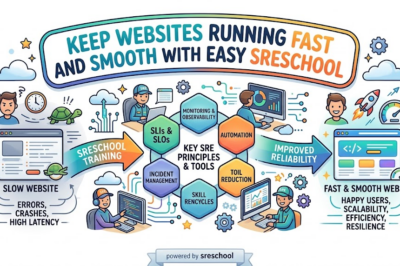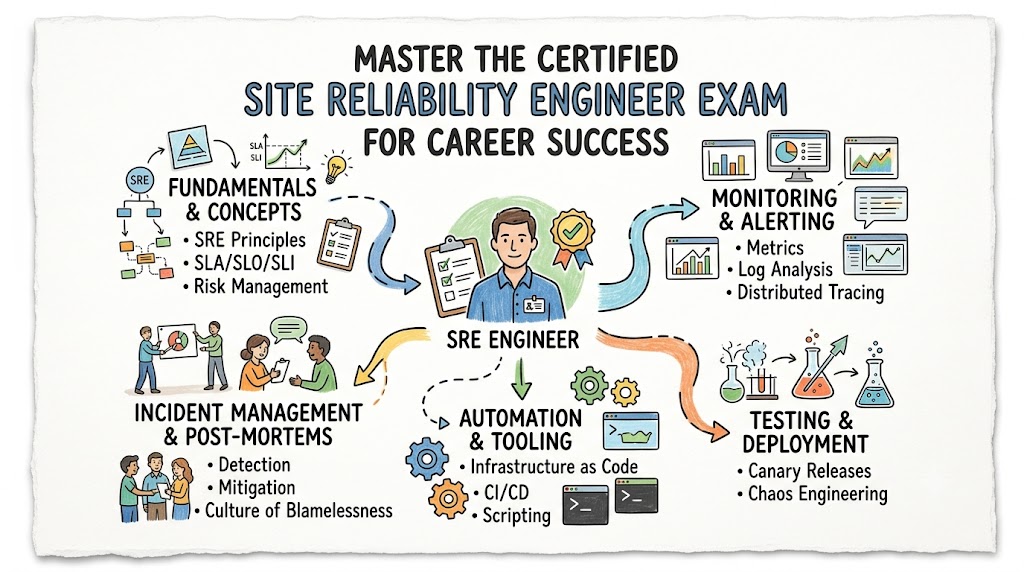
Site Reliability Engineering bridges the gap between software development and IT infrastructure management to ensure system stability. Organizations worldwide face immense pressure to keep their digital platforms available, responsive, and secure at all times. Therefore, technical professionals seek specialized training to handle these complex infrastructure demands effectively. The Sreschool program offers a direct path to acquiring these highly demanded engineering skills.
This comprehensive certification guide provides you with a clear roadmap to mastering infrastructure stability and advanced automated workflows. You will explore critical telemetry practices, cultural paradigms, architectural designs, and common deployment pitfalls to accelerate your career growth.
Key Operational Concepts You Must Know
Understanding Service Level Objectives
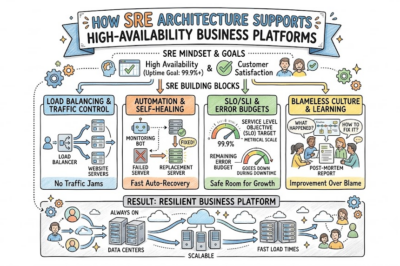
Service Level Objectives establish the definitive target metrics for system availability and overall system performance. These objectives act as a metric-driven agreement between the engineering teams and business stakeholders to balance speed with reliability. Consequently, engineers track these metrics closely to determine whether a system meets acceptable user standards.
When a system violates these targets, teams immediately prioritize stability fixes over shipping new functional code. Maintaining these precise boundaries ensures that software development never compromises the core user experience.
Managing Your Error Budget
An error budget represents the total acceptable amount of system downtime or failure within a specific time window. This budget provides an exact mathematical framework for calculated risk-taking during production software deployments. For instance, if your system achieves perfect uptime, your team can safely accelerate the release of innovative new features.
However, exhausting this budget triggers an immediate halt to all non-essential production updates. This strict operational boundary forces development teams to collaborate closely with infrastructure engineers to resolve underlying stability bugs.
Defining Service Level Indicators
Service Level Indicators serve as the quantifiable metrics that measure the real-time performance of your active applications. These indicators typically measure specific technical parameters such as query latency, error rates, system throughput, and resource availability. By analyzing these continuous data points, operations teams can quickly detect early signs of system degradation.
Furthermore, precise indicators allow automated monitoring systems to send early warnings before a minor glitch escalates into a catastrophic outage. Choosing the right metrics ensures that your alerting system remains highly accurate and actionable.
Eliminating Operational Toil
Toil represents the repetitive, manual, and administrative work that scales directly with the size of your infrastructure. This administrative overhead includes manual server provisioning, basic database backups, routine user management, and manual script executions. Site Reliability Engineering actively seeks to eliminate this manual labor through advanced software automation and self-healing systems.
As a result, engineers free up valuable time to build resilient software rather than manually fighting operational fires. Reducing toil significantly boosts overall engineering efficiency and minimizes human error in production environments.
Platform Implementation vs. Culture — What’s the Real Difference?
| Focus Area | Platform Implementation | Cultural Paradigm |
|---|---|---|
| Primary Goal | Building scalable, automated infrastructure systems. | Fostering collaboration, shared empathy, and mutual trust. |
| Core Tooling | Metrics dashboards, deployment pipelines, code repositories. | Post-mortem reviews, shared goals, open communication channels. |
| Measurement | Uptime percentages, latency metrics, resource utilization. | Team psychological safety, deployment confidence, learning agility. |
| Error Handling | Auto-scaling policies, failover triggers, automated alerts. | Blameless root-cause analysis, collective system ownership. |
The Mechanics of Platform Engineering
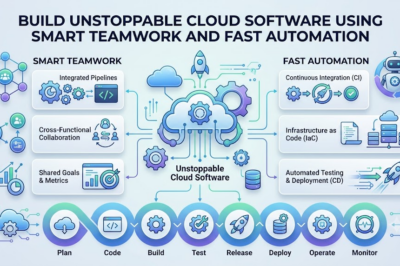
Platform implementation focuses entirely on creating robust, automated framework structures that support seamless software delivery pipelines. This technical discipline involves constructing infrastructure as code, configuring container orchestration networks, and maintaining comprehensive telemetry logging systems. Moreover, platform engineers build self-service portals that allow software developers to deploy code independently and securely.
These automated environments enforce strict security compliance rules and corporate architectural patterns without requiring human intervention. Ultimately, platform engineering provides the raw technical capabilities needed to run large-scale applications reliably.
Driving Cultural Transformation
Cultural transformation focuses on changing how engineering teams communicate, collaborate, and share ownership over production systems. This psychological shifts eliminates traditional organizational silos that separate eager feature developers from cautious infrastructure operators. Instead of assigning individual blame during application outages, the entire engineering department embraces a constructive, blameless post-mortem approach.
Teams treat every system failure as an invaluable learning opportunity to improve software resiliency and monitoring design. A healthy operational culture ensures that technical tools are utilized effectively to drive long-term business value.
Real-World Use Cases of Modern Operations
Managing E-Commerce Traffic Spikes
High-volume digital commerce platforms experience massive, unpredictable traffic surges during seasonal shopping events and flash sales. During these critical windows, automated load balancing systems must instantly distribute incoming web requests across multiple cloud regions. Simultaneously, database sharding strategies prevent database connection bottlenecks from crashing the entire checkout checkout workflow.
By utilizing cached content delivery networks, the application reduces the processing strain on core backend microservices. These combined architectural patterns ensure that customers enjoy smooth, unhindered shopping experiences during peak demand.
Maintaining Financial Data Consistency
Financial transaction systems require absolute data consistency and near-zero latency across geographically distributed database clusters. To achieve this, engineers implement highly resilient consensus protocols that validate every monetary transaction in real time. Continuous data replication strategies ensure that a sudden hardware failure never results in catastrophic financial data loss.
Additionally, automated circuit breakers instantly isolate failing third-party payment gateways to keep the core banking application fully functional. These meticulous engineering practices preserve consumer trust and ensure strict regulatory compliance for enterprise institutions.
Streaming Media Architecture
Global entertainment platforms must deliver high-definition media streams to millions of concurrent users across varying network conditions. Engineers solve this complex delivery challenge by deploying adaptive bitrate streaming technologies and decentralized edge computing nodes. If a localized content delivery network fails, automated traffic routing systems instantly redirect users to an alternative active node.
Furthermore, real-time telemetry systems continuously monitor video playback quality to adjust bandwidth consumption dynamically. This proactive architecture minimizes buffering delays and ensures uninterrupted video playback for global audiences.
Common Mistakes in Operations Engineering
- Relying on Manual Infrastructure Modifications: Adjusting production server settings manually creates configuration drift and makes system replication impossible.
- Creating Overly Complex Alerting Logic: Configuring vague or low-priority alerts causes deep alert fatigue, leading engineers to ignore critical system warnings.
- Neglecting Comprehensive Chaos Testing: Failing to simulate real-world hardware failures means hidden architectural bugs will eventually surface during live production outages.
- Ignoring the Human Aspect of On-Call Rotations: Overworking engineering teams with exhausting on-call schedules reduces morale and increases the likelihood of critical mistakes.
- Postponing Automation for Quick Manual Fixes: Choosing immediate manual patches over permanent automated solutions builds massive technical debt that slows future growth.
The Danger of Configuration Drift
Configuration drift occurs when engineers make undocumented, manual adjustments directly to active production servers over time. This bad habit creates hidden discrepancies between your actual infrastructure state and your official configuration files. Consequently, when a server crashes, replicating that specific environment during an emergency recovery becomes nearly impossible.
To eliminate this dangerous vulnerability, organizations must enforce strict infrastructure as code policies across all development environments. Every single infrastructure alteration must go through a formal code review and automated deployment pipeline.
Overcoming Chronic Alert Fatigue
Alert fatigue happens when monitoring platforms inundate engineering teams with hundreds of minor, non-actionable system notifications daily. When everything is labeled as an urgent emergency, engineers quickly become desensitized to incoming pages. As a direct result, critical, high-priority notifications get buried beneath a mountain of irrelevant operational noise.
To resolve this issue, teams must configure alerts to trigger only when a user-facing metric is genuinely violated. Every alert must include a clear, documented runbook that guides the responder through a definitive resolution path.
How to Become an Operations Expert — Career Roadmap
Step 1: Master Linux Fundamentals and Networking
Begin your professional journey by developing a profound understanding of Linux operating system internals and core networking protocols. You must feel completely comfortable navigating the command-line interface, managing system processes, and modifying access permissions. Additionally, master foundational networking concepts like the domain name system, transport control protocols, and secure routing paths.
Understanding how data moves across distributed networks allows you to troubleshoot complex connectivity issues efficiently. This fundamental knowledge forms the bedrock of all advanced infrastructure and reliability engineering tasks.
Step 2: Learn Modern Scripting and Automation
Transition into writing clean, maintainable automation scripts using versatile programming languages such as Python or Go. Automation eliminates error-prone manual administrative tasks and allows you to interact seamlessly with external cloud application programming interfaces. Focus on building scripts that parse complex log files, automate data backups, and audit cloud security configurations.
By treating system administration as a software engineering problem, you significantly improve operational speed and accuracy. Developing strong coding skills distinguishes elite operations specialists from traditional system administrators.
Step 3: Implement Infrastructure as Code
Adopt modern infrastructure as code methodologies to provision and manage your cloud environments safely and predictably. Learn to define your cloud servers, virtual networks, and database clusters using declarative configuration files. This practice allows you to version-control your entire infrastructure footprint using standard git repositories.
As a result, your team can review infrastructure changes before deployment, run automated validation checks, and spin up identical environments instantly. This approach minimizes human error and guarantees complete environmental consistency.
Step 4: Master Containerization and Orchestration
Package your software applications into lightweight, isolated containers to guarantee uniform execution across development and production environments. Once you understand container basics, dive deep into advanced container orchestration platforms to manage large-scale deployments. Learn how to configure automated rolling updates, horizontal auto-scaling matrices, and self-healing container policies.
These sophisticated tools ensure that your applications remain highly available even when underlying physical hardware fails. Mastering orchestration is essential for managing modern microservice architectures efficiently.
Step 5: Design Deep Observability Systems
Construct comprehensive observability frameworks that combine distributed tracing, centralized log aggregation, and real-time metric dashboards. This deep visibility allows you to monitor internal system states based entirely on external performance data. Configure proactive alerting matrices that identify anomalous system behavior before it impacts your end-user community.
Furthermore, practice conducting detailed root-cause analysis using the rich contextual data provided by your telemetry pipelines. A well-designed observability platform removes the guesswork from system debugging and incident response.
FAQ Section
- What is the primary difference between DevOps and Site Reliability Engineering?DevOps focuses broadly on cultural philosophy and breaking down organizational silos between development and operations teams. In contrast, Site Reliability Engineering prescribes specific, metric-driven software engineering practices to implement that philosophy successfully.
- How does an error budget help software development teams move faster?An error budget provides clear mathematical permission to take calculated risks and deploy innovative new features rapidly. As long as the error budget remains positive, development teams can release updates without bureaucratic delays.
- Why are blameless post-mortems critical for building reliable digital systems?Blameless post-mortems focus entirely on fixing systemic engineering flaws rather than punishing individual human operators for mistakes. This open environment encourages transparent communication, which helps organizations identify and fix the true root causes of outages.
- What technical skills are tested in a professional reliability certification exam?The certification exam thoroughly evaluates your proficiency in cloud architecture, infrastructure automation, container orchestration, and observability design. It also tests your understanding of service level objectives and incident response workflows.
- Can a system administrator transition into a reliability engineering role smoothly?Yes, a system administrator can transition successfully by mastering software development practices and infrastructure automation tools. Shifting your mindset from manual server management to programmatic system engineering is the key requirement.
Final Summary
Achieving a professional reliability certification validates your technical ability to design, automate, and protect complex digital infrastructure systems. Throughout this guide, you explored how managing error budgets and service level objectives balances innovation with platform stability. You also examined how combining technical platform engineering with a healthy, blameless operational culture prevents system failures. By avoiding manual configuration drift and building robust observability pipelines, you protect your organization from costly application downtime.
Embracing this career roadmap prepares you to lead enterprise digital transformations with absolute operational confidence. Ultimately, dedicating time to mastering these automated workflows and architectural patterns unlocks elite engineering opportunities worldwide.