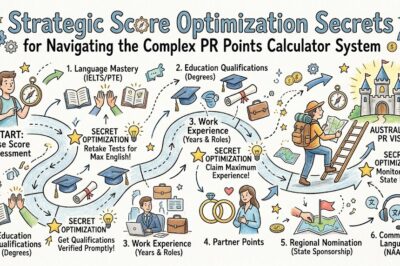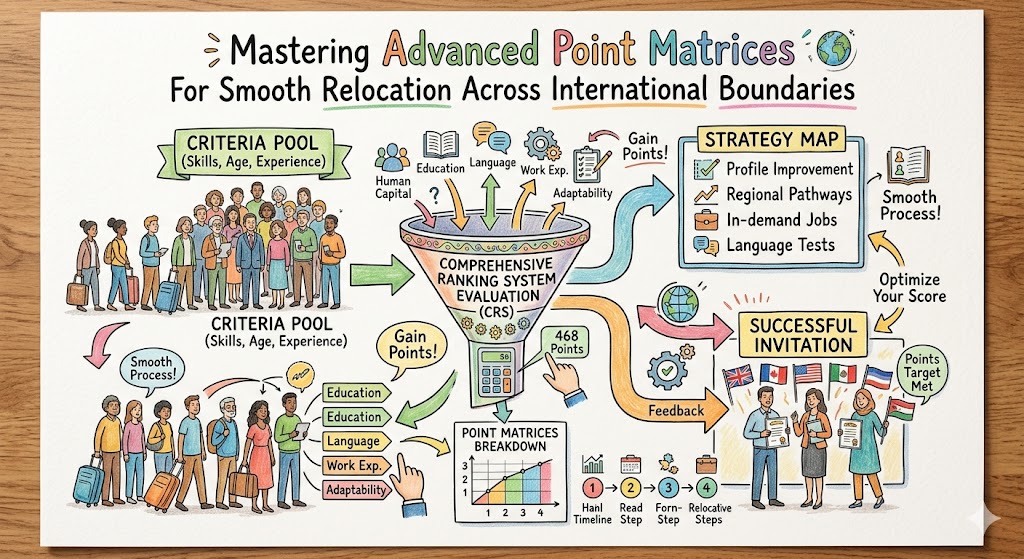
The exhilarating prospect of launching a brand-new life in a prosperous nation frequently fuels immense personal ambition, but complex global immigration pathways instantly introduce heavy layers of confusion. Modern selection mechanisms utilize highly sophisticated grading metrics to evaluate applicant backgrounds, which leaves thousands of hopeful candidates guessing about their actual chances. Consequently, wandering through this bureaucratic maze without a precise navigation plan wastes significant financial resources and valuable time. Fortunately, utilizing a Canada PR CRS Calculator dispels the frustrating uncertainty by transforming dense regulatory criteria into clear, usable statistics. This ultimate handbook delivers a powerful blueprint to navigate selection formulas, upgrade your personal profile, and confidently accelerate your transition to permanent residency.
Demystifying the Point Allocation System
The Core Purpose of Canada PR CRS Calculator
Government authorities regulate expanding talent pools by deploying centralized, electronic tracking networks. Therefore, a Canada PR CRS Calculator serves as an automated diagnostic engine that perfectly replicates the official selection rubric. It achieves the vital goal of standardizing candidate assessments, ensuring absolute transparency across diverse candidate pools. Instead of forcing individuals to scan massive, confusing administrative booklets manually, the online script yields an immediate breakdown of their professional standing. This mathematical framework removes subjective human prejudice completely, which allows global professionals to measure their value against historical cut-offs and changing pool parameters.
How the Canada PR CRS Calculator System Works
The mathematical engine operates on a cumulative point architecture that balances scores across several distinct background categories. Initially, the algorithm collects specific demographic facts, including marital status, current age, and completed academic certifications. Subsequently, the program cross-references language test scorecards with documented corporate employment histories. By implementing a responsive interface, the system alters its maximum scoring caps based on whether a spouse accompanies the primary applicant. Finally, it generates a definitive final sum, which establishes the exact placement of that individual within the master registry.
Eligibility Standards vs. Selection Criteria
Prospective migrants routinely mix up initial eligibility requirements with final competitive ranking scores. However, these two frameworks govern entirely separate phases of the intake pipeline. Entry eligibility protocols dictate whether an individual meets the baseline requirements to join specific economic immigration programs. Conversely, selection criteria—measured accurately by the automated diagnostic tool—rank those qualified individuals against one another. Meeting the minimum threshold simply places your name inside the competitive pool, whereas securing a high point total actually grants you the final invitation to apply.
Core Metrics of the Evaluation Matrix
Age Factors in Canada PR CRS Calculator
Chronological milestones play a remarkably sensitive role within human capital metrics, heavily favoring younger candidates during their most productive working years. The ranking software awards maximum values to applicants who fall within the mid-twenties to early thirties age range. Once a candidate moves past this premium window, the underlying formula applies an automatic downward point deduction each year. Therefore, recognizing this automatic decline highlights the immense value of launching your migration strategy as early as possible. Younger applicants easily leverage this built-in advantage, while mature professionals must make up for these point reductions by achieving higher marks in alternative categories.
Educational Evaluation for Canada PR CRS Calculator
Academic credentials represent long-term intellectual wealth, which indicates an applicant’s capacity to adjust to a fast-moving, knowledge-based economy. The selection system highly rewards advanced academic qualifications, giving top points to master’s degrees and doctorates. However, international graduates must obtain independent equivalence reports from approved evaluation agencies to prove local parity. Furthermore, holding two or more post-secondary credentials offers a massive competitive boost over applicants with only one degree. The system also tracks whether the candidate studied locally or abroad, assigning extra weight to domestic academic experiences.
Performance Standards and Benchmarks
Advanced communication skills serve as one of the most flexible and rewarding variables within the entire ranking framework. The evaluation engine scores proficiency across two major international languages, analyzing reading, writing, listening, and speaking capabilities. Minor score improvements on these standardized exams generate substantial increases in the final tally due to progressive point rewards. Moreover, proving advanced fluency in a secondary official language secures valuable bonus points. Because language capabilities remain completely under your control, dedicated study offers the fastest way to rescue a struggling profile.
Professional Experience Verification
The international labor market prioritizes consistent, highly skilled employment history when choosing future permanent residents. The system scrutinizes both overseas corporate experience and local job placement records, organizing industries through a specialized national occupational classification directory. While a single year of professional service fulfills the baseline requirement, accumulating three or more years maximizes the experience category completely. Additionally, gaining continuous local experience within the host country activates top-tier scoring brackets, because officials view domestic workplace exposure as a strong predictor of rapid economic success.
Mathematical Frameworks Controlling the Outcome
The Detailed Score Breakdown
The overarching selection system spreads available points across four core structural pillars, creating a maximum potential score of 1,200 points.
+-----------------------------------------------------------------------+
|                       POINT DISTRIBUTION METRIC                       |
+-----------------------------------------------------------------------+
|  1. Core Personal Attributes (Up to 500 Points)                       |
|     - Age, Degrees, Language Skill, Domestic Work History             |
+-----------------------------------------------------------------------+
|  2. Accompanying Partner Metrics (Up to 40 Points)                    |
|     - Spouse's Academic History, Language Fluency, Local Experience   |
+-----------------------------------------------------------------------+
|  3. Capability Combination Bonuses (Up to 100 Points)                 |
|     - Education + Language Skills | Work History + Language           |
+-----------------------------------------------------------------------+
|  4. High-Value Endorsements (Up to 600 Points)                        |
|     - Provincial Nominations, Arranged Corporate Offers, Relatives    |
+-----------------------------------------------------------------------+
Core personal attributes command up to 500 points, focusing entirely on individual capabilities. Meanwhile, spouse factors distribute 40 points across shared applications, ensuring balanced partner credentials. Next, capability combination bonuses offer 100 points, rewarding strong intersections between education, language fluency, and diverse experience. Finally, high-value endorsements contribute up to 600 points, immediately guaranteeing an invitation for top-tier candidates.
Real-World Application Scenarios
To see these mathematical principles in action, imagine a single thirty-year-old applicant who possesses a master’s degree and three years of foreign corporate experience. If this individual scores top-tier language marks, the calculation engine easily pushes their final score above competitive historical limits. On the flip side, consider a forty-year-old applicant with a bachelor’s degree and identical language scores. This older professional encounters a severe point drop due to age limits, leaving them far below the selection line. Consequently, the second applicant must actively seek out regional nominations or secure local job offers to close the gap.
Navigating Global Inflow Streams
Key Categories and Classes
The centralized electronic database feeds three primary federal pathways, each designed for specific sectors of the international workforce. The Federal Skilled Worker stream recruits highly educated corporate professionals, demanding superior language scores and strong academic backgrounds. Meanwhile, the Federal Skilled Trades category assists practical vocational specialists, prioritizing valid job offers and certified technical training. Lastly, the Canadian Experience Class offers an exclusive path for individuals who already hold local corporate experience, which allows temporary residents to transition smoothly into permanent status.
Comparative Results Summary
The competitive climate inside the selection pool changes constantly, reflecting evolving economic goals and corporate hiring trends.
| Point Thresholds | Candidate Pool Concentration | Relative Competitive Strength | Immediate Action Strategy |
| Above 500 | Thin Distribution | Exceptionally Strong | Keep your file updated and wait for the next invitation |
| 451 to 500 | High Density Cluster | Moderate to High | Boost language test results and evaluate secondary points |
| 401 to 450 | Very High Concentration | Low General Standing | Target regional streams and secure local corporate offers |
| Below 400 | Massive Volume | Non-Competitive | Secure formal provincial backing or seek local study options |
As this dataset clearly demonstrates, candidates sitting below the 450 mark must aggressively pursue alternative pathways, because broad selection draws rarely descend into those highly saturated lower brackets.
Strategic Local and Regional Matrix Settings
Regional Variations and Systems
Because different geographical territories face distinct economic realities, individual provinces run independent immigration programs tailored to local employment gaps. These regional setups use custom selection rules that run alongside the central federal database. For example, some western provinces recruit candidates with deep technology backgrounds, while eastern coastal areas favor healthcare professionals and logistics experts. Therefore, entering the federal pool automatically displays your profile to regional recruiters who select candidates with targeted skills, completely bypassing the standard score cut-offs.
Professional Registration Requirements
Regulated corporate sectors require immediate professional licensing or formal validation before an applicant can claim associated points. Engineering fields, medical services, legal professions, and educational roles demand deep evaluations by local licensing boards. Consequently, ignoring these mandatory regional credentials prevents you from claiming specialized professional points. Initiating these credential checks early eliminates processing delays, which ensures the online assessment tool mirrors your certified technical skills perfectly.
Mapping the Global Point-Based Landscape
Major International Selection Frameworks
Numerous developed nations utilize structured point systems to manage their long-term economic migration pipelines effectively. While specific score rules differ, the foundational philosophy remains consistent across major global markets:
- Southern Hemisphere Model (Australia & New Zealand): Relies on fixed scoring benchmarks centered heavily on regional sponsorship, rigid age tiers, and highly specific occupational demand lists.
- North American System: Focuses heavily on premium human capital variables, mixing language skills, education, and flexible capabilities with massive point boosts for regional endorsements.
- European Blue Card Framework: Prioritizes verified corporate employment contracts, minimum salary brackets, and recognized academic credentials over a general pool ranking system.
- East Asian Models (Japan & Singapore): Utilize strict qualification matrices that evaluate corporate investment records, advanced scientific research achievements, and salary histories.
Key Advantages of Online Point Estimation Tools
Cost Efficiency and Resource Management
Launching an international relocation project requires major financial outlays, from language exam fees to document certification costs. Using an automated estimation script saves thousands of dollars by offering an immediate, zero-cost reality check before you spend any money. Applicants avoid spending funds on expensive document packages if their initial score falls far below historic draw realities. Instead, they can direct their financial resources toward specific self-improvement areas that actively raise their position.
Instant Reality Checks
The international relocation market shifts rapidly, which causes selection cut-offs to swing based on global talent numbers. An online score checker delivers a real-time, transparent snapshot of exactly where your profile stands in relation to current trends. This instant feedback cuts through vague marketing promises, providing a clear and realistic look at your actual prospects. Equipped with exact figures, candidates abandon wishful thinking and start making smart, data-driven career choices.
Strategic Long-Term Planning
Successful candidates treat immigration as a continuous optimization project rather than a single roll of the dice. The digital assessment tool allows you to model hypothetical scenarios, charting clear paths for future profile enhancements. For instance, you can test how finishing a secondary degree or mastering an additional language alters your final score. This predictive capability turns the application journey into a deliberate, long-term plan, which enables you to build a highly competitive file systematically.
Operational Blueprint for Point Optimization
1. Gathering Necessary Documents
Before entering details into the digital estimation tool, you must collect verified primary documents to guarantee absolute accuracy. Entering guessed parameters produces flawed results, which creates false expectations and leads to official rejections later on. Gather valid language test results, formal educational credentials, and detailed employer reference letters. Keeping these original files handy ensures that every value you enter into the online form matches your physical evidence exactly.
2. Practicing the Core Assessments
Because language fluency heavily controls your final placement, investing time in targeted exam preparation yields massive competitive advantages. Avoid counting on everyday conversational skills; instead, study the exact academic parameters required by global testing groups. Dedicate focused hours to practicing complex reading comprehension and highly structured analytical writing under timed conditions. Raising individual test modules by even a single level can unlock huge point multipliers within the selection system.
3. Checking Market Demand Lists
Modern immigration pipelines heavily favor applicants who fill specific, localized workforce shortages over generalized job seekers. Constantly monitor national and provincial economic updates to find out which occupation codes receive fast-track processing. Aligning your daily job responsibilities with expanding regional demand lists opens the door to specialized, category-specific selection draws. This targeted approach allows lower-scoring candidates to secure invitations by matching urgent industrial vacancies.
4. Adding Secondary Factors
Many candidates focus so much on primary human capital that they miss secondary scoring options that provide a winning edge. For example, proving you have a blood relative who holds permanent status or citizenship in the target country adds valuable points. Similarly, testing your partner’s language skills or verifying their post-secondary credentials adds important points to your shared total. Systematically checking these extra variables helps you extract every single point from the selection matrix.
5. Calculating the Final Result
Once you compile and verify all personal variables, input your final data into the online application to reveal your true score. Double-check the resulting breakdown to confirm every category aligns perfectly with your physical supporting documents. This final number establishes your operational baseline, guiding your subsequent choices inside the competitive registry. From this point forward, focus your energy on watching selection draw patterns and applying smart updates to your profile.
Proven Tactics to Elevate Your Selection Score
The Performance Enhancement Strategy
The fastest and most predictable method to repair a non-competitive score is retaking standard language exams. Upgrading from a mid-tier language profile to an advanced tier generates massive point increases due to capability combination bonuses.
+-----------------------------------------------------------------------+
|                     LANGUAGE UPGRADE PERFORMANCE                      |
+-----------------------------------------------------------------------+
|  Initial Try (Moderate Language Marks)   -->   ~410-430 Points        |
|                                                                       |
|  Optimized Try (Advanced Language Marks) -->   ~470-490 Points        |
|  * Triggers Maximum Combination Bonuses Automatically!                |
+-----------------------------------------------------------------------+
Securing top marks across all four exam modules can single-handedly rescue an underperforming file, driving your score past thousands of slower competitors without requiring changes to your education or career length.
Bonus Qualification Advantages
Learning a secondary international language creates a massive competitive shield that sets top-tier applicants apart from the rest of the pool. For instance, demonstrating basic fluency in French secures major bonus points, irrespective of your primary English exam scores. Furthermore, immigration authorities frequently run specialized selection draws exclusively for bilingual applicants, ignoring standard score cut-offs entirely. Committing time to secondary language acquisition provides a reliable, high-yield strategy for motivated candidates.
Specialized Opportunity Pathways
Securing a formal regional endorsement represents the ultimate scoring victory, adding 600 points directly to an applicant’s file. This massive boost guarantees an immediate invitation during the next scheduled draw cycle. To catch these premium options, research local provincial streams that value your specific technical or corporate background. Additionally, pursuing validated corporate employment offers or completing academic degrees inside the country can elevate your profile above general pool competitors.
Frequent Red Flags in the Point Evaluation Process
Overestimating Attributes and Qualifications
A frequent and costly blunder involves inflating personal credentials when filling out online estimation forms. Candidates often mistake basic conversational skills for top-tier exam scores, or count unverified technical certificates as formal university degrees. Similarly, entering part-time internships or volunteer roles as full-time professional experience skews your results artificially. These errors build a false sense of progress, leading to automatic rejections once official immigration officers review your real paperwork.
Wrong Classification Codes
Selecting incorrect occupational classification codes frequently destroys otherwise excellent migration files. Applicants routinely choose codes based on generic corporate titles rather than matching their actual daily workplace tasks. If your official employment reference letters do not match the specific duties outlined in the regulatory framework, officials will discard those experience points completely. Invest the time to analyze your career history thoroughly, making sure your everyday duties map perfectly to official definitions.
Using Expired Documents
Immigration processing systems run on strict schedules, and key verification documents carry rigid expiration dates. Standard language test scorecards remain valid for only two years, while regional nomination certificates often expire even faster. Inputting outdated document numbers into the calculation engine produces invalid scores that will fail mandatory background checks. Keep a close eye on document expiration dates, scheduling fresh language tests or document updates well before your current records expire.
Real-Life Case Scenarios
The Early Career Scenario
Consider Marcus, a twenty-six-year-old software engineer who possesses a bachelor’s degree and three years of work experience. Initially, Marcus scored poorly due to average language test results, leaving his file trapped in a dense point bracket. However, after analyzing his breakdown using the digital tool, Marcus realized that optimizing his language marks offered his best path forward. Following three months of focused study, he retook the exam and secured top scores, lifting his total by sixty points and winning an immediate invitation.
The Experienced Professional Scenario
Look at Elena, a thirty-eight-year-old corporate project manager who holds a master’s degree and extensive career history. Because of her age, Elena faced severe point drops that left her baseline total far below general selection cut-offs. Instead of quitting, she used the calculator to look into regional pathways that value advanced management backgrounds. By matching her profile with an aligned provincial stream, Elena secured a direct regional nomination, adding 600 points to her file and ensuring a successful outcome.
The Specialized Hero Scenario
Review Rajesh, a twenty-nine-year-old industrial technician who holds a technical diploma and four years of hands-on experience. While his general human capital score remained modest, Rajesh targeted selection draws focused specifically on skilled trades. He completed his formal regional trade certification, which unlocked critical skill combination bonuses within the evaluation tool. This strategic move allowed him to bypass the general draws entirely and secure permanent status through a targeted skilled trades stream.
Frequently Asked Questions (FAQs)
- How frequently do immigration ministries modify the selection pool cut-off scores?Immigration ministries adjust selection cut-offs with every fresh draw cycle, reflecting the current volume and quality of profiles inside the registry. Authorities update these targets based on changing economic needs, labor shortages, and processing capacities.
- Can I add my common-law partner to my point estimation profile?You can include your common-law partner in your profile, provided you present official documentation proving at least twelve months of continuous cohabitation. The calculation engine adjusts its point layout to evaluate your partner’s academic background and language skills.
- What happens if my chronological age reduces my score while I sit in the pool?The electronic platform updates your file automatically on your birthday, applying the standard annual point deduction. To balance out this natural point drop, look for ways to upgrade your score in other categories, like retaking language exams.
- Do part-time corporate internships count toward my overall work history total?Part-time employment counts toward your total score, provided you accumulate the exact hourly equivalent of one full year of full-time work. Additionally, your daily duties must match the requirements of an eligible occupational classification code.
- How long do my official language test score sheets remain valid for use?Standard language proficiency test results remain valid for exactly two years from the date of the examination. You must ensure your scores stay valid through both the initial profile entry and the final permanent residency application stage.
- Is a formal credential report mandatory for locally completed university degrees?Degrees completed at accredited local institutions within the host country do not require an independent educational credential evaluation. This mandatory verification step applies exclusively to academic qualifications obtained from international universities.
- Can I submit multiple active profiles inside the central selection registry at once?Applicants face strict limits that prevent them from holding more than one active profile inside the central electronic database at any time. Attempting to create duplicate entries can trigger administrative delays and potential systemic rejections.
- What specific point total guarantees a selection invitation during a draw?No fixed or baseline score guarantees an invitation within the competitive pool system. Selection cut-offs shift continuously based on scheduled draw sizes, specific category targets, and the general quality of competing candidates.
- How do category-specific draws differ from standard general selection draws?General draws rank applicants purely on their cumulative point totals, whereas category-specific draws target distinct attributes like French fluency or specific healthcare professions. This allows targeted candidates to win invitations with lower overall scores.
- Does obtaining a local corporate job offer automatically secure an immediate invitation?A valid job offer boosts your point total significantly but does not guarantee an immediate invitation on its own. The extra points you receive depend on the specific occupational level and whether the job passed official labor market reviews.
- Can I edit my personal details after entering the competitive selection pool?You can log into your profile and update your details at any point to reflect higher language marks, new degrees, or extra work experience. The online engine recalculates your total score automatically as soon as you save the changes.
- Does having an established sibling in the destination country benefit my profile?Proving you have a sibling who holds permanent status or citizenship adds valuable bonus points to your profile. You must upload official birth certificates and clear proof of residency to claim these additional points.
Summary Insight
Achieving your international relocation goals demands a mix of personal determination, smart tactical upgrades, and data-driven career choices. While the maze of immigration rules can seem overwhelming at first glance, using an online point estimation tool brings immediate clarity to your journey. Converting guesswork into a concrete, measurable score allows you to take complete control of your future application. Consistently upgrading your personal human capital attributes, maximizing your exam scores, and targeting local regional pathways will help transform your global ambitions into a successful reality.