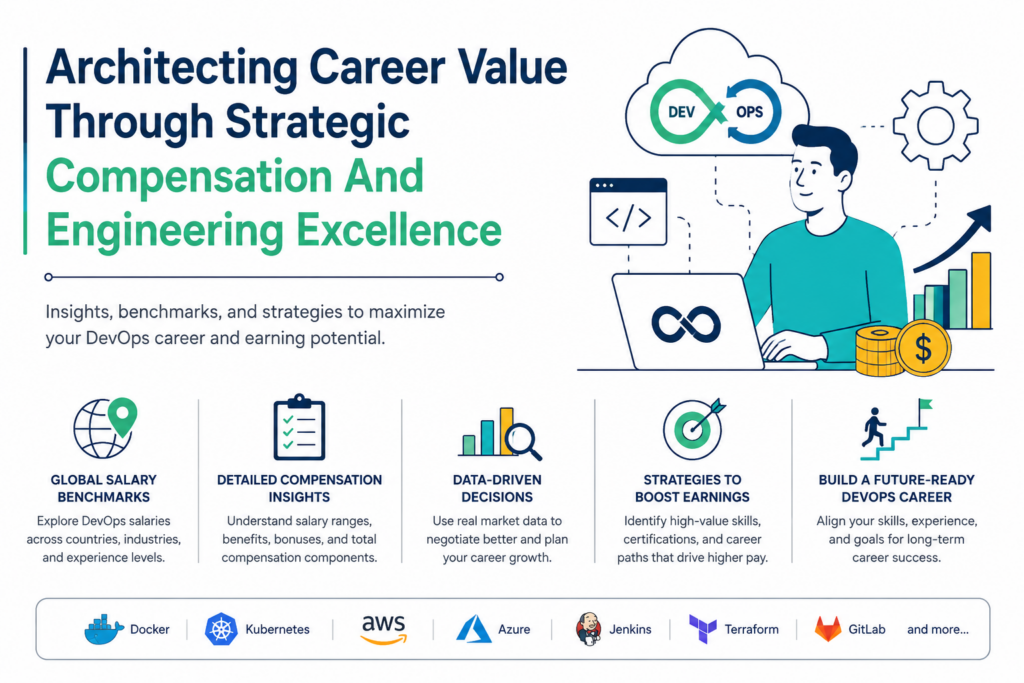
Engineers often face significant hurdles when they attempt to quantify their true marketplace value because generic regional surveys rarely account for individual technical contributions. Professionals frequently feel frustrated by ambiguous job grades and opaque internal financial policies. You can effectively cut through this noise by adopting a systematic Best DevOps Salary tracking model that prioritizes your specific career growth. This roadmap deconstructs the complex software economics landscape, transforming raw data into a precise strategy for maximizing your total earnings. By mastering organizational leveling, aligning your skills with high-demand niches, and executing calculated negotiations, you steer your professional trajectory toward the highest financial tier.
Understanding The Mechanics Of Technical Remuneration
Corporate compensation systems function as sophisticated engines that weigh global market trends against your demonstrated ability to solve complex infrastructure puzzles. Organizations invest heavily in infrastructure specialists to buy stability, scalability, and accelerated deployment cycles.
The Business Case For Infrastructure Investment
Enterprises authorize premium pay bands when they recognize that your specific engineering choices directly impact their bottom-line revenue. You do not simply write scripts or manage configuration files; you eliminate production bottlenecks and prevent costly downtime. A highly structured compensation package functions as a strategic partnership where the firm rewards you for maintaining seamless operational uptime.
Operational Market Segments
- Agile Product Organizations: These high-growth companies distribute massive equity stakes alongside base pay to incentivize rapid, scalable product development.
- Highly Regulated Enterprise Firms: These entities prioritize institutional reliability and offer predictable, bonus-heavy compensation structures that include extensive long-term benefits.
- Global Service Delivery Hubs: These firms rely on standardized rate cards where your base income correlates precisely with the billable value you provide to external clients.
Defining Your Value Propositions
Elite pay brackets exist for those who master the delicate balance between baseline technical proficiency and advanced selection criteria. While a degree or standard certification establishes your initial eligibility, your final compensation offer depends on your track record of leading critical system migrations, mentoring cross-functional teams, and implementing automated security gates that shield the business from external threats.
Identifying High-Leverage Career Attributes
You must audit your professional profile against the specific markers that hiring executives scrutinize during final offer negotiations.
Elevating Your Professional Footprint
Years on a resume serve as a poor proxy for value; instead, hiring leaders focus on the architectural complexity you have successfully navigated. Your seniority level dictates your capacity to influence organizational decision-making, which effectively establishes the maximum threshold for your compensation. Focus your career growth on owning systemic reliability rather than merely performing task-based ticket management.
Prioritizing Continuous Capability Validation
Academic credentials provide a helpful initial filter during your early career phases. However, the modern marketplace places a premium on practical, self-directed skill acquisition. Professionals who master cloud-native orchestration, automated compliance frameworks, and infrastructure-as-code patterns rapidly eclipse traditional degree holders in total earning capacity. Build a portfolio that demonstrates your ability to solve real-world problems.
Benchmarking Operational Impact
Top earners consistently tie their daily engineering work to measurable business outcomes. You justify your compensation increase when you present clear data showing reduced incident recovery times or lower cloud operational expenditures. Focus on these four pillars of high-value work:
- Resilience Engineering: Building self-healing systems that prevent automated failures from disrupting consumer access.
- Error Budget Management: Balancing the speed of feature innovation with the stability of the underlying infrastructure.
- Internal Platform Adoption: Crafting developer-facing portals that empower your colleagues to ship code faster and safer.
- Cloud Cost Optimization: Engineering cost-efficient infrastructure patterns that actively protect corporate gross margins.
Navigating The Compensation Negotiation Landscape
Securing your optimal financial offer requires more than just technical brilliance; it demands a structured, data-driven negotiation strategy.
- Perform Data Audits: Aggregate your performance metrics—such as deployment frequency gains and outage reduction percentages—to build a compelling narrative before you initiate salary discussions.
- Map Skill Premiums: Explicitly highlight your mastery of high-scarcity technical domains like secure CI/CD pipelines, policy-as-code automation, or distributed system observability.
- Research Structural Caps: Utilize peer-verified data platforms to understand the internal leveling structure of your target firm. This prevents you from asking for compensation that lies outside their pre-defined grade boundaries.
- Decline Early Ultimatums: Politely deflect requests for your “salary history” during initial screening calls. Redirect the conversation toward the comprehensive scope and business impact of the open role.
- Leverage Multiple Streams: Present verified alternative offers with total professionalism. Let the marketplace demand for your skills drive the final total compensation package.
Frequently Asked Questions
1. Does obtaining multiple public cloud certifications guarantee immediate salary increases?
Certifications validate your foundational knowledge but rarely trigger top-tier compensation alone. Employers prioritize specialists who demonstrate the ability to apply those skills to solve complex, real-world architectural challenges and mitigate business risks.
2. Why do platform engineering roles often command a higher premium than traditional infrastructure automation?
Platform engineering shifts the focus from managing individual components to building a sustainable product for internal developers. This high-leverage work directly multiplies the productivity of every team within the organization.
3. What is the most effective approach for overcoming a stagnant regional pay ceiling?
Seek out organizations that operate globally and offer remote-first employment contracts. These firms often provide compensation packages anchored to international capital standards rather than localized cost-of-living constraints.
4. How should I account for equity when evaluating a startup offer?
View equity as a high-risk, high-reward investment in the company’s future. Ensure your base salary provides sufficient stability for your current financial obligations while you allow the equity to function as a long-term wealth-building mechanism.
5. Does active participation in on-call rotations improve my standing?
Sophisticated engineering organizations treat on-call involvement as a critical professional service. This often serves as a key leverage point for negotiating higher base bands or securing supplemental availability premiums.
6. How much does a formal computer science degree influence long-term earning potential?
A degree helps you bypass initial automated application hurdles. However, your actual career advancement depends almost entirely on your ability to prove your technical leadership, system ownership, and complex problem-solving capabilities.
7. What distinguishes base pay from a comprehensive total compensation structure?
Base pay represents your guaranteed gross annual cash income. Total compensation adds non-cash components such as annual performance bonuses, retirement contribution matches, and corporate stock vesting plans.
8. When should I initiate a formal request for a compensation review?
Wait until the conclusion of the corporate performance appraisal cycle. Come prepared with concrete documentation that links your recent engineering contributions to specific corporate cost savings or infrastructure uptime improvements.
9. Why do financial technology firms frequently outbid other tech sectors for infrastructure talent?
Financial firms encounter extreme revenue losses and regulatory scrutiny during system downtime. They proactively pay high premiums for the specific talent required to defend their core transaction platforms.
10. Can exaggerating my technical proficiency during the interview process harm me later?
Avoid this at all costs. Overstating your capabilities often puts you in a position to handle architectural challenges you aren’t prepared to execute, which leads to performance struggles rather than career advancement.
Transforming Career Ambition Into Tangible Results
Professional advancement requires a calculated shift from being a task-oriented employee to acting as a strategic business partner. The most lucrative compensation packages favor those who view infrastructure as a vehicle for protecting revenue, reducing organizational friction, and building unmatched system reliability. By continuously expanding your technical expertise, documenting your real-world successes, and approaching negotiations with objective market data, you define your own financial limits. Use this strategic framework to guide your next career move and ensure your earnings correctly reflect the immense value you deliver to the modern digital enterprise.