Introduction
Fast-moving technology markets demand swift product iteration and flawless system stability from engineering departments. To achieve this operational velocity, modern software teams must rapidly transform how they configure servers and deploy code. Relying on outdated manual procedures creates devastating bottlenecks that stall business growth and frustrate talented developers. Fortunately, BestDevOps introduces a robust, practical framework that equips technical professionals with elite deployment capabilities. This resource alters your approach to automation, ensuring you can scale services with absolute precision.
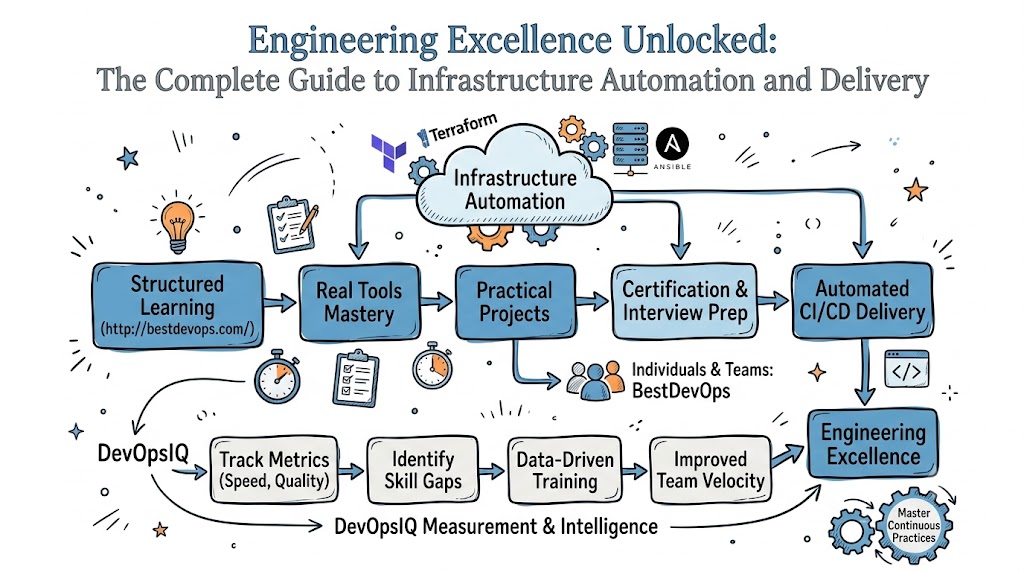
Acquiring senior-level technical execution requires an educational system that moves far beyond basic software installation tutorials. Software engineers need deep structural context to build fault-tolerant continuous delivery pipelines across multi-cloud environments. This foundational ecosystem demystifies complex system administration, converting abstract architectural theories into repeatable corporate successes. By prioritizing hands-on execution, it fundamentally upgrades how individuals learn engineering practices while simultaneously optimizing enterprise software delivery workflows.
Understanding the Platform Core
BestDevOps operates as a highly strategic educational ecosystem engineered specifically to cultivate elite infrastructure specialists. This specialized knowledge center simplifies advanced automation methodologies by arranging them into clear, actionable technical tracks. Instead of presenting isolated syntax guides, the curriculum concentrates entirely on real-world engineering environments and corporate production standards. Consequently, professionals acquire functional expertise that immediately enhances the reliability of their live software products.
In addition to driving individual technical mastery, the platform serves as an essential architectural blueprint for entire enterprise departments. It replaces chaotic, unverified learning attempts with a standardized training approach that unifies your entire technical workforce. By providing clear technical pathways, it guides engineers through the intricacies of container management and declarative cloud provisioning. As a result, technical teams confidently navigate the shifting requirements of modern software development.
Driving Industry Demand for Quality Ecosystems
The contemporary software ecosystem shifts at an incredible velocity, leaving many traditional engineering squads lagging behind modern standards. Without centralized guidance, teams routinely deploy unstable code changes because they lack a unified grasp of cloud engineering. Fragmented online documentation and academic textbooks fail to address the high-pressure needs of live enterprise systems. Therefore, the industry urgently requires an integrated solution that blends modern engineering theory with direct operational application.
Furthermore, corporate leadership frequently squanders massive training budgets on disjointed video packages that yield zero measurable improvement. Disorganized learning methods cause separate developers to implement conflicting configuration tactics, which introduces systemic vulnerabilities into the deployment pipeline. Platforms like this eliminate these costly errors by establishing a solid baseline of engineering performance across the company. Ultimately, this structured methodology converts erratic software deployments into highly predictable, secure, and rapid release cycles.
Mastering Systems Architecture Systematically
Aspiring operations professionals often stumble because they study random software utilities without analyzing the complete application delivery cycle. Attempting to master complex orchestrators before understanding core operating system mechanics leads to total cognitive overload. This platform eliminates this educational barrier by designing a chronological learning matrix that perfectly reflects real production workflows. Thus, you systematically advance from basic command-line configuration to intricate microservices orchestration.
Adhering to a calculated educational sequence protects you from the confusion that typically derails self-taught cloud professionals. You will thoroughly master version control workflows and system networking parameters before attempting to configure massive container clusters. Transitioning smoothly through these established educational milestones guarantees that you never encounter missing links in your operational knowledge. Consequently, you forge a comprehensive understanding of how software moves from a local workstation into a global production cloud.
Placing Utilities in the Right Lifecycle Stage
Achieving deployment fluidity requires knowing exactly which utility solves a specific bottleneck within your delivery pipeline. However, many practitioners focus exclusively on tool documentation while ignoring the larger architectural design strategy. This ecosystem spotlights the precise location and purpose of every single technology, training you to select tools based on specific corporate performance demands. By learning these strategic boundaries, you evaluate systems holistically instead of merely memorizing temporary terminal commands.
Analyzing the specific integration points for source control managers, build servers, and telemetry collectors builds immense architectural foresight. You observe exactly how a single code modification triggers container compilation, passes automated security audits, and provisions live cloud instances. This specific contextual understanding elevates you from a script technician to a principal systems architect. Therefore, you confidently engineer resilient automation pipelines that protect enterprise systems from unexpected downtime during deployment windows.
Conquering Professional Interviews and Credentials
Securing a premium engineering position or passing rigorous cloud infrastructure examinations requires absolute technical clarity and rapid problem-solving skills. Fortunately, this deep-dive curriculum aligns its technical content with the core domains tested by elite global technology corporations. It breaks down complex architectural patterns and real-world infrastructure scenarios that interview panels use to evaluate high-tier candidates. This targeted preparation gives you an immediate competitive advantage in a crowded technical job market.
Beyond technical precision, the platform teaches you to communicate your architectural decisions using sophisticated professional terminology. You will learn to articulate the precise business logic behind your networking models, storage choices, and security compliance policies. This advanced level of communication signals true leadership potential to engineering directors during intense screening processes. Consequently, you enter any interview room or testing center knowing you possess the elite skills required to succeed.
Forging Expertise via Hands-On Exercises
Reading static technical articles cannot prepare you for the sudden infrastructure failures that happen inside actual corporate data centers. For this reason, the platform builds its entire educational philosophy around constructing live, production-grade automation projects. You will actively provision cloud-native environments, build self-healing monitoring stacks, and debug complex cluster networking issues. This experiential learning method ensures that you forge your professional capabilities through genuine execution and rigorous system troubleshooting.
Completing these comprehensive practical labs helps you compile a sophisticated engineering portfolio that demonstrates your true capability to prospective employers. You gain invaluable experience handling typical infrastructure errors, such as misconfigured identity permissions, routing blocks, and broken build scripts. Overcoming these realistic challenges builds the precise muscle memory required to manage production systems during high-traffic emergencies. Ultimately, you develop the supreme operational confidence needed to manage complex software applications flawlessly.
Essential Technical Verticals in Modern Operations
To establish true dominance in the automation space, you must master multiple overlapping technological ecosystems. This platform provides intensive coverage across every major operational vertical to ensure your complete professional readiness.
| Operational Focus | Essential Tools & Concepts | Tangible Skill Result |
|---|---|---|
| Code Integration | Git, GitHub, Jenkins, GitHub Actions | Automate code compilation and testing loops cleanly. |
| Microservices Isolation | Docker, Containerd, Image Security | Package enterprise software into secure, portable units. |
| Cluster Orchestration | Kubernetes, Helm, Service Meshes | Deploy and scale distributed systems effortlessly. |
| Infrastructure Code | Terraform, OpenTofu, Ansible | Generate complete data centers via declarative scripts. |
| System Telemetry | Prometheus, Grafana, OpenTelemetry | Maintain total visibility over application and cluster health. |
Integrating Analytical Capability via DevOpsIQ
Individual knowledge forms a fantastic foundation, but growing enterprises must also track the collective execution capacity of their teams. This specific organizational need introduces DevOpsIQ into your workflow as a cutting-edge engineering intelligence system. It operates as a continuous diagnostic scanner that measures your team’s operational maturity and technical delivery speeds. By embedding this analytical layer, engineering directors instantly identify hidden skill deficiencies across their software development units.
Shifting your organization away from blind training initiatives requires objective, empirical metrics that remove personal bias from performance reviews. DevOpsIQ serves as the perfect evaluation partner to the deep educational tracks found on the core platform. It allows engineering leaders to monitor exactly how effectively their staff incorporates automated methodologies into daily development cycles. Therefore, it successfully transforms abstract training concepts into highly visible, quantified business capabilities.
Key Metrics Tracked by the Diagnostic Matrix
DevOpsIQ utilizes precise measurement parameters to evaluate the complete operational efficiency of your technical staff.
- Delivery Pipeline Velocity: This metric tracks the speed and safety of code moving from initial development branches to live user environments.
- Infrastructure Script Quality: The scanner reviews code modularity, security parameters, and readability within your automated configuration files.
- Service Restoration Speed: This parameter measures how rapidly your engineers isolate, debug, and fix unexpected production outages.
- Cloud Resource Efficiency: The assessment engine determines how effectively your team configures instances to eliminate waste.
- System Automation Ratio: This ratio monitors what percentage of your deployment pipeline runs autonomously without human intervention.
The Power of Timeline Tracking in Systems Intelligence
Evaluating an engineering team’s capabilities at one isolated moment provides an inaccurate view of their true trajectory. Instead, technical leaders must monitor operational capability across continuous, historical timelines to detect subtle behavioral patterns and growth trends. Tracking telemetry over distinct timelines tells management whether their optimization efforts are producing permanent cultural improvements. This long-term historical data stops leadership from making erratic changes based on temporary performance fluctuations.
Furthermore, analyzing timeline telemetry allows management to connect specific learning paths directly to concrete velocity gains in production. You can easily watch your team’s deployment frequency rise and error rates plummet following a focused training push. This chronological context gives you the hard evidence required to justify engineering enablement budgets to corporate stakeholders. Ultimately, tracking timelines converts chaotic development environments into highly predictable, continuously optimizing software delivery channels.
Harmonizing Individual Learning and Corporate Diagnostics
The true power of this ecosystem reveals itself when you combine individual technical instruction with corporate team diagnostics. Specifically, the learning platform delivers the deep operational knowledge that an individual engineer needs to conquer daily tasks. At the same time, the intelligence layer grants leadership the macro-level view required to direct the company’s technology strategy. Together, these tools form an unbroken feedback loop of targeted training and empirical validation.
“True organizational velocity occurs when individual technical competence aligns perfectly with measurable corporate delivery objectives.”
When a team assessment highlights a critical vulnerability in infrastructure automation, the system immediately unlocks the exact corresponding training pathways. As your developers master those specific practical projects, the diagnostic engine validates their upgraded skills during the next evaluation scan. This loop completely eliminates irrelevant training sessions that fail to address immediate business challenges. Consequently, both individual professionals and major enterprises scale their capabilities simultaneously, securing superior execution across the board.
Empowering Distinct Technology Roles
Different positions across the modern corporate landscape require distinct operational skill sets to fulfill their specific engineering mandates.
- Application Developers: Discover how to write container-ready code and integrate changes directly into automated validation pipelines.
- Systems Administrators: Transition away from manual server maintenance by adopting declarative infrastructure-as-code engineering principles.
- Site Reliability Engineers: Master deep telemetry collection, automated infrastructure recovery, and complex cluster performance tuning.
- Release Directors: Acquire comprehensive oversight of deployment pipelines to guarantee stress-free, predictable software launches.
- Infrastructure Architects: Gain the specialized expertise needed to build highly secure, fault-tolerant, and cost-optimized global cloud structures.
Maximizing Developer Output and Efficiency
In the modern business environment, developer productivity directly dictates a corporation’s market survival and financial success. When engineers encounter broken environments, manual verification delays, and fragile deployment tools, their creative velocity vanishes completely. By embedding a standardized, automated operational philosophy, this platform actively sweeps away those frustrating operational roadblocks. This directly results in highly motivated development teams who spend their energy building features rather than wrestling with infrastructure.
Furthermore, boosting productivity via master-level automation drastically shortens the time required to bring new features to market. Code adjustments cruise safely through automated validation gates and launch into production with zero manual overhead. This incredible speed allows businesses to seize new market opportunities instantly and leave slower competitors behind. Investing in structured technical education ultimately secures your organization’s core market agility and competitive edge.
Transforming a Struggling Development Workflow
Imagine a scaling enterprise software provider that suffers from constant application outages during its weekly product deployment cycles. The engineering VP utilizes the diagnostic framework to run a comprehensive capability assessment across the entire engineering division. The resulting analytical report reveals a glaring weakness: the development team lacks a solid understanding of Kubernetes zero-downtime deployment strategies. This specific knowledge deficit causes the persistent service interruptions that damage customer trust.
To resolve this issue, the VP deploys the specialized container orchestration track to every engineer on the team. The developers master the structured lessons and build rolling-update pipelines inside isolated, hands-on lab environments. Following completion, the intelligence platform rescans the department and records a massive improvement in infrastructure capability scores. The very next software release finishes flawlessly without a single second of user disruption, proving the immense power of integrated learning.
Core Separators from Traditional Training
Most online educational platforms offer nothing more than a random assortment of shallow video tutorials that become obsolete instantly. In stark contrast, this platform maintains a meticulously organized, continuously updated curriculum crafted by genuine enterprise field veterans. It prioritizes everlasting architectural concepts and automation philosophies over temporary command-line syntax or superficial tool gimmicks. This deep foundational focus ensures that the skills you acquire remain highly valuable across your entire professional lifespan.
Additionally, combining individual technical training with corporate analytical telemetry creates a completely unique solution in the current marketplace. This ecosystem treats professional growth as a verifiable business metric rather than a passive, unmeasured human resources checklist item. The absolute focus on live project engineering means you exit the platform with functional, battle-tested skills ready for production environments. This unwavering dedication to real-world execution cements the platform as the premier choice for modern engineering enablement.
Answers to Crucial Operational Queries
- How does BestDevOps accelerate my professional career growth?It delivers structured paths that teach you cloud architecture, continuous deployment pipelines, and advanced automation frameworks from the ground up. Mastering these high-value disciplines qualifies you for premium senior engineering positions, command higher salaries, and secure elite corporate roles.
- Can absolute beginners find success using this educational material?Yes, the curriculum purposefully begins with foundational engineering concepts like Linux system basics and Git version control before introducing advanced tools. This logical educational ladder ensures that newcomers build a solid technical foundation before tackling complex cloud systems.
- What specific value does DevOpsIQ offer to engineering leadership?It equips management teams with objective, data-driven insights into their workforce’s technical execution capabilities and pipeline delivery speeds. This helps leaders spot operational weaknesses, monitor skill trends across timelines, and maximize the return on corporate training investments.
- Do learners work with authentic, production-grade lab assignments?Absolutely, the ecosystem emphasizes real-world execution by requiring you to construct live, production-grade infrastructure environments from scratch. These practical exercises accurately mimic enterprise engineering bottlenecks, ensuring you build genuine troubleshooting experience that translates directly to your job.
- Will these training tracks prepare me for major cloud credentials?Yes, the deep-dive modules map directly to the core operational competencies tested in premium industry cloud and automation certifications. It infuses you with the comprehensive theoretical understanding and hands-on capability required to pass these rigorous technical exams easily.
- Which enterprise utilities receive the most focus in the curriculum?The training program covers essential enterprise solutions including Git, Jenkins, Docker, Kubernetes, Terraform, Ansible, Prometheus, and Grafana. Crucially, the lessons focus on how to seamlessly weld these separate components into a unified, automated delivery system.
- Why should engineering managers track capabilities across historical timelines?Tracking metrics over timelines allows you to confirm that your engineering velocity is improving and that your staff is retaining new skills. This long-term context gives leadership the empirical data needed to back up strategic choices and prove business optimization.
- How frequently do creators update the platform’s core content?The platform updates its instructional courses continuously to match evolving industry trends, security regulations, and modern cloud deployment frameworks. This persistent maintenance ensures that you spend your valuable time studying cutting-edge engineering practices.
- Can companies customize these educational tracks for specific development squads?By deploying the diagnostic framework alongside the educational courses, managers can pinpoint the exact fields where their engineers struggle. This clarity allows organizations to assign the precise learning modules that remove their current deployment blockages.
- Why does an active voice improve the overall educational process?Using an active, mentor-driven communication style makes dense infrastructural concepts far more engaging and easier to digest for students. Eliminating dry, passive academic prose keeps your focus entirely on absorbing practical system delivery techniques.
Closing Considerations
Building an automated, resilient deployment ecosystem represents a foundational requirement for any enterprise seeking long-term market relevance. Professionals who master advanced infrastructure engineering and continuous deployment pipelines will always secure the market’s most lucrative technical opportunities. This platform delivers the precise educational roadmap, practical portfolio projects, and corporate analytical telemetry required to lead this automation revolution. By unifying technical training with real-world execution, it establishes a premium benchmark for modern engineering advancement.
As you plan your next professional steps, remember that operational excellence requires continuous measurement and structured capability development. Whether you want to supercharge your individual engineering career or revolutionize an entire enterprise technology department, this ecosystem provides the path. Elevate your technical standard today by engaging with an environment built for authentic production performance. Ultimately, embracing these advanced infrastructure principles will redefine how you construct, deploy, and safeguard enterprise software systems for the rest of your career.