Introduction
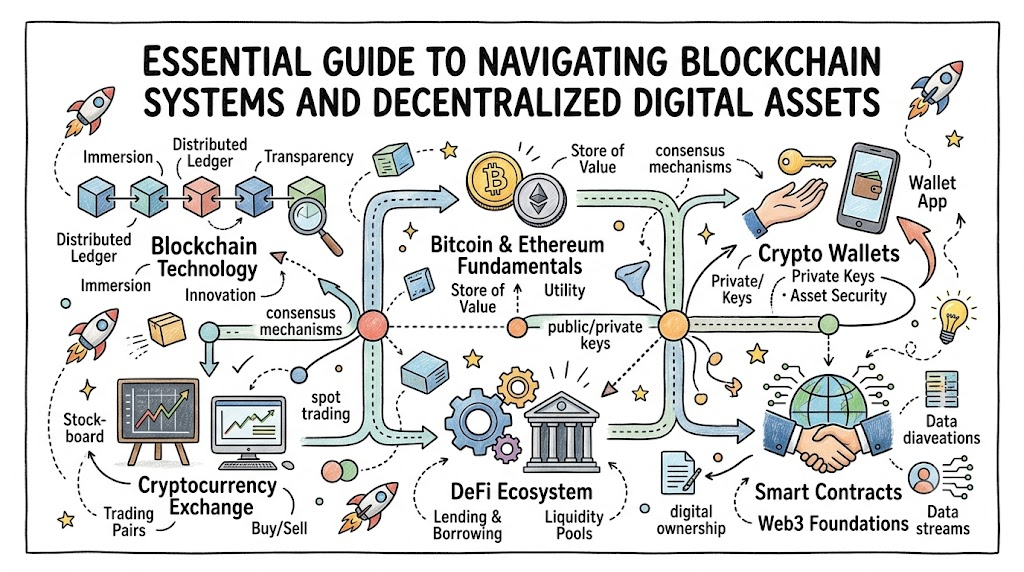
Decentralized software networks reshape international financial architecture by placing complete transactional control directly into individual hands. Participants bypass institutional custodians to manage, transfer, and verify digital assets across open public networks without middleman interference.
Stepping into this expansive ecosystem without structured educational guidance introduces immediate operational hazards. Dense computational vocabulary, unfamiliar storage tools, and mathematical validation consensus mechanisms quickly overwhelm emerging participants.
CryptoBlockCoins functions as an accessible, independent educational directory that demystifies digital currencies, cryptographic wallets, and digital trading. Readers acquire verified practical competence, enabling them to navigate emerging decentralized networks securely and confidently.
Understanding Cryptocurrency
Digital tokens transmit verifiable purchasing power across a borderless, peer-to-peer computer network without central authorities. No sovereign central bank, commercial banking cartel, or private corporate board dictates operational rules or transaction ordering.
Instead, geographically separated nodes validate account balances using mathematical algorithms rather than blind institutional trust. The underlying protocol logs every confirmed transfer into an append-only, public digital record that prevents retroactive changes.
Newcomers exploring cryptocurrency for beginners learn how cryptographic rules ensure supply scarcity and personal financial independence. This fundamental clarity allows participants to evaluate and utilize emerging digital monetary systems intelligently.
How Blockchain Technology Works
A distributed network bundles incoming transactional records into consecutive, chronologically ordered data blocks. Every confirmed block calculates a unique cryptographic hash and references the preceding block’s hash.
Consequently, altering a historical entry forces an attacker to recalculate every subsequent cryptographic hash across thousands of independent nodes simultaneously. This immense mathematical hurdle creates absolute transactional immutability while guaranteeing continuous data transparency.
- Independent Verification: Global network nodes confirm incoming data batches without delegating authority to a central entity.
- Cryptographic Bonding: Mathematical hashing mechanisms chain subsequent data records into an irreversible historical sequence.
- Distributed Synchronization: Algorithmic rules guarantee absolute data uniformity across every active computer node.
Bitcoin for Beginners
Satoshi Nakamoto introduced Bitcoin as an autonomous peer-to-peer electronic payment system that functions without custodial banks. The underlying codebase permanently restricts total token issuance to twenty-one million units.
This hard mathematical limit safeguards purchasing power against systematic monetary debasement over extended periods. Furthermore, specialized mining machines consume computational power to validate transactions, effectively preventing double-spending exploits across the network.
Mastering Bitcoin for beginners provides the foundational technical context needed to evaluate alternative blockchain networks. Readers uncover how decentralized game-theory incentives successfully secure an autonomous global settlement layer.
What Is a Crypto Wallet?
A crypto wallet stores cryptographic keys that authorize on-chain transfers rather than holding physical tokens. Your public key generates addresses for inbound payments, while your confidential private key authorizes outbound ledger transactions.
Anyone who steals your secret seed phrase gains unrestricted control over your stored wealth. Establishing disciplined, sovereign custody habits represents the most critical baseline duty for every market participant.
| System Model | Physical Storage Format | Network Connectivity | Security Assessment |
| Software Platform | Mobile app or desktop program | Continuous web access | Baseline; vulnerable to operating system malware |
| Hardware Enclave | Dedicated offline chip device | Air-gapped isolation | Maximum; neutralizes online intrusion vectors |
| Physical Archive | Engraved steel plate or paper card | Zero electrical connection | Uncompromising immunity against digital attacks |
Crypto Security Every Beginner Should Understand
Proactive defensive measures preserve your assets far more reliably than stressful recovery attempts after a compromise. Cybercriminals regularly deploy fraudulent interface mirrors, malicious smart contract authorizations, and deceptive social engineering campaigns.
Applying strict crypto security practices preserves your savings across diverse threat vectors. Users must scrutinize destination alphanumeric characters, activate hardware-based verification keys, and store recovery seed phrases on resilient offline materials.
- Offline Phrase Storage: Transcribe secret seed phrases onto durable, non-digital surfaces while avoiding cloud storage.
- Direct Address Bookmarks: Launch operational dashboards exclusively through saved browser bookmarks to bypass search spoofing.
- Hardware Authentication: Secure personal accounts with physical authentication dongles instead of easily hijacked SMS codes.
Crypto Trading for Beginners
Sustained trading success demands emotional discipline, systematic capital allocation, and uncompromising risk management. Novices starting crypto trading for beginners must prioritize capital defense over erratic speculative moonshots.
Beginners should trade simple spot pairs rather than deploying high-risk leverage products. Additionally, placing automatic stop-loss orders shields your portfolio balance against abrupt market contractions.
- Spot Purchases: Acquire direct asset ownership without exposing your balance to sudden margin liquidation.
- Preset Limit Orders: Execute trading positions with limit orders to avoid severe price slippage during volatile moves.
- Balanced Allocation: Distribute trading capital across multiple positions to avoid catastrophic portfolio drawdowns.
How a Cryptocurrency Exchange Works
A trading marketplace matches prospective buyers with active sellers through dynamic real-time order books. Centralized services handle client balances internally, maintain abundant market liquidity, and conduct standard compliance reviews.
Conversely, decentralized protocols enable direct peer-to-peer swaps directly from non-custodial wallets via smart contracts. Traders must weigh the custodial convenience of managed platforms against the sovereign control of non-custodial exchanges.
| Exchange Framework | Custodial Responsibility | Identity Verification | Optimal Audience |
| Centralized System | Platform controls private keys | Mandatory compliance documentation | Beginners purchasing assets with fiat currency |
| Decentralized Protocol | Trader holds private keys | Zero personal documentation | Active users swapping native on-chain tokens |
Ethereum and Smart Contracts
Bitcoin demonstrated the resilience of digital currency, but the Ethereum blockchain transformed distributed ledgers into universal computing platforms. The network executes self-enforcing code sequences via the Ethereum Virtual Machine.
These automated contracts resolve transactions instantaneously once incoming conditions satisfy underlying algorithmic rules. Consequently, global software developers deploy non-custodial lending pools, asset tokenization tools, and decentralized applications without administrative gatekeepers.
Studying this programmable computing landscape broadens your perspective beyond simple asset transfers. You observe how automated software systems orchestrate complex multi-party digital transactions securely.
Exploring Decentralized Finance
Decentralized finance rebuilds conventional banking instruments using transparent, self-executing software programs. Market users interact with automated liquidity reserves, borrow against digital collateral, and generate network yield directly from personal wallets.
Algorithmic logic sets collateral limits and variable interest rates openly on public ledgers. Nevertheless, capital providers must continuously analyze smart contract code vulnerabilities, systemic volatility, and economic risks.
- Automated Liquidity Pools: Mathematical algorithms determine fair asset pricing without traditional order bookmakers.
- Overcollateralized Credit: Users deposit surplus tokens to borrow alternative assets without passing intrusive credit checks.
- Consensus Staking: Validators pledge digital tokens to secure transaction validation in exchange for native protocol rewards.
Web3 for Beginners
The fundamental architectural evolution of the internet restores data ownership to everyday individuals. Exploring Web3 for beginners shows how decentralized architectures restore sovereign user control across digital platforms.
Instead of authenticating through centralized corporate logins, users connect to web applications using sovereign cryptographic keys. Furthermore, decentralized community structures distribute voting power directly to token holders for ongoing governance.
- Informational Stage: Centralized web servers serve static educational pages to passive internet visitors.
- Interactive Stage: Corporate web monopolies collect private behavioural data from independent content creators.
- Ownership Stage: Open cryptographic ledgers verify personal property, sovereign identities, and private data.
A Practical Learning Path for New Crypto Users
Developing operational confidence requires deliberate, hands-on practice rather than reckless financial speculation. Master fundamental ledger mechanics thoroughly before committing any financial capital to live networks.
Install an open-source non-custodial wallet and practice sending microscopic test transfers across open network explorers. This controlled training establishes crucial muscle memory while insulating your primary savings from expensive operational errors.
- Internalize Foundational Principles: Study consensus mechanics, digital signature signing, and ledger propagation thoroughly.
- Install Safe Software: Configure a verified non-custodial wallet and preserve your seed phrase offline.
- Dispatch Test Transfers: Send small transactional fractions to personal addresses to observe block explorer records firsthand.
Common Mistakes to Avoid
Inexperienced enthusiasts routinely surrender capital through careless security oversights, unverified promotions, or impulsive emotional trades. Storing core savings on commercial exchanges leaves your balance vulnerable to platform insolvency or frozen accounts.
Similarly, following sponsored promotional banners or responding to unverified private messages exposes your credentials to theft. Always double-check contract hashes, review public code audit reports, and reject any platform that promises guaranteed returns.
- Emotional Chasing: Buying extended price rallies without evaluating real liquidity or underlying technical strength.
- Digital Phrase Storage: Saving recovery seed phrases inside web applications, screenshots, or unencrypted text documents.
- Unrestricted Authorizations: Granting unlimited asset spending permissions to unverified decentralized software applications.
How CryptoBlockCoins Can Help
Navigating modern cryptographic systems requires clear, structured educational materials designed for practical application. CryptoBlockCoins provides deep foundational walkthroughs, structural network dissections, and verified defense methodologies without promotional distortions.
Our educational guides translate complex cryptographic mechanisms into manageable, actionable steps. By prioritizing foundational architecture, personal asset protection, and risk awareness, CryptoBlockCoins prepares you to engage with decentralized systems safely and successfully.
Frequently Asked Questions About CryptoBlockCoins
- What primary subjects does CryptoBlockCoins examine?
CryptoBlockCoins clarifies distributed networks, non-custodial storage practices, defense protocols, spot trading workflows, and automated decentralized protocols through clear educational modules.
- Does the platform require paid memberships for tutorials?
Every educational article, security guide, and network walkthrough remains completely accessible without paid memberships or mandatory paywalls.
- Can individuals without technical training follow the curriculum?
Our writers explain complicated computational concepts with clear, direct explanations designed specifically for absolute beginners.
- Will readers find speculative token recommendations on the site?
CryptoBlockCoins avoids financial advice, speculative signals, or token endorsements, focusing exclusively on operational mechanics and security practices.
- How does the platform outline wallet safety?
The resource highlights physical key preservation, offline hardware solutions, address verification habits, and modern phishing defense strategies.
- Does CryptoBlockCoins offer automated market bots?
Our materials discourage automated speculative algorithms, focusing instead on disciplined risk management, manual limit orders, and sensible capital allocation.
- How frequently do contributors refresh educational tracks?
Technical contributors continuously refresh learning tracks, security notices, and protocol reviews to reflect the latest consensus and network developments.
- Can readers learn decentralized finance protocols on the site?
Detailed tutorials explain smart contract execution, collateralized lending, automated market makers, and protocol safety considerations.
- Does CryptoBlockCoins run a custodial asset exchange?
The platform functions strictly as an educational publisher and never processes user trades, stores customer balances, or provides financial brokerage services.
- Why should beginners study technical fundamentals before investing?
Building structural knowledge protects users from devastating operational mistakes, phishing traps, and irreversible transaction errors on live networks.
Final Thoughts
Sovereign asset ownership marks a monumental leap in human economic coordination by removing administrative gatekeepers through verifiable mathematics. Capitalizing on this open frontier requires consistent study, disciplined actions, and strict defensive habits.
Rather than pursuing speculative trends or unverified claims, analyze the structural mechanics that secure decentralized distributed networks. Leaning on objective educational platforms like CryptoBlockCoins grants you the practical competence required to operate safely across the digital frontier.