Modern enterprises operate in an era where application downtime directly translates to severe revenue loss and damaged brand reputation. Consequently, engineering organizations are moving away from reactive IT support models and adopting proactive engineering frameworks that ensure high availability. Transitioning into this high-impact domain requires structured training and proven mastery from a specialized educational platform like Sreschool. A recognized credential provides engineers with the architectural knowledge needed to transform unstable cloud platforms into self-healing environments.
Furthermore, DevOps practitioners and cloud engineers often encounter bottlenecks when managing complex distributed microservices and continuous release pipelines. Pursuing a specialized qualification helps you bridge the gap between rapid software delivery and uncompromising system reliability. You learn to view operational friction through the lens of programmatic software development rather than repetitive manual interventions. Therefore, committing to structured validation empowers you to advance your engineering career and lead enterprise-wide reliability initiatives.
Defining the Core Architecture of Modern Systems Reliability
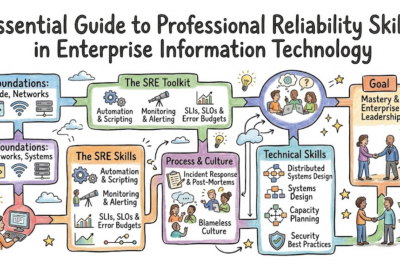
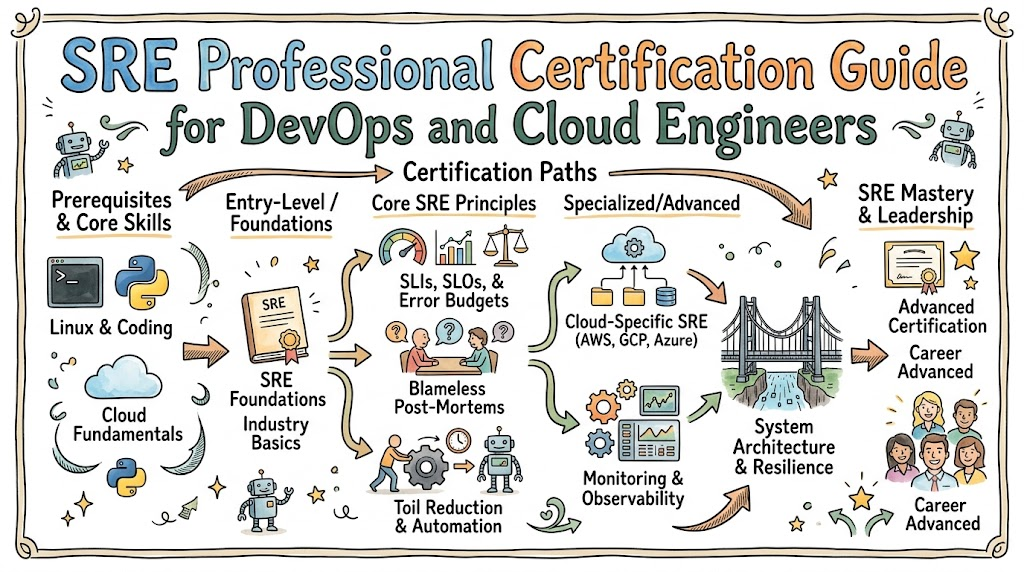
Site Reliability Engineering treats operations as a software problem, utilizing programmatic frameworks to govern infrastructure uptime and performance. When software systems expand across multi-cloud environments, manual configuration quickly becomes unfeasible and error-prone. Certified professionals master the discipline of building resilient distributed architectures that survive hardware crashes, network partitions, and unpredictable traffic surges. Consequently, organizations prioritize hiring credentialed engineers who can guarantee robust production stability.
Additionally, this discipline establishes a unified language between development teams rushing new features and operations teams defending stability. By implementing objective measurements and automated testing within continuous delivery pipelines, engineers eliminate traditional organizational friction. As a result, product teams safely accelerate deployment velocity without compromising customer satisfaction. Ultimately, this strategic discipline creates resilient digital ecosystems capable of continuous autonomous operation.
The Strategic Synergy Between Cloud Operations and Reliability
Cloud engineering provides scalable infrastructure resources, while reliability practices establish the algorithmic guardrails required to manage those resources efficiently. DevOps practitioners frequently discover that merely automating continuous integration pipelines is insufficient without continuous operational observability. Reliability certification equips engineers with deep insights into distributed tracing, dynamic autoscaling, and chaos testing methodologies. Consequently, your daily work transforms from basic cloud administration into sophisticated, resilient platform design.
Moreover, integrating these methodologies into cloud environments empowers teams to design highly cost-efficient architectures without sacrificing performance. Certified practitioners know how to optimize compute allocations, tune database query performance, and set up multi-region failover clusters. This technical mastery prevents catastrophic outages while reducing unnecessary infrastructure expenditures across enterprise environments. Therefore, mastering these dual disciplines turns you into an invaluable strategic asset for modern engineering organizations.
Eliminating Manual Friction Through Programmatic Infrastructure Automation
Repetitive operational tasks—often referred to as toil—drain engineering productivity and introduce severe risks of human error into production systems. Reliability programs train engineers to systematically identify repetitive maintenance tasks and eliminate them using declarative configuration scripts and autonomous daemons. When you replace manual server maintenance with Infrastructure as Code and automated reconciliation loops, your systems maintain consistent baseline states. Consequently, engineering teams spend significantly more time developing innovative product features.
Furthermore, automated systems deliver rapid, reliable error recovery that easily surpasses manual troubleshooting capabilities. Programmatic mechanisms can instantly detect failing compute instances, drain incoming network traffic, and spin up healthy replacements in seconds. By mastering the construction of these self-healing deployment pipelines, you safeguard your organization against costly service degradations. Ultimately, continuous automation establishes a dependable operational backbone that scales effortlessly with business growth.
Driving Measurable Business Outcomes Through Resilient Engineering
Technical stability serves as the absolute foundation for modern customer retention and business profitability. When an enterprise application experiences prolonged downtime, digital commerce stalls, transaction flows stop, and customer trust evaporates. Certified reliability specialists directly protect corporate profitability by constructing high-availability architectures that keep digital services online continuously. Executive leadership teams actively reward technical professionals who can translate complex infrastructure reliability into measurable financial security.
Beyond protecting revenue streams, robust reliability practices accelerate organizational innovation and time-to-market for digital products. When engineering teams trust that automated safety nets and rapid rollback mechanisms are active, they deploy code updates with greater confidence. This operational security enables businesses to outpace market competitors through frequent, low-risk software iterations. As a direct result, credentialed professionals occupy influential advisory roles that shape long-term technology roadmaps.
Key Operational Concepts You Must Know
Service Level Objectives and Service Level Indicators
Establishing quantitative operational targets is essential for managing production infrastructure objectively. A Service Level Indicator represents a precise, quantifiable metric tracking real-time service health, such as request latency or error percentages. In contrast, a Service Level Objective defines the target threshold that the indicator must satisfy over a rolling time window. Certified specialists use these metrics to determine when software systems operate healthily and when they require immediate stabilization.
+-------------------------------------------------------------------------+
|                  SERVICE LEVEL FRAMEWORK ARCHITECTURE                   |
+-------------------------------------------------------------------------+
|                                                                         |
|  [ SLI: Real-Time Measurement ]                                         |
|  --> Computes current latency, uptime, and request error percentages.   |
|         │                                                               |
|         ▼                                                               |
|  [ SLO: Operational Target ]                                            |
|  --> Sets internal engineering goal (e.g., 99.9% successful requests).   |
|         │                                                               |
|         ▼                                                               |
|  [ Error Budget: Innovation Allowance ]                                 |
|  --> 100% minus SLO (e.g., 0.1% tolerated downtime for new releases).   |
|         │                                                               |
|         ▼                                                               |
|  [ SLA: Business Agreement ]                                            |
|  --> Defines contractual uptime commitments and commercial penalties.   |
|                                                                         |
+-------------------------------------------------------------------------+
Error Budgets and Risk Toleration Strategies
An error budget represents the acceptable margin of unreliability that a digital service can experience without violating customer expectations. For instance, an objective targeting ninety-nine point nine percent availability provides an error budget of zero point one percent downtime. Product developers can burn this budget to release experimental features rapidly until the allowance is exhausted. When the budget is depleted, all engineering efforts freeze new feature releases to focus exclusively on infrastructure resilience.
Blameless Post-Mortems and Root Cause Analysis
When critical production incidents inevitably strike, high-performing organizations avoid pointing fingers at individual engineers. Blameless post-mortem investigations focus on identifying systemic vulnerabilities, missing automation, and procedural gaps that allowed the outage to manifest. By examining contributing factors through structured root-cause analysis, teams construct preventative safeguards that permanently eliminate entire failure classes. This collaborative culture transforms stressful production outages into constructive architectural enhancements.
Toil Reduction and Strategic Automation
Toil encompasses operational tasks that are manual, repetitive, automatable, and devoid of permanent enduring engineering value. Examples include manually provisioning virtual servers, resetting expired database tokens, and restarting hung application processes. Reliability frameworks demand that engineers limit toil to less than fifty percent of their working time. By dedicating remaining engineering hours to developing automated remediation workflows, teams create scalable systems that operate smoothly without constant human supervision.
Platform Implementation vs. Culture — What’s the Real Difference?
| Evaluation Dimension | Platform Implementation Focus | Cultural Integration Focus |
|---|---|---|
| Primary Objective | Deploying observability platforms, container clusters, and automated continuous delivery pipelines. | Cultivating shared operational accountability, psychological safety, and blameless analysis. |
| System Governance | Setting up automated threshold alerting, monitoring daemons, and programmatic scaling policies. | Balancing release speed against reliability using negotiated error budget agreements. |
| Incident Management | Triggering pager notifications, routing escalation paths, and applying rollback scripts. | Conducting blameless post-mortems and learning collaboratively from complex failure scenarios. |
| Tooling Strategy | Configuring distributed tracing systems, logging stacks, and Infrastructure as Code modules. | Encouraging cross-functional alignment between software developers and platform maintainers. |
| Failure Resolution | Applying automated system repairs and executing declarative environment updates. | Improving engineering workflows, documentation clarity, and architectural standards. |
Real-World Use Cases of Modern Operations
+-------------------------------------------------------------------------+
|                  ENTERPRISE PRODUCTION DEPLOYMENT MODELS                |
+-------------------------------------------------------------------------+
|                                                                         |
|  [ Global E-Commerce Architecture ]                                     |
|  * Auto-Scaling Cloud Clusters   ──> Manages traffic during flash sales |
|  * Multi-Region Read Replicas    ──> Guarantees low latency checkout    |
|  * Circuit-Breaker Integration   ──> Isolates payment gateway drops     |
|                                                                         |
|  [ Digital Financial Banking ]                                          |
|  * Active-Active Replication     ──> Zero data loss across data hubs    |
|  * Continuous Compliance Scans   ──> Enforces real-time access security |
|  * Automated Chaos Injection     ──> Validates continuous resilience    |
|                                                                         |
|  [ Distributed Healthcare Systems ]                                     |
|  * Blue-Green Deployments        ──> Delivers zero-downtime maintenance |
|  * Immutable System Auditing     ──> Safeguards sensitive health logs   |
|  * Predictive Anomaly Detection  ──> Prevents memory degradation        |
|                                                                         |
+-------------------------------------------------------------------------+
High-Volume E-Commerce Platforms
- Elastic Traffic Autoscaling: Provisioning dynamic container groups that expand compute nodes automatically during high-volume sales events and scale down during off-peak hours.
- Database Isolation Protocols: Deploying distributed caching layers and read-only replicas to protect core transactional databases from read-heavy shopping surges.
- Circuit Breakers: Designing decoupled microservices architectures that gracefully degrade non-essential features, like product recommendations, when payment gateways slow down.
Global Financial Services
- Active-Active Data Replication: Building multi-region distributed databases that synchronize account records in sub-milliseconds while preventing transactional collisions.
- Continuous Automated Compliance: Running policy-as-code validation scripts across cloud environments to block unauthorized network port configurations instantly.
- Automated Chaos Experiments: Regularly injecting synthetic networking delays into staging environments to verify that automated failover protocols execute without manual human intervention.
Healthcare Information Systems
- Zero-Downtime Application Upgrades: Employing blue-green deployment pipelines to roll out critical clinical portal updates without disconnecting hospital personnel.
- Immutable Operational Logging: Routing all infrastructure access records into tamper-proof, append-only cloud storage buckets to satisfy strict clinical regulatory audits.
- Predictive Telemetry Monitoring: Implementing machine learning observability algorithms that catch memory leaks in diagnostic imaging software hours before crashes occur.
Common Mistakes in Operations Engineering
+-------------------------------------------------------------------------+
|                FOUR TRAPS IN ENTERPRISE RELIABILITY WORK                |
+-------------------------------------------------------------------------+
|                                                                         |
|  [ 1. Isolated Silos ]    ──> Operations isolated from developers;      |
|                               reintroduces friction and broken code.    |
|                                                                         |
|  [ 2. Premature Auto ]    ──> Automating flawed manual procedures;      |
|                               amplifies bugs and spreads outages fast.  |
|                                                                         |
|  [ 3. 100% Uptime Trap ]  ──> Unrealistic perfectionism;                |
|                               spends excessive capital and stalls code. |
|                                                                         |
|  [ 4. Alert Fatigue ]     ──> Flooding engineers with noisy alerts;     |
|                               causes burnout and missed emergencies.    |
|                                                                         |
+-------------------------------------------------------------------------+
Treating Reliability Teams as a Separate Silo
Many enterprises mistakenly create isolated reliability groups that operate completely detached from primary product development teams. When this architectural separation occurs, developers continue writing code without taking responsibility for runtime behavior, throwing unstable builds over the wall. This dysfunctional structure re-establishes traditional IT friction and slows deployment cycles down significantly. True engineering reliability requires embedding operational responsibility directly into every development squad.
Automating Unstable or Ill-Defined Manual Workflows
Attempting to write complex automation scripts for manual processes that are poorly documented produces brittle, erratic software behavior. If an underlying manual system maintenance routine contains unaddressed logical flaws, automating that routine simply accelerates how fast your infrastructure fails. Engineering teams must thoroughly validate, document, and stabilize an operational procedure manually before attempting programmatic automation. Disciplined process verification prevents disastrous script execution failures in live enterprise production environments.
Demanding Unattainable Perfection and Total Uptime
Enforcing a target of one hundred percent system uptime is economically impossible and counterproductive for fast-moving digital businesses. Designing infrastructure to achieve absolute perfection requires massive capital investments in redundant hardware and excessive architectural complexity. Furthermore, this impossible standard forces development teams to freeze software updates, stifling product innovation and frustrating end-users. Teams must instead set realistic availability objectives that balance customer satisfaction against rapid technical innovation.
Overwhelming Incident Responders with Alert Fatigue
Configuring monitoring systems to blast notification channels for minor, non-actionable operational spikes creates a dangerous culture of indifference. When on-call engineers receive hundreds of low-priority warnings every shift, they inevitably become desensitized to incoming notifications. Consequently, when a catastrophic database failure strikes, responders often overlook the critical alert until widespread service outages impact users. Every configured alert must represent an actionable, severe failure requiring immediate human decision-making.
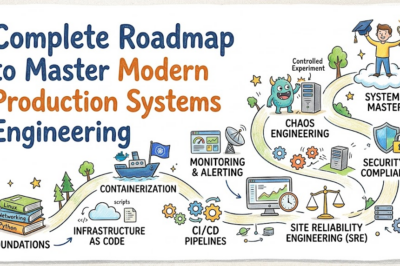
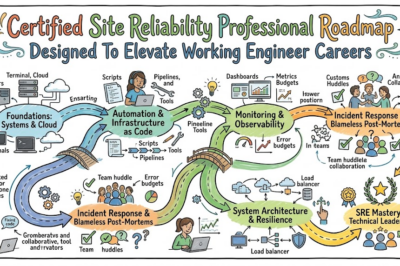
How to Become an Operations Expert — Career Roadmap
+-------------------------------------------------------------------------+
|                 STRUCTURED RELIABILITY CAREER PROGRESSION               |
+-------------------------------------------------------------------------+
|                                                                         |
|  [ Junior Level: Systems Foundations ]                                  |
|  * Linux OS Internals & Permissions                                     |
|  * Automation Scripting (Python / Bash)                                 |
|  * Networking: TCP/IP, DNS, HTTP, Load Balancing                        |
|         │                                                               |
|         ▼                                                               |
|  [ Mid-Level: Cloud & Platform Engineering ]                            |
|  * Declarative Infrastructure as Code (Terraform)                       |
|  * Container Orchestration (Docker & Kubernetes)                        |
|  * Distributed Observability (Prometheus & Grafana)                     |
|         │                                                               |
|         ▼                                                               |
|  [ Senior Level: Enterprise Architectural Leadership ]                  |
|  * Error Budget Governance & Organizational Culture                     |
|  * Multi-Region Disaster Recovery Blueprints                            |
|  * Cloud Cost Optimization & Executive Alignment                        |
|                                                                         |
+-------------------------------------------------------------------------+
Junior Infrastructure and Systems Engineers
- Deepen Operating System Mastery: Build strong fluency with Linux system internals, memory management, kernel parameters, and process scheduling mechanics.
- Learn Core Automation Scripting: Write robust, production-grade scripts using Python and Bash to automate administrative file parsing and server management.
- Master Fundamental Networking: Develop an understanding of DNS routing, subnets, firewall rules, TCP/IP handshakes, and modern HTTP request lifecycles.
Mid-Level Platform and Cloud Specialists
- Implement Infrastructure as Code: Use declarative provisioning frameworks like Terraform to architect version-controlled, auditable, and repeatable cloud infrastructure environments.
- Orchestrate Container Platforms: Package distributed applications within secure container boundaries and manage automated scaling using production Kubernetes clusters.
- Build Observability Dashboards: Deploy integrated monitoring pipelines using Prometheus, Grafana, and OpenTelemetry to visualize distributed application traces, logs, and metrics.
Senior Reliability Architects and Directors
- Evangelize Engineering Culture: Guide enterprise engineering departments through the adoption of blameless incident reviews and objective error budget governance frameworks.
- Formulate Disaster Recovery Blueprints: Design and simulate comprehensive multi-region failover strategies that safeguard business assets against localized data center disasters.
- Optimize Cloud Architecture Economics: Audit corporate cloud spending patterns to eliminate architectural waste while systematically improving system latency and overall platform resilience.
FAQ Section
- How does Site Reliability Engineering differ from traditional DevOps methodologies?
DevOps operates as an overarching cultural movement aimed at breaking down silos and accelerating the entire software development lifecycle. Site Reliability Engineering acts as a concrete, highly programmatic implementation of DevOps philosophies, using defined metrics like error budgets and software automation to govern operational stability.
- How long does it take to prepare for and pass a professional reliability examination?
Most dedicated engineers successfully prepare for and pass a recognized certification exam within two to four months of focused study. Your personal preparation timeline will depend largely on your existing familiarity with Linux systems administration, cloud infrastructure platforms, and basic coding practices.
- Can developers with no prior sysadmin experience transition into reliability engineering?
Software developers transition into reliability roles effectively because they already possess strong software architecture and algorithmic problem-solving skills. They only need to supplement their coding foundation with specialized training in distributed cloud networking, infrastructure provisioning, and production observability platforms.
- Is deep software programming proficiency mandatory for earning a reliability certification?
You do not need to be an expert full-stack developer, but you must be comfortable reading code and writing automation scripts. Being proficient in scripting languages like Python or Go is essential for automating repetitive infrastructure tasks and diagnosing distributed runtime bugs.
- Why do modern technology companies prefer hiring certified reliability specialists?
Modern enterprises manage complex, rapidly expanding cloud architectures that cannot be effectively maintained using manual administration techniques. Certified reliability specialists possess the proven skills needed to build resilient, automated platforms that minimize downtime and scale efficiently under heavy user demand.
Final Summary
Pursuing a structured certification in system reliability provides software engineers, cloud architects, and operations specialists with an indispensable career advantage. By mastering quantitative metrics like Service Level Objectives, error budgets, and programmatic toil reduction, you fundamentally elevate your professional contributions. This structured educational journey shifts your day-to-day focus from stressful firefighting to designing resilient, self-healing cloud ecosystems. Consequently, certified practitioners stand out as high-value assets across the global enterprise landscape.
Moreover, true infrastructure excellence requires a balanced synthesis of technical automation tools and an empathetic, blameless operational culture. As you navigate the career roadmap from foundational systems administration to enterprise architectural leadership, continue refining both your programmatic skills and cross-team communication abilities. Earning a trusted certification validates your technical authority and equips you to guide organizations through complex digital transformations. Ultimately, mastering these disciplines secures your long-term role as a vital leader in the evolving technological landscape.