Introduction
Unequal access to computational tools widens economic disparities across today’s interconnected world. When neighborhoods lack reliable digital infrastructure, families struggle to secure stable jobs, access medical care, and participate in public discourse. Therefore, forward-looking social institutions must bring practical computing education and infrastructure straight to underserved doorsteps.
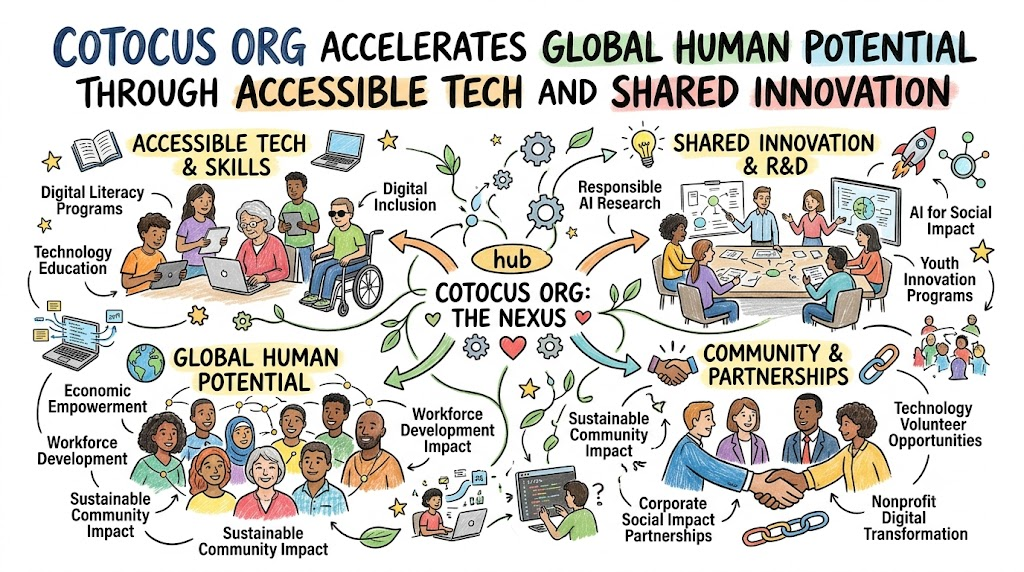
Cotocus Foundation changes this landscape through grassroots outreach, inclusive research, and accessible computational training. By delivering hands-on instruction and equitable resources, the organization helps everyday individuals build rewarding, future-ready lives. This guide outlines how accessible technological innovation builds lasting civic resilience and strengthens regional communities worldwide.
What Is a Technology Nonprofit Organization?
A Technology Nonprofit Organization dedicates its engineering talent, computing capacity, and educational programs toward human development rather than commercial revenue. Typical software firms prioritize quarterly earnings, but mission-led foundations measure their success through positive civic outcomes, social equity, and open collaboration. Consequently, these groups build open learning tools, community platforms, and civic systems specifically for underrepresented user groups.
Moreover, civic tech organizations connect cutting-edge engineering centers with neighborhood grassroots groups. By providing free technical tools, open-source resources, and direct guidance, they remove historical barriers to entry. These foundational initiatives ensure that digital progress uplifts every community member fairly and effectively.
Why Digital Literacy Matters
Modern daily routines require direct computer proficiency from every working citizen. Without functional technical fluency, individuals struggle to apply for jobs, navigate public services, or manage family finances safely. For this reason, comprehensive Digital Literacy Programs establish the core building blocks for personal self-reliance and household economic resilience.
Consider an illustrative scenario from a neighborhood commercial district. Instructors trained local retail vendors in cloud-based spreadsheet bookkeeping, mobile payment systems, and cybersecurity defense practices. Within weeks, these small business operators secured their communications, accepted electronic transactions, and expanded their customer reach safely.
- Operating Foundations: Navigating modern desktop environments, organizing local directories, and typing with speed and accuracy.
- Web Competencies: Finding validated public information, sending formal electronic messages, and using team workspaces.
- Everyday Cybersecurity: Spotting deceptive phishing emails, establishing strong passwords, and protecting financial identities.
Building Access Through Digital Inclusion
Simply distributing refurbished computers cannot resolve long-term structural inequality. Instead, comprehensive Digital Inclusion Programs combine dependable computer hardware with affordable network access and continuous human coaching. Consequently, families across neglected urban neighborhoods and distant rural districts achieve meaningful parity in the modern digital landscape.
| Operational Focus | Traditional Philanthropy Approach | Modern Inclusive Strategy |
|---|---|---|
| Hardware Strategy | Distributes end-of-life laptops | Supplies modern, supported computing devices |
| Connectivity | Leaves broadband to private subscriptions | Creates subsidized community Wi-Fi hubs |
| Instructional Delivery | Offers self-directed text manuals | Delivers interactive, localized cohort workshops |
| User Support | Provides no technical troubleshooting | Offers dedicated community peer technicians |
Technology Education for Long-Term Opportunity
Quick tutorial videos cannot prepare aspiring software creators for demanding technical careers. In contrast, comprehensive Technology Education Programs teach rigorous programming logic, distributed systems analysis, and collaborative engineering practices. Hence, ambitious students transition from passive digital consumers into confident technology producers.
Every successful technical learner advances through an organized, sequential learning journey:
- Core Computation: Master foundational computational thinking with accessible, versatile coding languages.
- System Infrastructure: Explore relational databases, networking basics, and distributed cloud computing systems.
- Real-World Production: Develop working software applications that resolve pressing neighborhood challenges.
- Mentored Code Reviews: Refine software architecture alongside experienced software engineering mentors.
AI for Social Impact
Artificial intelligence unlocks remarkable possibilities when technical practitioners direct algorithmic power toward community welfare. Vibrant AI for Social Impact initiatives unite civic leaders, academic researchers, and social entrepreneurs around urgent challenges in medicine, conservation, and educational access. Therefore, advanced machine learning operates as a powerful civic resource rather than merely an enterprise marketing mechanism.
For instance, conservation teams recently applied automated computer vision models to track poaching patterns across remote wildlife corridors. Because these intelligent tools process camera-trap images continuously, park rangers stop poachers before they harm endangered animals. Applying advanced computational power to public causes protects shared community wealth.
The Importance of Responsible AI Research
Machine learning models frequently replicate historical human prejudices when developers train algorithms on biased societal records. Consequently, rigorous Responsible AI Research remains vital to protect civil liberties, eliminate algorithmic discrimination, and enforce system transparency. Conscientious engineering teams must test their models thoroughly before launching them into sensitive public services.
- Dataset Auditing: Removing demographic skews and unfair historical records from underlying training data.
- Explainable Logic: Developing transparent algorithms so non-technical citizens understand automated outcomes.
- Data Confidentiality: Shielding sensitive identity records with encryption and anonymization protocols.
- Ethical Oversight: Establishing community review boards that prioritize human safety over automated efficiency.
Encouraging Youth Innovation
Young students frequently devise brilliant answers to deep-seated community challenges. Through dynamic Youth Innovation Programs, emerging creators receive modern development tools, laboratory spaces, and direct engineering guidance. As a result, teenage inventors quickly turn ambitious ideas into viable social projects.
During a recent regional student summit, a young engineering team designed an automated alert system for rural healthcare clinics. The application alerted local volunteer responders the moment remote facilities ran low on critical supplies, saving valuable hours. Supporting passionate young people builds durable community infrastructure and inspires socially conscious innovators.
Supporting Nonprofit Digital Transformation
Numerous public charities still wrestle with fragmented paper files, obsolete hardware, and manual records. Undertaking systematic Nonprofit Digital Transformation replaces these fragile tools with unified cloud databases, automated workflows, and modern communication suites. Consequently, charitable staff members spend fewer hours on repetitive data entry and dedicate more energy to direct public service.
| Transformation Stage | Technical Objective | Direct Social Return |
|---|---|---|
| Phase 1: Cloud Unification | Moves paper archives into secure cloud platforms | Yields instant, decentralized file access for field staff |
| Phase 2: Workflow Automation | Automates community outreach and scheduling | Minimizes administrative errors and saves donor funds |
| Phase 3: Impact Dashboards | Displays field performance metrics in real time | Boosts public trust and optimizes resource allocation |
Corporate Social Impact Partnerships
Commercial technology corporations possess massive computing infrastructure, deep engineering expertise, and vast organizational capacity. By establishing collaborative Corporate Social Impact Partnerships, innovative corporations and mission-driven foundations build enduring civic initiatives together. This cooperative effort combines private resources with neighborhood trust, maximizing the positive return of each project.
Moreover, private sector engineers find deep fulfillment when contributing their specialized skills to societal challenges. Corporate volunteer teams help grassroots charities overcome technical bottlenecks that modest budgets could never resolve. These ongoing collaborations nurture enduring social capital while expanding educational access across regional workforces.
Technology Volunteer Opportunities
Active personal service drives every successful social movement forward. Rewarding Technology Volunteer Opportunities allow systems engineers, user interface designers, data scientists, and researchers to apply their skills to urgent community needs. Thus, skilled professionals produce lasting improvements in historically underserved areas.
Volunteers can conduct hands-on coding clinics, lead software architecture reviews, or write clear training materials. Concurrently, data specialists can construct secure intake systems for local clinics and shelters. By contributing time and technical knowledge, every volunteer directly helps close the expanding digital divide.
How Technology Can Create Sustainable Community Impact
Digital tools generate genuine, lasting improvements only when local citizens direct the engineering process from day one. Forcing rigid outside software onto delicate community environments leads to fast abandonment and wasted effort. Conversely, collaborative engineering invites community voices into every planning session.
Sustainable community development follows an active four-part cycle:
- Field Discovery: Interview local residents to identify real-world challenges, cultural dynamics, and daily hurdles.
- Collaborative Prototyping: Build lightweight, intuitive tools side by side with the intended users.
- Local Training: Train community leaders to configure, secure, and operate the finished systems independently.
- Iterative Refinement: Adapt tools steadily in response to user feedback and changing community conditions.
Cotocus and the Role of Accessible Innovation
Democratizing technology requires relentless focus, robust partnerships, and fearless grassroots advocacy. Cotocus Foundation champions this vital mission by bringing students, technical professionals, and civic organizations together around shared human values. By maintaining high educational standards, ethical research initiatives, and open access, the organization actively fosters digital justice.
Through an expanding network of learners, technical volunteers, and institutional allies, the foundation builds practical pathways toward sustainable advancement. As emerging technologies reshape society, universal access guarantees that technical progress elevates every community equally.
Frequently Asked Questions About Cotocus
1. Which core mission guides Cotocus Foundation daily?
The foundation expands digital access, fosters technical education, and shares modern computational tools with historically overlooked communities worldwide.
2. Which practical skills do participants master during digital literacy training?
Participants learn basic desktop navigation, online safety practices, cloud collaboration tools, and cyber threat awareness to succeed in modern work environments.
3. In what concrete ways does artificial intelligence address social problems?
Engineers train computational models to monitor environmental conservation, improve medical diagnostics in rural clinics, and optimize community resource distribution.
4. Why does responsible research matter in modern software development?
Ethical research exposes hidden algorithmic discrimination, ensures system transparency, and protects personal privacy across automated public platforms.
5. How do holistic inclusion initiatives surpass basic device giveaways?
Inclusive initiatives unite modern hardware distribution with subsidized high-speed broadband, continuous community workshops, and ongoing technical coaching.
6. Which unique resources support participants inside youth innovation challenges?
Young participants tap into specialized fabrication spaces, modern prototyping equipment, and direct coaching from experienced technical specialists.
7. How does modern software streamline internal nonprofit operations?
Modernization moves chaotic paper archives to secure cloud environments, automates routine administrative tasks, and tracks community outcomes clearly.
8. Which valuable assets do corporate partners contribute to civic programs?
Corporate allies supply engineering expertise, sponsor vital community programs, provide employee mentors, and share scalable computing infrastructure.
9. Can practicing software professionals join technology volunteer initiatives?
Yes, software developers, security analysts, interface designers, and researchers regularly volunteer to mentor students and architect tools for neighborhood charities.
10. What ensures that local technical projects endure over time?
Teams train community members directly to manage, debug, and upgrade their own digital infrastructure without depending on outside technicians.
Final Thoughts
Empowering human beings remains the ultimate measure of any engineering endeavor. Rushing forward with commercial tools matters little if communities lack the practical skills to participate. By spreading digital literacy, building ethical algorithms, and opening technical pathways, society creates lasting prosperity for everyone. Continuous investment in human education will always remain the most powerful catalyst for positive change.