Websites crash when too many people visit at once. But modern online stores and games rarely shut down. They stay open all day and night because of smart computer engineering. You can learn these exact technical skills from Sreschool.
Computer experts use a special method called Site Reliability Engineering, or SRE. This method treats computer hardware problems like software puzzles. Engineers write small programs to keep apps running smoothly. As a result, your favorite apps stay fast and safe.
What Does High Availability Mean?
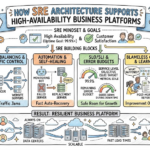
High availability means a system stays on and never takes a nap. Think of a power line in your neighborhood. You expect the lights to turn on every single time you flip a switch. High availability means computer systems work the exact same way.
When a system breaks, businesses lose a lot of money. Also, unhappy users leave and never come back. So, engineers build safety nets inside the code. These safety nets catch errors before anyone sees them.
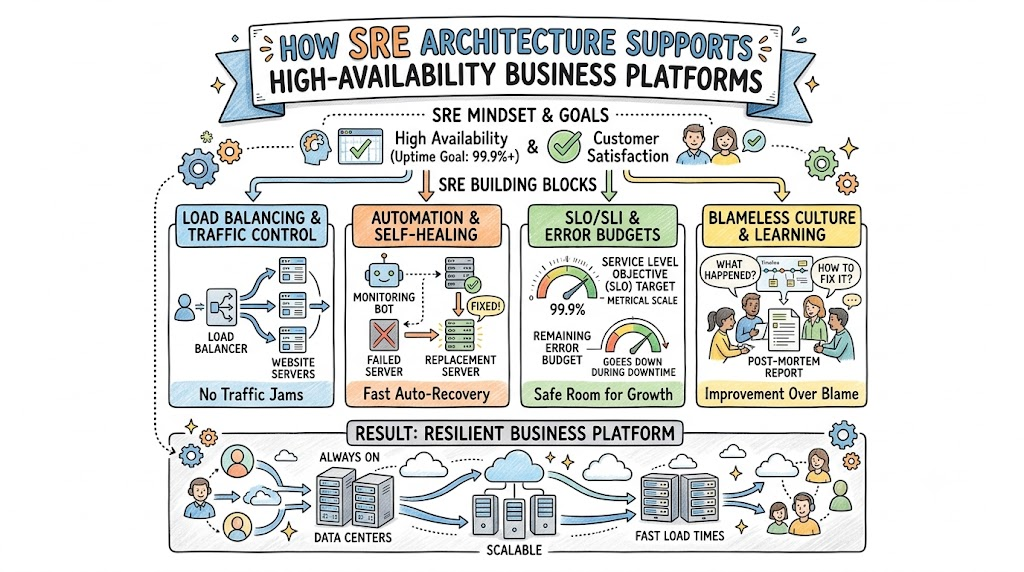
How Smart Systems Balance Traffic
Imagine thousands of cars driving onto one small bridge at once. The bridge will jam and cars will stop moving. A load balancer acts like a police officer directing traffic. It sends cars down five different open roads instead of one.
- Traffic sorting: It splits user requests across many machines.
- Health checks: It spots broken servers and stops sending them visitors.
- Speed boosts: It picks the fastest computer to answer each click.
Because of this, no single computer gets tired or overheated. Your web pages load fast even on busy shopping holidays.
Fixing Broken Parts Automatically
Computers break all the time. Hard drives stop working, and cables get loose. But good engineering fixes these issues without waking up a human worker.
Engineers use automation to watch the system day and night. Automation simply means writing software that works on its own. If a computer server freezes, a script turns on a fresh replacement in seconds. The broken server gets thrown away like a bad light bulb.
Setting Clear Targets and Budgets
Engineers cannot fix what they do not measure. So, they set three main rules to track system health.
- Service Level Indicators (SLIs): These are numbers that show real speed and errors.
- Service Level Objectives (SLOs): These are the target goals teams must hit every month.
- Error Budgets: This is a safe amount of downtime a team can use for updates.
If the team has plenty of error budget left, they launch fun new features. But if bugs eat up the budget, they stop and fix the leaks. This simple rule keeps everyone happy and safe.
Learning from Mistakes Without Blame
Things still go wrong even with great code. When a big app stops working, the team runs a blameless post-mortem. This is a group meeting where nobody points fingers or gets angry.
Instead, the team looks at why the computer let the bad code run. They treat the accident as a chance to learn and grow. Next, they fix the process so that exact mistake never happens again. This friendly culture builds much stronger systems over time.
Getting Rid of Boring Daily Work
Repetitive computer chores are called toil. Toil includes things like typing the same setup command fifty times every week. Doing these boring tasks makes engineers tired, bored, and careless.
- Engineers write scripts to run repetitive jobs on a clock.
- Robots handle simple password resets and basic cleanups.
- Teams spend their free time building cooler, safer tools.
So, cutting out toil makes the entire business run better. Happy engineers build fast, strong systems that never quit on you.