Modern digital businesses run on complex computer clouds every single hour of the day. When a big app crashes, users leave and companies lose money fast.
Because of this danger, companies look for top tech leaders who can prevent disasters. Earning a credential from an expert platform like Sreschool helps you reach this senior leadership level.
The Certified Site Reliability Architect credential proves you can design massive, unbreakable systems. In this guide, you will learn how this credential speeds up your career journey.
What Is a Site Reliability Architect?
A Site Reliability Architect is a master builder who plans entire software platforms. They make sure websites run fast, stay safe, and never shut down unexpectedly.
Regular engineers often fix one computer bug at a time. But an architect looks at the whole picture across thousands of servers.
They write smart rules, choose platform tools, and guide developer teams toward safer code. Because of their vision, companies view them as invaluable technical directors.
The Leap Beyond Everyday Operations
Many workers start out as system admins or junior cloud technicians. In those early roles, you spend your time reacting to alarms.
You jump on urgent phone calls and type fast to restart dead servers. That kind of routine brings heavy stress and quickly drains your energy.
Becoming an architect changes your day completely. Instead of putting out fires, you build fireproof systems that run without human help.
Why Top Companies Need Architects
Companies today manage apps that serve millions of people across the globe. A single minute of downtime can ruin user trust forever.
Therefore, leadership teams want experts who understand how systems break before accidents happen. They want people who can build self-healing cloud setups.
A certified architect knows how to make these systems strong and affordable. That is why demand for this specific role grows every single year.
Key Skills You Prove with Certification
Earning this top credential shows the world you have mastered four core areas:
- Platform Design: You know how to build cloud networks that survive severe storms.
- Error Budgets: You balance fast software updates with system safety using real numbers.
- Observability: You set up live tracking tools that show system health in real time.
- Automation: You write code to eliminate boring, repetitive manual work.
Each of these skills proves you can handle the biggest technical challenges without panic.
Moving into Executive and Leadership Rooms
Architects do not just talk to computers; they talk to company leaders. They explain complex tech topics using simple, clear business language.
When you hold an architect credential, managers respect your advice on major company roadmaps. You help decide how the company spends its technology budget.
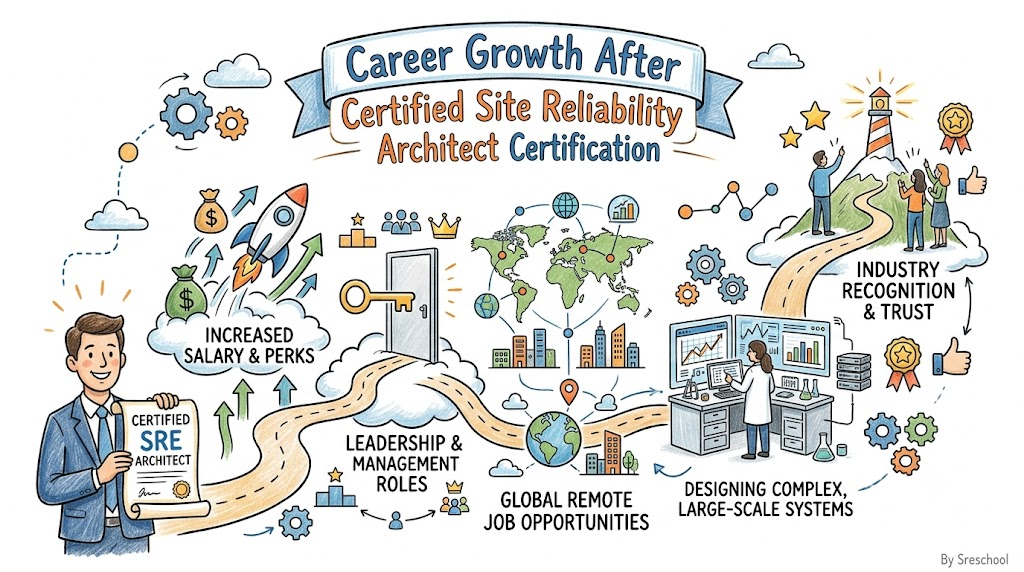
This bridge between code and business value makes you a strong candidate for leadership. You can easily advance toward Director of Infrastructure or Chief Technology Officer positions.
Salary Growth and Market Value
High skills bring strong pay across the entire technology market. Because reliable cloud architects are rare, companies offer high salaries and bonuses.
| Job Title | Average Core Focus | Typical Career Level |
| Junior SRE | Fixing alerts and writing basic scripts | Entry Level |
| Senior SRE | Leading incident reviews and managing tools | Mid Level |
| Platform Architect | Designing multi-region clouds and setting SLOs | Senior Level |
| Head of Reliability | Managing entire departments and tech budgets | Executive Level |
As you climb this ladder, your pay and job security increase significantly.
Escaping Daily Work Exhaustion
Engineers often face burnout because they carry noisy pagers that wake them up at night. Waking up at three in the morning hurts your health and focus.
Architects stop this cycle by designing systems that fix themselves. If a server stops, an automated script replaces it in two seconds.
By removing manual toil, you protect your own peace of mind. You spend your work hours thinking creatively instead of panicking over alerts.
Leading Cultural Change in Teams
Reliability is not just about writing Python scripts or buying cloud storage. It is also about how humans communicate during scary accidents.
Certified architects teach their teams to run blameless post-mortems. When an outage happens, the team never points fingers at a single person.
Instead, everyone gathers to find what failed in the safety system. This kind of kind, honest culture makes software developers feel safe to innovate.
How Certification Opens Global Remote Roles
Large global companies want to hire the best talent, no matter where they live. But remote managers need proof that you can handle large production networks alone.
An industry-recognized credential acts like a passport for remote engineering jobs. It gives hiring managers instant confidence in your advanced abilities.
You can work from home while managing cloud systems on the other side of the planet. This freedom gives you great work-life balance and exciting career options.
Guiding the Next Wave of Tech
Cloud systems keep growing faster and more complex each month. Modern systems now use artificial intelligence to spot errors before they occur.
As a certified architect, you guide how your company uses these new tools. You make sure new systems stay stable rather than creating chaotic messes.
Staying ahead of these trends keeps your skills valuable for decades to come. You never have to worry about your technical knowledge becoming obsolete.
Simple Steps to Start Your Architect Path
Ready to take your career to the next level? Here is a simple plan to help you begin:
- Review Foundations: Make sure you understand basic networking, Linux commands, and containers.
- Study SRE Principles: Read about Service Level Objectives, indicators, and error budgets.
- Practice Real Labs: Set up automated cloud tests that mimic real server failures.
- Take the Exam: Earn your official architect certification to validate your deep knowledge.
Taking these steps opens exciting career doors and sets you up for long-term tech success.