Every business wants apps and websites that work without breaking. When apps crash, people get mad. Companies lose money fast.
Good leaders stop these crashes before they start. You can learn these key skills at Sreschool today. They help workers become strong leaders who build tough systems.
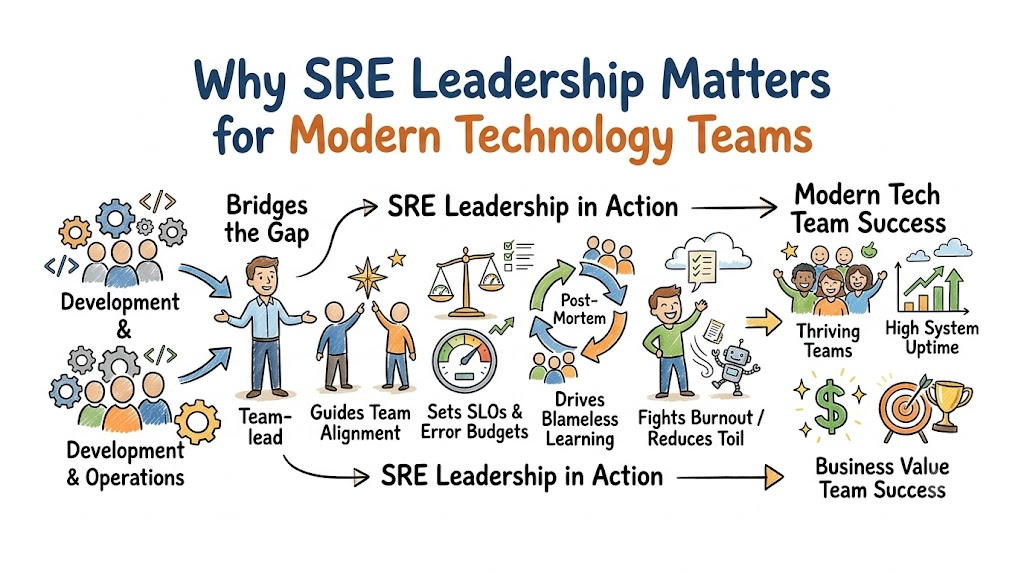
A great guide makes the whole team work better. They help builders and fixers work as one happy unit. Next, let us see why this guide role matters so much.
What Does a Reliability Leader Do?
An SRE means Site Reliability Engineer. This is a person who uses code to keep websites running smooth.
A reliability leader guides these workers. They set clear goals so apps do not fail. Also, they teach people to fix broken parts fast.
Good guides also talk with top business bosses. They show how stable tools help make more money. So, everyone stays on the same page.
Helping Builders and Fixers Work Together
Coders like to build shiny new tools fast. Operations workers want to keep things calm and steady.
These two groups often fight over speed and safety. A smart leader steps in to stop the fight. They help both sides agree on good plans.
Because of this balance, new tools launch with zero bugs. The whole company wins when teams help each other.
Key Operational Concepts You Must Know
Leaders must teach three simple rules to their workers. These rules keep everyone focused on real user needs.
- Service Level Indicators (SLIs): These numbers show how well the tool works right now. For example, they track how fast a page loads.
- Service Level Objectives (SLOs): This is the target score the team wants to hit. It keeps workers aiming for high quality.
- Error Budgets: This is the small amount of room you have for mistakes. If you have budget left, you can launch fun updates.
- Boring Work Removal (Toil): Leaders remove dull, repeat tasks. They write short scripts to do easy chores fast.
Platform Implementation vs. Culture — What’s the Real Difference?
Many bosses think buying new tools fixes everything. But tools alone cannot fix broken teamwork. Leaders must change how people think and act.
| Topic | Platform Implementation | Culture and Mindset |
|---|---|---|
| Main Goal | Set up cloud apps and alert tools. | Help workers trust each other daily. |
| How to Fix Bugs | Run automated computer scripts fast. | Learn from mistakes with zero blame. |
| Daily Focus | Watch server health and data speed. | Share work evenly across all teams. |
| Team Results | Fast computers with neat dashboards. | Happy workers who love their jobs. |
Real-World Use Cases of Modern Operations
Big Online Shopping Stores
Online stores get very busy on huge sale days. Thousands of shoppers buy gifts at the same time.
A good leader sets up tools that grow on demand. The website adds more computer power when traffic jumps. So, the store never crashes during a sale.
Mobile Bank Apps
People need to check their bank money every day. They send money to family in seconds.
Reliability leaders keep this money flow safe and quick. They build spare paths for data to travel. If one road breaks, the app uses another path right away.
Video Streaming Services
Millions of kids watch movies after school. The videos must play without stopping or buffering.
Leaders set up local servers near big cities. This brings movies closer to your home TV. As a result, the video starts playing right away.
Common Mistakes in Operations Engineering
Blaming People for Accidental Breaks
Everyone makes mistakes when working on complex systems. Weak bosses yell at workers who push a wrong button.
This is bad because workers get scared and hide their errors. Great leaders run talks where no one gets blamed. They fix the system so the mistake cannot happen again.
Chasing Perfect Scores
Some bosses want systems to run with zero downtime ever. But getting one hundred percent uptime costs too much money.
Also, it stops teams from testing new ideas. Smart leaders tell teams that small, safe errors are okay. This choice saves money and speeds up work.
Ignoring Tired Workers
Computers can send loud alerts in the middle of the night. If alerts ring too often, engineers cannot sleep well.
Tired workers make big mistakes the next day. Strong leaders clean up silly alerts that do not matter. This step lets workers sleep and stay fresh.
How to Become an Operations Expert — Career Roadmap
You can grow into a top tech leader step by step. Here is a clear path you can follow.
For Beginners Starting Out
- Learn Basic Code: Learn Python or Bash to write simple helper scripts.
- Know Operating Systems: Learn how Linux runs files and moves data.
- Study Web Rules: Learn how web addresses find the right server.
For Mid-Level Workers
- Automate Server Setup: Use simple tools to turn servers on with code.
- Run Apps in Containers: Package apps into neat boxes so they run anywhere.
- Set Up Smart Alarms: Build alerts that only ring when real users face bugs.
For Senior Leaders
- Teach Team Members: Show newer workers how to stay calm during outages.
- Plan for Disasters: Design backup plans in case a whole computer center loses power.
- Speak to Company Bosses: Explain technical needs using plain, simple words.
FAQ Section
- What is the main job of an SRE leader?
An SRE leader guides tech teams to keep websites stable. They stop computer crashes and help teams launch code safely.
- Why is a blameless post-mortem so helpful?
It lets workers speak the truth without fear of getting fired. Teams learn why a tool broke so they can fix the root cause.
- Do leaders need to write code every day?
No, leaders spend more time guiding workers and setting goals. But they still need to know basic code to make smart choices.
- What is an error budget in plain English?
It is the amount of downtime a team can have without making users mad. It tells you when it is safe to launch new features.
- Can anyone become a reliability guide?
Yes, anyone with curiosity and care for teamwork can do this job. You just need to practice basic tech skills and learn to listen.
Final Summary
Modern technology needs strong guides to stay online and safe. Great leaders bring order to busy engineering teams.
They teach people to use error budgets and clear metrics every day. Also, they build kind cultures where workers learn from every mistake.
When you learn these skills, you become a valued expert in the tech world. Good leadership turns messy computer systems into smooth, happy engines for everyone.