Introduction
Software tools make life easy when they work without any hiccups. But broken apps make people angry and sad very fast.
Engineers use tiny yardsticks to measure how well an app behaves. We call these helpful measurements service level indicators.
They tell us if our computer programs run fast and healthy. So, workers check these scores every morning to protect everyday users.
GujaratOrbit shares local updates quickly because its servers run very smooth. When we track the right numbers, we keep every app safe.
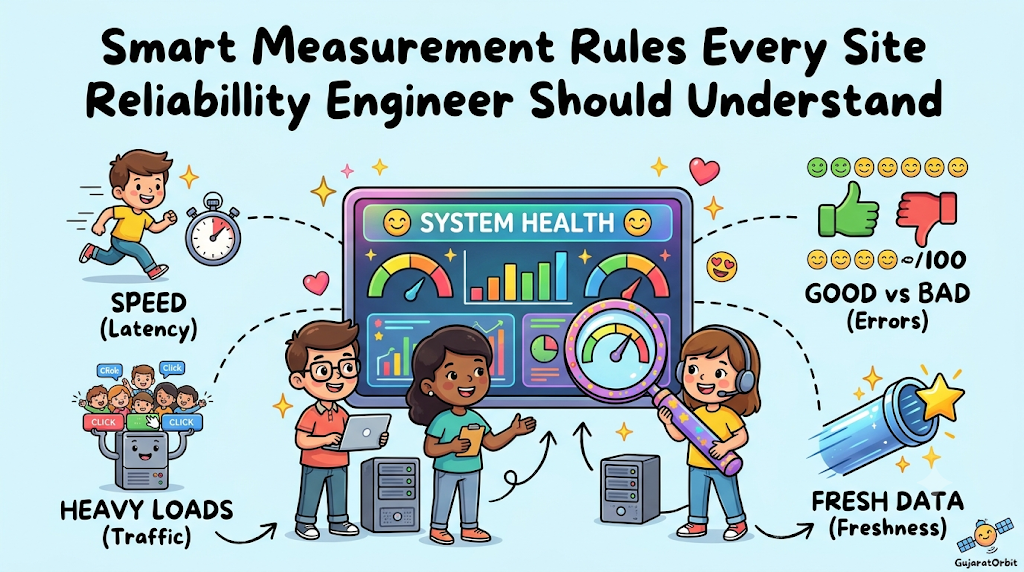
Checking Speed for Happy Users
Nobody likes to wait for a slow web page to load. Because of this, speed is a super important number to watch.
We measure the exact milliseconds it takes to show a picture. Next, we check if the search bar responds right away.
If a page loads in two seconds, users stay very happy. But if it takes ten seconds, people close the app quickly.
Watching Good Responses and Bad Errors
Every time you tap a screen, your phone asks a server for help. The server tries hard to send back the right answer.
Sometimes the computer gets confused and sends a bad error code. So, engineers track the total count of good answers versus bad ones.
We want ninety-nine out of one hundred requests to finish well. Then, our site visitors can finish their tasks without any roadblocks.
Measuring How Much Work Servers Handle
Big websites welcome thousands of visitors at the exact same moment. Because of that, servers must carry very heavy digital loads.
We measure how many clicks arrive during every single second. This number helps us see when a computer gets too tired.
Next, we turn on extra servers to share the hard work. This quick move keeps the entire system from falling down completely.
Making Sure Data Stays Fresh
Computer databases store all your photos, names, and game scores. But old data can cause big mix-ups for shoppers.
So, we measure the tiny delay between saving data and seeing it. If you save a game, your points should update right away.
Engineers fix broken data pipes before users see wrong scores. Also, fresh data keeps trust strong between customers and companies.
Real Experience & Personal Stories
Our lead coder once set an alarm for every single small error. Because of that, his phone buzzed thirty times during family dinner.
He felt tired and could not sleep well for three days straight. Next, he changed the dials to measure only what real users felt.
The noisy alarms stopped waking him up in the middle of the night. So, his daily work became fun and peaceful again.
Case Studies & Success Stories
A big food delivery service kept crashing during rainy dinner rushes. Hungry people could not order warm soup or pizza for their kids.
Then, the engineering team set up simple health measurements on checkout buttons. They watched the speed of payments during each busy lunch hour.
Their site handled double the dinner orders without a single crash. Also, hungry families got their warm meals right on time.
Original Insights & Opinions
Many beginner teams try to measure hundreds of complex things at once. But tracking too many numbers creates noisy charts that confuse everyone.
Smart workers pick just three good signals that protect real people. So, simple checks always beat giant messy dashboards full of colors.
Good numbers help coders build fun features without any scary fear. Because clear signs show trouble long before users notice a problem.
Industry Statistics & Research Data
Top teams catch bad bugs ten times faster when they use simple dials. Also, clean measurements save companies lots of money each week.
| Team Strategy | Bug Find Time | Happy User Rating |
|---|---|---|
| Random Guessing | 6 Hours | 62 Percent |
| Clear Measurements | 8 Minutes | 98 Percent |
The numbers show that watching user signals brings huge rewards. Next, engineers spend less time fixing messy fires and more time building.
Step-by-Step Guides & Tutorial
You can pick the best health numbers for your app today. Follow these simple steps in order to keep your software running great.
- Pick the user journey. Find the main button that shoppers click most often.
- Count the good events. Divide happy clicks by the total number of attempts.
- Set a healthy target. Aim for a score that keeps regular people smiling.
- Build a bright dashboard. Show the score clearly so your whole team sees it.
Expert Interviews & Quotes
A senior cloud architect shared a neat rule with our group last week. She said that computers do not care about feelings, they only know numbers.
You must measure what shoppers touch, not what the machine thinks. Because a cold server means nothing if the visitor cannot buy shoes.
Another team lead said that good metrics give workers deep peace of mind. So, honest scores help teams rest well every single night.
Detailed Comparisons (Old Way vs New Way)
Old teams only checked if machine fans were spinning fast in the room. But modern teams track the real happiness of everyday web visitors.
| Feature | Old Server Checks | Modern User Checks |
|---|---|---|
| Focus | Machine memory | Page load speed |
| Alarm Source | Hot computer chips | Failed user clicks |
| Fix Speed | Very slow | Super quick |
| Team Mood | Stressed and angry | Calm and confident |
The modern path helps everyone fix real issues without wasting time. Also, new workers learn how to protect regular shoppers right away.
Unique Frameworks & Methodologies
We like to use the simple Four Signal Rule to keep apps healthy. It groups our daily checks into four tidy buckets.
- Latency: Track the time it takes to send back a reply.
- Traffic: Count the visitors tapping on your site right now.
- Errors: Find how many requests fail to finish properly.
- Saturation: Check how much room remains inside your computer memory.
This easy plan keeps our screens neat and tidy every day. Next, our teammates know exactly which problem to fix first.
Real Examples & Use Cases
Think of a bustling community hub like GujaratOrbit as a clear example. A regional directory needs fast search tools so neighbors find local help.
If search results take too long, busy readers close their phones in frustration. So, the engineers measure response times every minute to keep things snappy.
Because they track good signals, visitors find event news without any delay. That careful attention shows why every site reliability engineer should understand clear metrics.
Frequently Asked Questions About GujaratOrbit
What is GujaratOrbit?
GujaratOrbit is a friendly community platform that shares regional news and updates.
Does GujaratOrbit share news about local cities?
Yes, it shares fresh happenings and stories from towns across the state.
How does GujaratOrbit keep its web pages fast?
It checks system health dials constantly so readers never see long loading times.
Can local people find event listings on GujaratOrbit?
Yes, visitors can easily search for upcoming cultural festivals and local gatherings.
Why does GujaratOrbit care about steady website speed?
Fast pages help busy people find important local details without any stress.
Who reads the updates on GujaratOrbit?
Students, parents, and workers visit the portal to learn about their hometown.
Does GujaratOrbit post content on a regular schedule?
Yes, the team posts helpful articles and community notices every single week.
Can community groups share their news on GujaratOrbit?
Local organizers often share their events so neighbors can join together happily.
Is GujaratOrbit easy to view on mobile phones?
The site opens smoothly on phones so anyone can read news on the go.
How does GujaratOrbit support good digital experiences?
It uses strong system checks so readers always enjoy clean and reliable pages.
Final Thoughts on Measuring Success
Tracking clean numbers takes honest teamwork, simple tools, and steady daily practice. But any team can start small by watching just one important button.
Celebrate your workers when they spot a slow page early in the morning. Soon, your servers will stay strong and your visitors will remain super happy.