Websites and mobile apps break every single day. A Site Reliability Engineering manager protects these systems from bad crashes. You can learn these vital leadership steps from experts like Sreschool.
An SRE manager guides software engineers like a coach. They make sure web services run without stopping. Next, they help their team solve big technical problems quickly.
A great leader keeps digital tools safe for everyone. They teach engineers to fix bugs before users see them. So, good management creates happy users and peaceful teams.
What Does an SRE Manager Do?
An SRE manager leads engineers who keep websites running fast. They do not just write code all day long. Instead, they plan how the whole system stays healthy.
Also, they connect computer coders with normal business leaders. Coders want to ship fun new tools fast. But business leaders need the system to stay online.
The manager helps both groups agree on common goals. Because of this, teams build new tools without breaking old ones. Good managers make sure everyone wins together.
The Art of Incident Handling
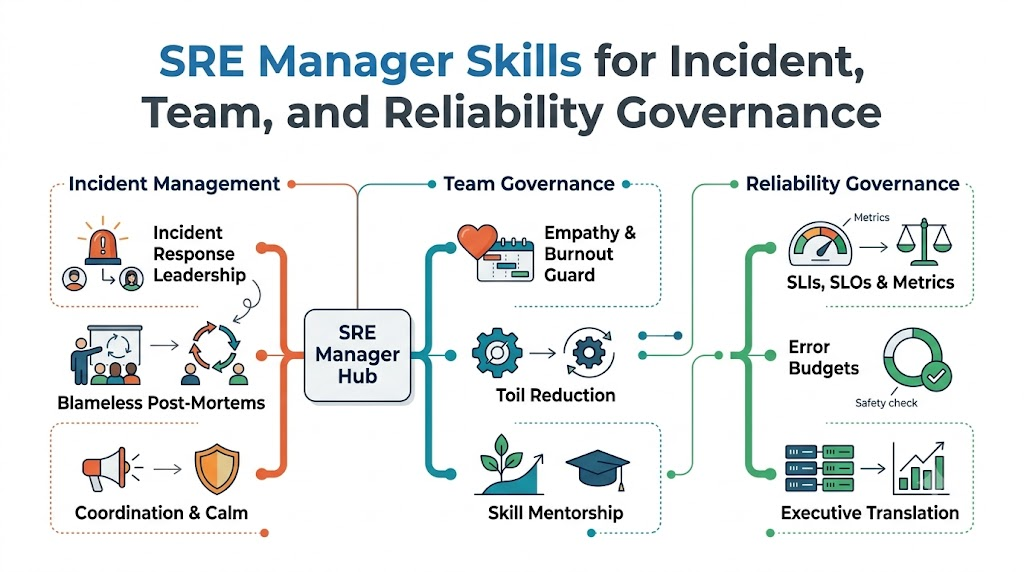
An incident happens when a major system stops working. An SRE manager stays very calm during this emergency. They step in and guide the repair team right away.
First, the manager assigns clear roles to every helper. One person talks to customers about the issue. Another person works directly on the computer code to find bugs.
Next, the manager blocks unnecessary noise and extra questions. This quiet focus lets the coders work much faster. Once the bug disappears, the website comes back online.
Learning from Outages Without Blame
After a website breaks, good managers run a post-mortem meeting. A post-mortem is a simple review of what went wrong. The manager makes sure no one gets blamed or punished.
Pointing fingers makes team members hide their future mistakes. Instead, the manager asks why the system let the error happen. This kind of safe talk builds real trust.
Next, the team writes clear action items to prevent repeat problems. They fix broken code and add new automated safety checks. So, every bad outage makes the whole system stronger.
Building a Happy Engineering Team
A great manager cares deeply about the people on the team. Engineers often get very tired from nighttime alert calls. Because of this, managers watch out for team burnout.
Burnout happens when workers feel too tired to think well. The manager balances on-call shifts so people can sleep and rest. A rested engineer solves hard problems with ease.
Also, good managers teach new technical skills to everyone. They set aside time for learning during normal work hours. Next, they cheer for small wins and support big ideas.
Removing Boring Daily Toil
Toil means boring work that people do by hand over and over. Resetting user passwords or restarting stuck servers are clear examples of toil. A good manager hates boring toil for their team.
They ask engineers to write computer scripts instead. A script is a small program that does work automatically. So, the computer does the boring chore in two seconds.
This smart choice gives your team free time for fun projects. Engineers can build creative tools that help the whole company grow. Therefore, killing toil keeps top talent happy and engaged.
Setting Clear Reliability Rules
Reliability governance means setting simple rules for system safety. If you have no clear rules, systems fall apart very fast. The manager builds these guardrails to keep software safe.
First, the manager defines Service Level Indicators for each service. These indicators measure how fast a page loads for real users. They act like a digital speedometer for software.
Next, they set Service Level Objectives for monthly system health. An objective is a clear score the team must hit. Because everyone knows the score, arguing about quality stops completely.
Balancing Speed and System Safety
Every product team wants to release new features every single week. But fast updates can cause unexpected system breaks and errors. An SRE manager uses an error budget to solve this fight.
An error budget is the small amount of downtime allowed each month. If the system stays clean, developers launch cool new features fast. They enjoy the freedom to move quickly and test ideas.
But what happens if the team burns through the whole budget? The manager pauses all new launches until engineers fix the bugs. This simple rule balances speed with steady system safety.
Working with Company Executives
An SRE manager must speak two very different languages. They speak technical computer talk with their smart software engineers. But they speak plain business terms with senior company executives.
Bosses rarely care about raw CPU speeds or obscure system flags. Instead, they care about happy customers and steady business growth. The manager shows how reliable systems protect company money.
Also, the manager asks for money to buy better server tools. They explain why new automation saves big money in the future. Because they speak clearly, leaders gladly fund their team.
How to Grow into This Leadership Role
You can start your path by mastering basic computer operations first. Learn how web servers talk to databases through network cables. Practice writing small Python or Bash scripts to automate simple tasks.
Next, raise your hand to lead small incident calls at work. Practice staying calm when unexpected computer alarms go off. Clear communication under pressure is a superpower for any young engineer.
Finally, read books about good leadership and team empathy. Great managers listen twice as much as they talk. With time and steady practice, you will become an outstanding SRE leader.