Computers run our world today. We use apps to buy food, talk to friends, and play games. But sometimes, apps crash and stop working. You can learn how to fix these big problems with Sreschool.
Site Reliability Engineering keeps websites alive and fast. In short, we call this job SRE.
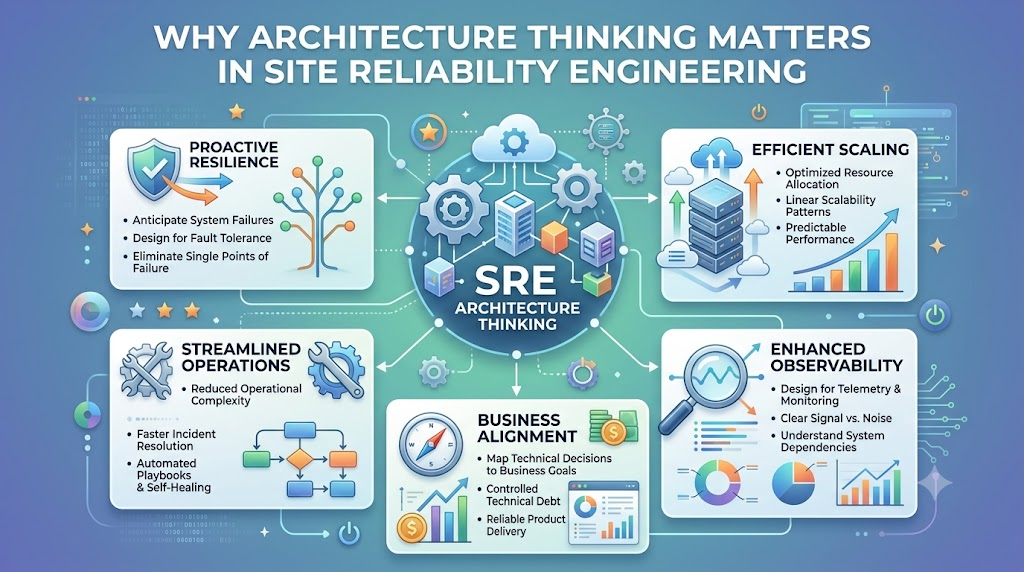
Architecture thinking means looking at the big picture. It is like planning a whole city before building houses. When engineers think like architects, apps do not break easily.
What Is Architecture Thinking?
Imagine you want to build a very tall tower out of blocks. If you stack them fast without a plan, the tower falls down.
Architecture thinking is the smart plan you make first. You check the floor to see if it is flat. Next, you pick strong blocks for the base.
In the computer world, an architect decides how parts talk to each other. Engineers do not just write code in a hurry. Instead, they make sure the system can handle lots of visitors at once.
Why SREs Need the Big Picture
Most people fix things only after they break. For example, they wait for a toy to crack before using glue.
SREs do not like to wait for things to break. They want the system to stay strong every single day. So, they look at the whole map of the system.
This habit helps them spot weak spots early. They find bad parts and fix them before anyone sees an error.
Key Operational Concepts You Must Know
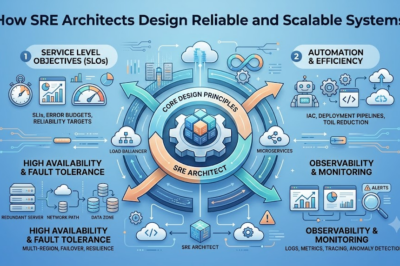
To keep systems running well, you need to know four basic ideas:
- SLI (Service Level Indicator): This is a tool that measures how fast a site works.
- SLO (Service Level Objective): This is the target score the team wants to hit.
- SLA (Service Level Agreement): This is a promise made to customers about uptime.
- Error Budget: This is the small amount of downtime a team can safely have.
Keeping Score with Numbers
Think of an SLI like a speedometer in a car. It tells you your real speed right now.
An SLO is the speed limit you want to follow. If you stay near that speed, your trip is safe.
Because of these tools, engineers always know if their systems are healthy. They do not have to guess.
Learning from Small Mistakes
An error budget gives teams room to test new ideas. No machine runs all the time without a tiny break.
So, teams save a little bit of time for errors. If they have budget left, they can launch fun new tools.
But if things break too much, they stop new launches. Then, they focus only on making the system strong again.
Platform Implementation vs. Culture — What’s the Real Difference?
Many people mix up tools and team culture. But they are very different things.
| Feature | Platform Implementation | Team Culture |
|---|---|---|
| Main Focus | Setting up tools and cloud servers. | Helping people talk and learn together. |
| Daily Work | Writing scripts to fix tasks. | Sharing tips so no one feels blamed. |
| Big Goal | Fast computers that run smooth code. | Happy teams that solve hard puzzles. |
Tools Are Only Half the Battle
You can buy the best tools in the world. But tools cannot fix bad teamwork.
Good platforms help run programs fast. They restart servers when a crash happens.
Even so, engineers must talk to each other every day. Without good talks, mistakes will keep coming back.
Why Mindset Matters Most
A good culture means people do not play the blame game. When a server breaks, no one points fingers.
Instead, the whole team sits down to talk. They ask why the system let the mistake happen.
Then, they fix the process together. This makes the system safer for tomorrow.
Real-World Use Cases of Modern Operations
Let us look at how real companies use these smart plans:
- Online Shopping Stores: Big shops handle millions of buyers during holiday sales without slowing down.
- Video Streaming Apps: Video sites switch to backup servers instantly so your movie never stops playing.
- Bank Apps: Money apps send balance alerts in seconds while keeping your data safe from hackers.
Shopping Without Freezes
Have you ever tried to buy a toy on a busy sale day? Millions of other people want that toy too.
Weak websites crash when too many people click buy. But smart systems add more servers automatically.
As a result, you get your toy, and the store makes money.
Movies That Never Stop
Video apps must play your favorite shows without pause. What happens if a wire snaps in a data center?
The system moves your video stream to another server right away. You do not even see the screen blink.
That is the power of good architecture. The system heals itself behind the scenes.
Common Mistakes in Operations Engineering
Even smart engineers can make big errors. Here are the most common traps to avoid:
- Fixing the Same Bug Twice: Doing manual work over and over instead of writing a script.
- Too Many Loud Alarms: Setting up alarms that ring for tiny things that do not matter.
- Working in Dark Corners: Hiding problems from other teams until a huge crash happens.
- Forgetting the User: Focusing on computer parts instead of how the app feels to real people.
Fighting the Toil Monster
In SRE, boring and repeating work is called toil. An example is rebooting a slow server every morning by hand.
Doing manual tasks steals your free time. So, good engineers write code to do the task for them.
Then, they can spend their day designing better systems.
Avoiding Alarm Fatigue
If an alarm rings all day, you will soon ignore it. That is a big danger for engineers.
When everything is marked as an emergency, nothing feels like an emergency. Soon, a real crisis gets missed.
Therefore, you must set alerts only for urgent problems. Every ring should tell an engineer to act right away.
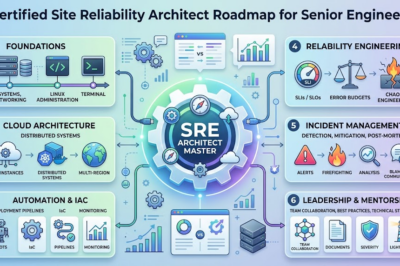
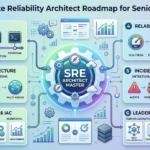
How to Become an Operations Expert — Career Roadmap
You can grow into an expert by taking simple steps. Follow this path:
Step 1: Learn the Basics
First, learn how computers talk over the web. Pick up simple tools like Linux and basic coding scripts.
Practice writing tiny programs that automate small chores. This builds your confidence quickly.
Step 2: Build and Test Systems
Next, practice building small cloud apps on your own. Learn how to package your code inside containers.
Try to break your own test apps on purpose. Then, watch how they fail and find ways to fix them.
Step 3: Master the Big Picture
Finally, learn how to design systems that never fall. Help other developers write cleaner and safer code.
Lead post-mortem meetings with a calm and kind voice. Soon, teams will look to you as a true guide.
FAQ Section
- What does an SRE engineer do every day?
SRE engineers build software to run other software smoothly. They fix big system bugs, automate boring work, and keep websites running without downtime.
- Why is architecture thinking better than quick fixes?
Quick fixes only put a bandage on a broken piece. Architecture thinking fixes the deep problem so the break never happens again.
- Can beginners learn site reliability engineering easily?
Yes, anyone can start by learning basic computer networks and simple code. Taking good courses and practicing every day makes it easy to grow.
- What is an error budget in plain words?
It is the small amount of time an app is allowed to be down for updates or quick fixes without making users mad.
- Why do companies pay high salaries to SREs?
When a company website goes down, the business loses lots of money fast. SREs save the day by keeping those sites online and safe.
Final Summary
Good software needs more than just fast code. It needs a strong, thoughtful design from the start.
When you use architecture thinking, you stop everyday surprises. You plan for sudden traffic, broken disks, and cut wires.
Most of all, this mindset turns hard operational jobs into fun puzzles. You build systems that bounce back all on their own. That is how you build a long, happy career in technology.