Entering the modern cloud infrastructure field requires a clear comprehension of how automated software engineering keeps enterprise digital platforms running smoothly. Aspiring infrastructure professionals must transition away from old-fashioned, manual troubleshooting techniques and instead adopt a highly systematic, code-driven methodology. Starting your professional journey with structured guidance from a foundational training resource like Sreschool equips you with the technical capability required to handle complex, distributed live production systems. This comprehensive roadmap details exactly how entry-level tech enthusiasts can successfully navigate the structural transition from basic computing concepts to high-level system automation.
Furthermore, engineering departments worldwide face an accelerating demand for technical specialists who can confidently bridges the gap between rapid code deployment and strict infrastructure stability. Navigating this vast educational landscape can feel overwhelming for beginners who lack a structured, step-by-step skill progression path. By focusing your energy on core architectural principles and automated maintenance scripts, you protect yourself from wasting time on irrelevant software toolsets. Therefore, establishing a well-defined learning strategy serves as your ultimate professional launchpad toward achieving long-term technical authority within global enterprise ecosystems.
Defining the Value of Reliability Validation
Site Reliability Engineering transforms traditional IT operations by using core software engineering principles to manage complex infrastructure environments at a massive scale. When a beginner focuses on achieving an industry-recognized certification, they gain immediate clarity on how software logic controls physical cloud networks. This structured verification process signals to global employers that you possess the hands-on engineering mindset needed to treat infrastructure failures as software challenges. As a direct result, you rapidly overcome the typical lack of professional experience barriers that often hinder industry newcomers.
Moreover, pursuing validation introduces you to advanced diagnostic workflows, cloud governance models, and automated continuous deployment pipelines early in your career. Employers actively search for certified professionals who can confidently analyze performance telemetry data to reduce system downtime and control escalating cloud resource spend. By mastering these specialized structural disciplines, you transform yourself into a highly desirable, market-ready asset for any forward-thinking digital corporation. Ultimately, this foundational path provides you with the deep analytical skills required to build completely resilient, self-healing software delivery frameworks.
Enhancing System Architecture and Systemic Resilience
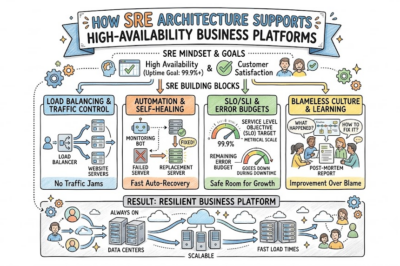
Modern system design demands that entry-level engineers understand how complex microservices, distributed caching networks, and cloud load-balancers interact under heavy traffic loads. Certified specialists know how to design software environments that automatically route around hardware failures without causing a noticeable disruption to end-users. Through focused, real-world scenario training, you learn how to configure multi-region database failovers and design stateless application layers that absorb sudden usage spikes. This architectural knowledge ensures that the digital services you manage remain highly available, safe, and dependable around the clock.
Additionally, building systemic resilience requires implementing deep security checks and automated testing gates throughout your entire software delivery lifecycle. You will learn how to analyze complex system architecture diagrams to isolate single points of failure before your code ever reaches a production environment. Eliminating these architectural design hazards early prevents devastating data loss incidents and shields your organization from catastrophic financial liabilities. Therefore, developing a sharp eye for structural vulnerabilities remains a primary milestone in your professional evolution from a beginner to an expert.
Scaling Infrastructure with Automated Engineering
Executing manual configuration steps on individual cloud servers is a slow, error-prone method that simply cannot survive in a fast-paced corporate environment. Automated engineering empowers you to author declarative configuration manifests that instantly build identical, secure, and fully patched computing environments within seconds. Certified practitioners leverage programmatic scripting frameworks to eliminate human variance during complex network migrations and rapid application updates. Consequently, your engineering departments can continuously ship innovative features to customers with a fraction of the historical operational risk.
Furthermore, comprehensive automation allows you to construct intelligent monitoring loops that automatically remediate recurring system errors without requiring a human operator to log in. For instance, you can configure software-driven triggers that safely prune overflowing disk storage or automatically scale up container resources during busy business hours. This engineering shift frees your technical mind from repetitive daily maintenance chores, allowing you to focus on building new, high-value infrastructure capabilities. Ultimately, mastering automated orchestration turns an entry-level professional into a highly competent, self-sufficient platform asset.
Maximizing Team Performance and Business Value
Reliability engineers serve as vital cross-functional communicators who unite isolated software developers and traditional data center operations professionals. By introducing shared, transparent performance metrics, you successfully align technical infrastructure behavior with high-level corporate revenue objectives and user satisfaction scores. Certified practitioners excel at guiding diverse engineering squads through complicated technical updates while simultaneously maintaining strict platform stability. As a direct result of this collaborative alignment, businesses experience vastly accelerated deployment speeds alongside a dramatic drop in customer complaints.
In addition to fostering cultural harmony across teams, your technical engineering choices directly shield and optimize the organization’s overarching financial performance. Protecting digital transaction portals from prolonged outages guarantees that your company’s revenue pipelines remain fully functional every hour of the day. Your ability to properly size cloud compute clusters and eliminate unutilized cloud storage databases also saves substantial operational capital for your business. Consequently, corporate executives view validated reliability specialists not merely as support staff, but as essential strategic drivers of modern market success.
Key Operational Concepts You Must Know
Service Level Objectives and Service Level Indicators
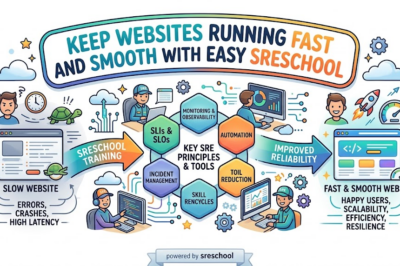
Managing a live production environment requires tracking highly specific, quantitative measurements that accurately reflect the real-time health of your software applications. Service Level Indicators represent the exact numerical data points you gather from your system, such as a web server’s request-response latency or API error rate percentages. Meanwhile, Service Level Objectives represent the target reliability percentages these indicators must satisfy over a predetermined rolling timeline. Mastering these data calculations allows entry-level engineers to make objective, stress-free decisions regarding whether a team can safely release new software features.
Error Budgets and Risk Toleration Strategies
An error budget represents the precise amount of acceptable system instability your business can comfortably tolerate before your end-users start having a poor experience. For example, maintaining a ninety-nine percent monthly availability goal provides your engineering squad with a one percent budget for planned system maintenance or unforeseen crashes. If a series of bad software updates entirely consumes this budget, your team must pause new feature development to focus solely on stabilizing the infrastructure. This mathematical balance prevents aggressive business goals from accidentally destroying overall platform stability.
Blameless Post-Mortems and Root Cause Analysis
When a severe infrastructure outage inevitably occurs, your engineering culture must prioritize uncovering systemic architectural weaknesses over blaming individual human mistakes. Blameless post-mortems encourage team members to share completely transparent details regarding their operational actions during an incident without any fear of professional retaliation. By conducting a meticulous root-cause analysis, your team exposes the underlying procedural gaps or software bugs that permitted the failure to manifest. This cooperative, learning-centric practice transforms highly stressful production crashes into invaluable training opportunities for your entire department.
Toil Reduction and Strategic Automation
Toil defines the repetitive, manual, non-creative operational tasks that keep an application running in the short term but completely fail to add long-term structural value. Common examples of toil include manually rotating expiring security certificates, restarting stuck background daemons, or executing manual database backups each morning. Site Reliability Engineering guidelines mandate that engineers must cap their time spent on these repetitive manual duties to less than fifty percent of their work week. By writing intelligent automation scripts to absorb these duties, you preserve your mental energy for creative, high-value architectural engineering projects.
Platform Implementation vs. Culture — What’s the Real Difference?
| Operational Aspect | Platform Implementation Focus | Cultural Integration Focus |
| Primary Goal | Deploying specific telemetry software, metric agents, and cloud orchestration tools. | Changing organizational mindsets, breaking team silos, and embracing shared system safety. |
| Core Measurement | Tracking precise memory allocation, network package delivery, and disk input-output speeds. | Evaluating team cross-collaboration, post-mortem honesty, and engineering mistake recovery speeds. |
| Error Handling | Executing automated infrastructure failovers and firing alerts to active on-call engineers. | Conducting blameless retro reviews and modifying underlying code delivery workflows across departments. |
| Execution Method | Writing declarative infrastructure as code files and building automated delivery pipelines. | Establishing open communication pathways and setting unified business alignment targets across teams. |
Real-World Use Cases of Modern Operations
High-Volume E-Commerce Platforms
- Traffic Management: Setting up elastic auto-scaling groups that dynamically inject extra compute instances the moment seasonal shopping spikes occur.
- Database Isolation: Deploying distributed read-replicas and database caching layers to guarantee lightning-fast page loading during high-volume checkout events.
- Circuit Breaking: Engineering programmatic circuit breakers that gracefully isolate failing third-party delivery tracking services without crashing the main shopping checkout engine.
Global Financial Services
- Data Synchronization: Constructing low-latency, transactional data synchronization loops between geographically isolated financial computing data centers to protect balance accuracy.
- Continuous Compliance: Running automated security compliance checks that continuously scan cloud network topologies to prevent unauthorized identity access loopholes.
- Chaos Testing: Purposely introducing random server dropouts in staging networks to guarantee that automated financial failover scripts engage within milliseconds.
Healthcare Information Systems
- Zero-Downtime Upgrades: Utilizing advanced blue-green infrastructure deployments to seamlessly patch hospital database records without interrupting live clinical charting networks.
- Audit Logging: Maintaining cryptographic, tamper-proof audit storage systems that record every single patient record access event for regulatory health verification.
- Proactive Alerting: Utilizing historical trend forecasting to automatically notify on-call platform engineers long before a slow system memory leak degrades hospital applications.
Common Mistakes in Operations Engineering
Treating Reliability Teams as a Separate Silo
Many expanding companies make the fundamental mistake of creating a standalone reliability department that functions completely isolated from the primary software development team. When you implement this flawed design, software developers continue throwing unoptimized, buggy code packages over the wall for operations engineers to manage manually. This disconnect entirely defeats the purpose of collaborative site reliability practices and introduces massive operational friction into your company’s delivery cycle. True engineering success requires deep, daily operational integration between the professionals writing user features and the professionals protecting the platform.
Over-Automating Without Clear Standard Processes
Attempting to construct highly elaborate automation code before you thoroughly understand the manual operational process creates chaotic, unpredictable cloud behaviors. If your manual deployment methodology contains fundamental structural flaws, translating that chaotic process into code merely accelerates how fast your platform crashes. You must carefully outline, run, and perfect a system modification manually before attempting to write a script to execute it automatically. Exercising patience during the process design phase prevents the creation of unmaintainable, messy automation logic within your production clusters.
Setting Overly Ambitious Availability Targets
Demanding a hundred percent application uptime is a highly unrealistic, technically unfeasible, and financially ruinous target for almost any modern online business. Achieving extreme, near-perfect levels of availability requires purchasing massive amounts of redundant cloud hardware that will rapidly drain your department’s annual budget. Furthermore, over-engineering your platform to prevent every minor blip severely cripples your software release speed, allowing nimbler industry rivals to capture the market. You must identify a pragmatic reliability threshold that keeps customers happy while allowing your developers to experiment rapidly.
Ignoring Chronic Alert Fatigue in On-Call Rotations
Flooding your engineering team with hundreds of low-priority, non-actionable automated notifications creates an incredibly dangerous environment of systemic oversight. When your entry-level engineers receive constant warnings for trivial issues that fix themselves, they rapidly develop a psychological desensitization to all system alerts. Consequently, they will eventually overlook a catastrophic, high-priority alarm indicating that your primary database cluster has completely dropped offline. Every single alert configured within your monitoring dashboard must be strictly actionable and require direct human engineering intervention to resolve.
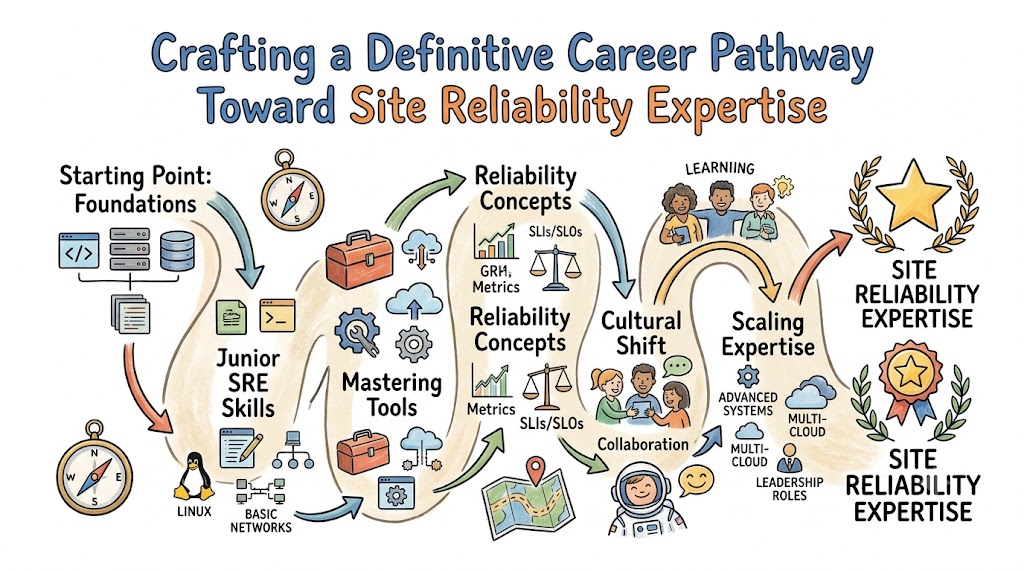
How to Become an Operations Expert — Career Roadmap
For Junior Infrastructure Engineers
- Master Linux Fundamentals: Learn to confidently traverse the directory structure, modify user file permissions, and debug applications using system logs.
- Adopt Scripting Proficiency: Focus your initial studies on mastering Python or Bash programming to automate basic, repetitive operating system workflows.
- Understand Networking Basics: Build an immutable mental model of core TCP/IP routing, DNS resolution mechanics, and common HTTP response statuses.
For Mid-Level Platform Specialists
- Implement Infrastructure as Code: Master industry tools like Terraform or OpenTofu to provision complex cloud topologies safely and programmatically.
- Learn Container Orchestration: Discover how to package software tightly inside lightweight Docker containers and manage them at scale using Kubernetes clusters.
- Build Telemetry Dashboards: Construct centralized logging and metrics collectors that aggregate system telemetry data into clear, actionable visual command centers.
For Senior Architectural Directors
- Evangelize Cultural Mindsets: Host internal educational sessions that teach development teams how to balance error budgets and share operational risk tracking.
- Optimize Multi-Cloud Expenditures: Dissect complex corporate cloud billing statements to eliminate asset waste while simultaneously pushing application performance boundaries higher.
- Design Disaster Recovery Blueprints: Author sophisticated, geo-replicated data recovery strategies that shield vital enterprise data resources against total regional data center destruction.
FAQ Section
- What is the primary difference between DevOps and Site Reliability Engineering?
DevOps operates as a broad cultural philosophy centered on breaking down internal corporate silos and accelerating the overall software delivery pipeline. Site Reliability Engineering acts as a concrete, highly prescriptive implementation of DevOps that uses software engineering disciplines to directly manage operational infrastructure metrics.
- How long does it typically take a beginner to complete a professional SRE certification?
Most dedicated entry-level students complete their foundational education curriculum and successfully clear the corresponding validation exam within two to three months of consistent study. This educational timeline depends heavily on your existing familiarity with basic Linux command-line tools and foundational cloud computing concepts.
- Can someone transition straight from a non-technical background into reliability engineering?
Yes, a non-technical individual can break into this field by systematically building core competencies in Linux systems administration, scripting, and networking. Following a structured, beginner-friendly certification path helps bridge the technical knowledge gap efficiently, validating your skills to potential hiring managers.
- Which programming language should an entry-level reliability engineer learn first?
Python remains the highly recommended programming language for beginners due to its incredibly clean, readable syntax and massive global community support. Python is extensively utilized across the industry for authoring infrastructure automation tools, managing API data tracking, and parsing complex application logs.
- Why are companies increasingly eager to hire certified SRE professionals over traditional admins?
Modern corporations deploy vast, dynamic cloud architectures that change by the minute and cannot be maintained through manual, server-by-server configurations. Companies require certified professionals who understand how to apply automated software development principles to manage thousands of computing nodes simultaneously and safely.
Final Summary
Embarks on a structured site reliability learning roadmap equips you with the exact technical blueprints required to thrive within complex modern cloud ecosystems. By dedicating yourself to mastering error budgets, declarative platform automation, and blameless operational cultures, you completely redefine your value within the technology marketplace. This educational progression successfully elevates your daily routine away from chaotic manual system patching towards designing elegant, self-healing software distribution frameworks. Consequently, validated entry-level professionals rapidly establish themselves as highly coveted technical assets across the global corporate landscape.
Furthermore, true infrastructure mastery requires a harmonious blend of cutting-edge software automation skills and a deeply cooperative, empathetic communication style across engineering departments. As you advance through each stage of this beginner roadmap, remember to prioritize cultural team alignment just as much as script precision. Investing your time in a structured validation program provides you with the undeniable technical credibility needed to lead these vital infrastructure transformations. Ultimately, maintaining this balanced engineering approach ensures your long-term advancement as an indispensable architectural leader in the enterprise arena.