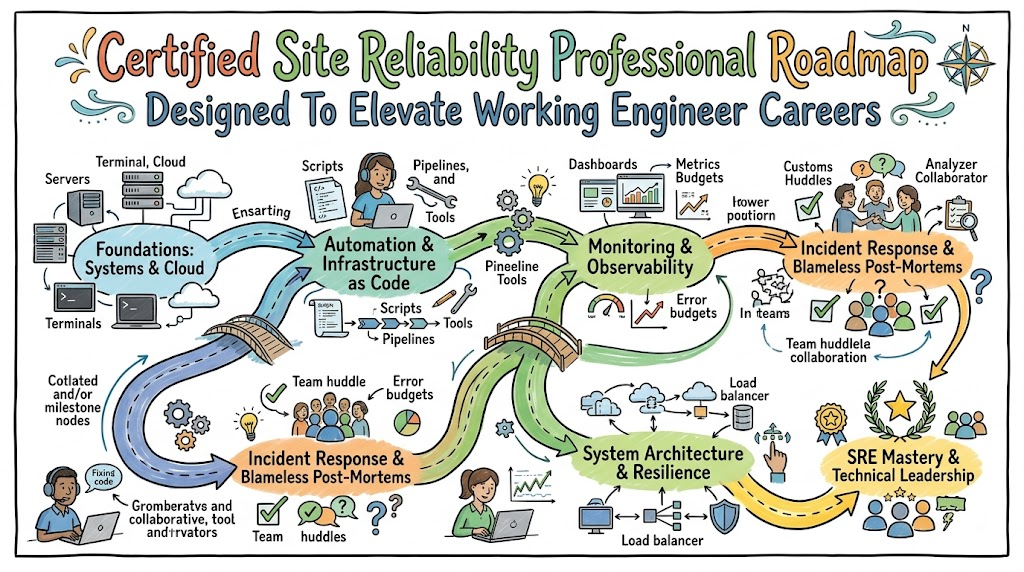
Navigating modern software development environments requires continuous adaptation as systems grow increasingly complex and distributed. Consequently, working engineers must acquire specialized skills to ensure complex digital infrastructures remain continuously available and resilient. Enrolling in an industry-recognized program through a structured platform like Sreschool empowers technical professionals to bridge the gap between traditional system administration and software engineering. This comprehensive roadmap explains how mastering automated operations builds a sustainable and high-growth technical career.
Furthermore, engineering teams frequently encounter severe operational friction when scaling cloud platforms without automated safeguards. When unexpected outages strike, unprepared organizations suffer significant financial losses and customer dissatisfaction. Therefore, adopting a certified learning framework equips you with proactive strategies to preempt system failures. By transforming operational chaos into predictable software workflows, you establish yourself as a vital leader in modern enterprise IT environments.
Defining the Value of Reliability Validation
Site Reliability Engineering combines software engineering methodologies with operational data management to create highly scalable digital architectures. When you validate your operational expertise through a structured certification, you prove your capacity to write code that manages infrastructure. Employers actively seek candidates who can replace manual firefighting with programmatic, self-healing system features. As a direct result, achieving formal validation significantly accelerates your career progression in competitive technology markets.
Additionally, structured credentials demonstrate your dedication to mastering advanced diagnostic tools and continuous deployment strategies. You learn to quantify system performance using precise mathematical models rather than subjective guesswork. This analytical approach enables you to optimize cloud expenditure while maintaining world-class application availability. Ultimately, obtaining professional validation equips you with the technical authority to lead enterprise-scale digital transformation initiatives.
Enhancing System Architecture and Systemic Resilience
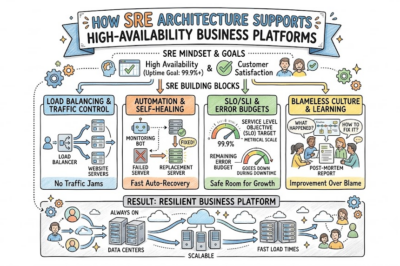
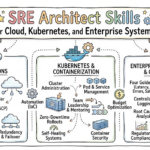
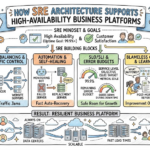
Designing resilient enterprise systems requires a deep conceptual understanding of distributed network topology, load distribution, and cloud storage. Certified engineers learn to architect systems that automatically withstand individual component failures without interrupting overall service delivery. Through structured training, you gain practical experience implementing redundant failover mechanisms and distributed data replication strategies. Consequently, your applications maintain exceptional operational stability even during sudden traffic surges.
Moreover, true systemic resilience involves embedding security protocols and real-time health checks into your automated deployment pipelines. You learn to audit architectural blueprints to identify single points of failure before shipping code to production environments. By proactively mitigating these structural risks, you protect your organization from costly downtime and brand reputation damage. Therefore, architectural mastery remains a fundamental pillar of senior-level operational engineering.
Scaling Infrastructure with Automated Engineering
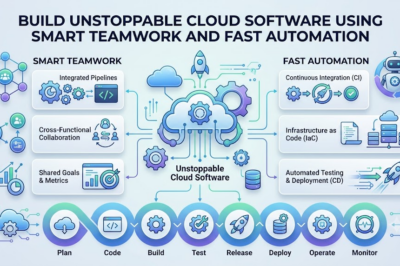
Manual server management becomes entirely unviable when managing thousands of virtual instances across global cloud data centers. Automated engineering enables you to define infrastructure using code, allowing instant and error-free environment provisioning. Certified engineers leverage programmatic configuration tools to standardize deployment processes across development, staging, and production tiers. As a result, software teams accelerate feature delivery cycles without compromising platform stability.
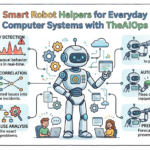
Furthermore, programmatic automation allows you to create intelligent monitoring routines that resolve standard system faults automatically. For instance, automated scripts can restart degraded microservices, clear storage caches, or provision extra compute nodes dynamically. This shift eliminates repetitive manual workloads, allowing engineers to dedicate time to strategic software innovations. Ultimately, mastering automated scale turns you into an invaluable operational strategist.
Maximizing Team Performance and Business Value
Reliability engineers serve as the crucial operational bridge between software developers and traditional IT operations teams. By establishing shared operational objectives, you align technical performance targets directly with organizational goals. Certified professionals excel at fostering collaborative culture, ensuring developers write code with production operational constraints in mind. Consequently, organizations experience smoother release cycles, reduced system downtime, and higher customer satisfaction.
In addition to improving team dynamics, your technical strategies directly safeguard the company’s financial bottom line. Mitigating application downtime ensures revenue-generating digital storefronts and transaction platforms remain online around the clock. Moreover, optimizing cloud infrastructure resource allocation yields substantial capital savings for executive decision-makers. Therefore, certified experts are universally recognized as primary drivers of long-term business growth.
Key Operational Concepts You Must Know
Service Level Objectives and Service Level Indicators
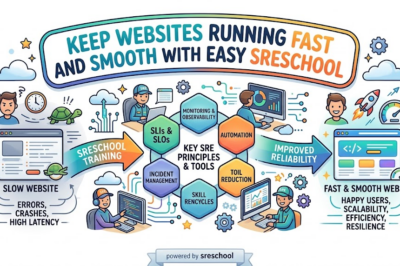
To maintain system health effectively, engineering teams must define and measure precise performance parameters continuously. Service Level Indicators represent the exact quantitative metrics that reflect active system health, such as request latency or error percentages. Meanwhile, Service Level Objectives define the target thresholds these metrics must meet over a designated operational window. Mastering these statistical measurements enables you to make objective, data-driven release decisions.
Error Budgets and Risk Toleration Strategies
An error budget represents the acceptable level of system instability a digital service can tolerate without frustrating customers. For example, a target availability goal of ninety-nine percent grants your engineering team a one percent budget for outages or updates. If your team exhausts this budget, feature releases pause to focus exclusively on infrastructure stabilization. This structured mechanism maintains a healthy balance between rapid software innovation and baseline service stability.
Blameless Post-Mortems and Root Cause Analysis
When system outages occur, modern operational teams prioritize finding procedural weaknesses over assigning individual blame. Blameless post-mortems encourage team members to report incident details transparently without fearing professional retribution. By conducting thorough root cause analyses, teams uncover underlying systemic vulnerabilities that allowed the failure to occur. This psychological safety transforms operational setbacks into powerful learning opportunities for the whole organization.
Toil Reduction and Strategic Automation
Toil encompasses manual, repetitive, and administrative tasks that keep services running but lack long-term architectural value. Common examples include manually resetting server nodes, executing routine database backups, or modifying access lists. Reliability engineering mandates limiting repetitive manual toil to less than half of an engineer’s work schedule. By writing intelligent software automation to manage repetitive tasks, engineers preserve mental energy for creative architectural design.
Platform Implementation vs. Culture — What’s the Real Difference?
| Operational Aspect | Platform Implementation Focus | Cultural Integration Focus |
|---|---|---|
| Primary Goal | Deploying specific software tools, monitoring dashboards, and cloud pipelines. | Fostering shared responsibility, open communication, and psychological safety. |
| Core Measurement | Tracking raw CPU utilization, network throughput, and memory consumption. | Evaluating team collaboration, post-mortem honesty, and organizational learning. |
| Error Handling | Executing automated failover scripts and generating instant PagerDuty alerts. | Conducting blameless technical reviews and modifying team operational policies. |
| Execution Method | Writing infrastructure scripts and building container orchestration clusters. | Aligning technical release velocities directly with business availability goals. |
Real-World Use Cases of Modern Operations
High-Volume E-Commerce Platforms
- Traffic Management: Deploying auto-scaling compute groups that dynamically expand capacity during major global shopping holidays.
- Database Isolation: Implementing read-replica database clusters to preserve smooth checkout flows during heavy user traffic spikes.
- Circuit Breaking: Architecting microservices to isolate external payment provider outages without crashing the core web application.
Global Financial Services
- Data Synchronization: Establishing low-latency data replication channels across multi-region banking data centers to prevent transaction losses.
- Continuous Compliance: Running automated policy scripts to audit security permissions continuously and prevent unauthorized data access.
- Chaos Testing: Injecting deliberate network delays into testing environments to verify that automated backup systems trigger instantly.
Healthcare Information Systems
- Zero-Downtime Upgrades: Utilizing blue-green deployment strategies to update core patient record databases without interrupting active care.
- Audit Logging: Maintaining tamper-proof audit trails that record every system transaction for regulatory compliance reviews.
- Proactive Alerting: Implementing predictive telemetry models to alert engineers before memory leaks cause critical application crashes.
Common Mistakes in Operations Engineering
Treating Reliability Teams as a Separate Silo
Many organizations mistakenly construct isolated reliability teams that function independently from active software developers. Consequently, developers continue releasing untested code while operations engineers bear the full burden of production failures. This fragmented setup reinforces operational friction and prevents genuine collaborative engineering. True system reliability requires continuous, integrated cooperation between developers and infrastructure engineers.
Over-Automating Without Clear Standard Processes
Attempting to build automated workflows around poorly defined manual processes creates chaotic and unpredictable systems. If your manual deployment procedure contains logical flaws, automating it merely speeds up system failure generation. Therefore, engineers must document, validate, and standardize manual procedures before writing code to execute them automatically. Careful initial planning prevents fragile, unmaintainable automation scripts in live environments.
Setting Overly Ambitious Availability Targets
Demanding absolute hundred percent application availability is financially impractical and technically unnecessary for most business models. Achieving extreme uptime requires redundant infrastructure setups that rapidly consume annual engineering budgets. Furthermore, over-engineered stability targets severely restrict software deployment speed, allowing agile competitors to gain market advantage. Teams must establish realistic targets that satisfy users while enabling fast feature delivery.
Ignoring Chronic Alert Fatigue in On-Call Rotations
Flooding on-call engineers with continuous streams of low-priority automated alerts causes severe burnout and desensitization. When engineers receive constant non-actionable notifications, they naturally struggle to spot critical production failures quickly. As a result, critical system outages remain unaddressed for prolonged periods, causing major business damage. Every configured alert must require immediate, specific human intervention to remain active.
How to Become an Operations Expert — Career Roadmap
For Junior Infrastructure Engineers
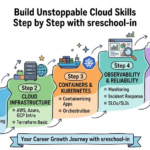
- Master Linux Administration: Gain confidence navigating the terminal, configuring file permissions, and analyzing system log directories.
- Learn a Scripting Language: Master Python or Bash to automate everyday system tasks and streamline workstation configurations.
- Understand Networking Fundamentals: Build a solid understanding of TCP/IP networking, DNS management, and HTTP status codes.
For Mid-Level Platform Specialists
- Adopt Infrastructure as Code: Master declarative tools like Terraform to provision multi-cloud environments consistently and safely.
- Master Container Orchestration: Learn to package applications using Docker containers and manage them at scale with Kubernetes clusters.
- Design Observability Systems: Build centralized telemetry stacks that combine metrics, traces, and logs into actionable visual dashboards.
For Senior Architectural Directors
- Drive Organizational Change: Conduct cross-departmental workshops to train developer teams on error budgets and joint operational accountability.
- Optimize Multi-Cloud Budgets: Analyze organizational cloud spending patterns to eliminate resource waste while maximizing system reliability.
- Formulate Disaster Recovery Blueprints: Author comprehensive failover strategies that guarantee continuous operations during major cloud provider outages.
FAQ Section
1. What is the primary operational distinction between DevOps and Site Reliability Engineering?
DevOps represents a cultural philosophy centered on breaking down silos and accelerating software delivery across organizations. Site Reliability Engineering provides concrete engineering practices, software tools, and measurable metrics like error budgets to implement that philosophy effectively.
2. How long does a working engineer typically take to complete a reliability certification program?
Most working professionals complete their structured study modules and pass the certification examination within two to three months of consistent study. However, preparation time varies based on your existing experience with cloud networking, Linux environments, and software programming.
3. Can a software developer transition successfully into a dedicated reliability engineering role?
Yes, software developers possess valuable coding skills that make them exceptionally well-suited for reliability engineering responsibilities. They simply need to expand their knowledge regarding cloud infrastructure design, container management platforms, and distributed telemetry monitoring.
4. Is advanced software programming experience mandatory to pass a reliability engineering assessment?
While expert-level application development skills are not required, you must understand basic coding logic and scripting structures thoroughly. Being able to read code and write automation scripts is crucial for configuring infrastructure and debugging distributed platform issues.
5. Why do modern enterprise organizations prioritize certified reliability engineers over traditional administrators?
Modern enterprises run complex cloud platforms that cannot be managed efficiently through old-fashioned, manual server administration methods. Certified professionals possess the automated software engineering skills necessary to manage thousands of server instances reliably at enterprise scale.
Final Summary
Adopting a certified reliability learning roadmap provides working engineers with the skills required to excel in modern cloud environments. By mastering essential concepts like error budgets, automated platform delivery, and blameless post-mortems, you elevate your career potential. This educational path shifts your focus away from reactive manual fixes toward building resilient, self-healing software architectures. Consequently, validated engineers remain highly sought after by top-tier global enterprises.
Furthermore, achieving long-term technical mastery requires balancing modern automation tools with an inclusive, highly collaborative team culture. As you progress along this career roadmap, emphasize both programmatic automation efficiency and effective cross-departmental communication. Investing in structured professional validation equips you with the authority needed to lead transformational infrastructure initiatives. Ultimately, this comprehensive expertise secures your position as a essential leader in the technology sector.