Introduction
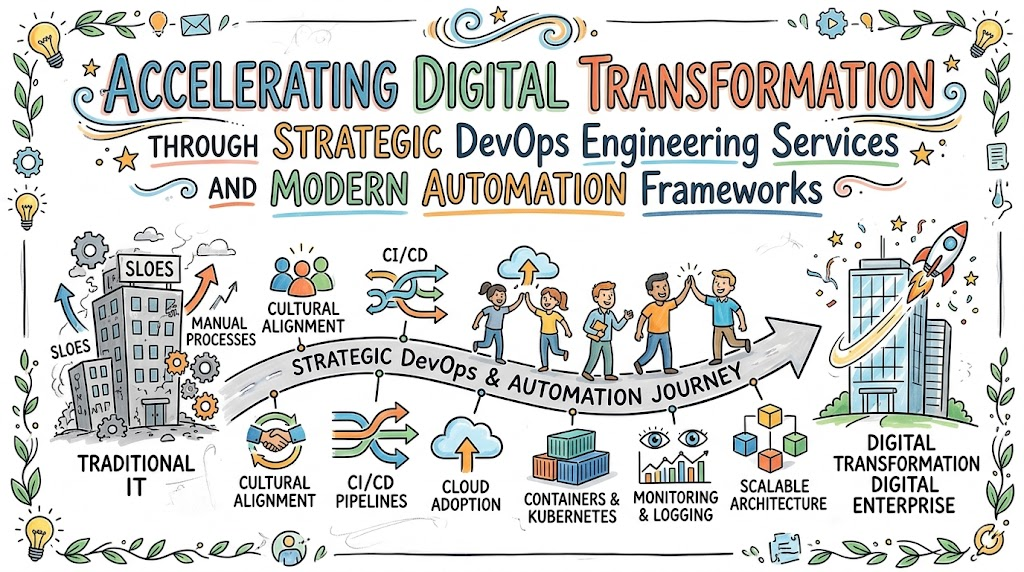
Scaling complex cloud systems requires technology teams to eliminate operational friction and modernize deployment workflows. Legacy development methodologies often create isolated operational silos that slow feature deployment, increase software defects, and inflate maintenance costs.
Collaborating with specialized cloud architects allows organizations to streamline continuous delivery, automate manual infrastructure tasks, and establish secure multi-cloud architectures. Furthermore, uniting software developers and system operators under shared operational frameworks drives continuous innovation and elevates overall software quality.
This comprehensive guide explores how advanced automation, cloud engineering, and strategic advisory services transform software operations for expanding enterprises.
What Is DevOps Consulting?
Strategic cloud consulting provides technical leadership to assess, re-architect, and optimize end-to-end software delivery ecosystems. Seasoned cloud advisors analyze existing software development lifecycles, deployment tools, and operational communication channels to identify core technical bottlenecks.
Furthermore, consultants design customized automation pipelines, establish automated testing frameworks, and build resilient cloud infrastructure. By replacing manual administrative workflows with version-controlled automation scripts, consultants empower developers to ship clean features continuously.
Ultimately, these advisory relationships link application creation directly to operational excellence. Organizations gain specialized technical expertise, minimizing digital transformation risks while expanding internal engineering capabilities.
Why Organizations Need DevOps Consulting Services
Modern cloud platforms feature complex microservices, serverless components, and distributed data stores that require constant operational oversight. Without clear engineering strategies, internal teams frequently encounter configuration errors, delayed releases, and unpredicted system outages.
Engaging professional DevOps Consulting Services provides immediate access to proven architecture patterns and specialized technical expertise. Consequently, this targeted guidance minimizes technical debt and drastically reduces the time required to build scalable deployment systems.
- Enhanced Delivery Velocity: Automated release pipelines eliminate manual approval steps, allowing teams to ship features to production in hours.
- Superior System Reliability: Standardized deployment templates eliminate configuration drift and minimize downtime across production environments.
- Embedded Security Governance: Automated vulnerability scanning catches security issues early in the software development lifecycle.
- Cost-Efficient Resource Scaling: Active cloud infrastructure optimization prevents over-provisioning and lowers compute expenditure.
CI/CD: The Foundation of Faster Software Delivery
Continuous Integration and Continuous Delivery form the primary technical engine driving high-performance software engineering organizations. Without automated compilation, validation, and deployment pipelines, releasing software remains a stressful, manual process prone to human error.
Configuring robust delivery pipelines ensures that automated test suites evaluate every single code modification immediately upon commit. As a outcome, developers receive immediate validation, enabling rapid bug fixes long before code reaches production systems.
Furthermore, continuous delivery platforms maintain deployment readiness across all staging and production environments. Consequently, engineering departments transform risky software launches into routine, low-impact daily deployments.
Infrastructure as Code Changes Infrastructure Management
Legacy server provisioning required manual administrative actions across individual cloud consoles or hardware racks, leading to inconsistent environments. Infrastructure as Code solves this operational challenge by defining networks, firewalls, and server clusters using version-controlled code files.
Utilizing modern infrastructure tools like Terraform and AWS CloudFormation, engineers instantiate identical environments across staging, testing, and production in minutes. Additionally, maintaining infrastructure code within central version control systems provides complete audit capability and rapid disaster recovery options.
This automated approach eliminates manual setup errors and enforces strict operational consistency across environments. Consequently, operations personnel manage global cloud platforms with the same precision and repeatability applied to application code.
Managed DevOps Services for Continuous Operations
Maintaining complex multi-cloud environments demands around-the-clock infrastructure monitoring, proactive patch management, and rapid incident handling. Growing technology companies often struggle to allocate internal development bandwidth purely toward daily system administration.
Leveraging specialized Managed DevOps Services equips organizations with dedicated, continuous operational support. External engineering specialists manage real-time observability, auto-scaling routines, routine backups, security patches, and emergency incident resolution continuously.
This sustained operational oversight significantly reduces internal engineer burnout and mitigates unplanned downtime risks. Consequently, internal application developers focus exclusively on creating business features and driving core product innovations.
AWS DevOps Consulting Services
Amazon Web Services offers an expansive suite of cloud services tailored for massive scale and high availability. However, building, securing, and optimizing complex AWS environments requires specialized domain mastery and hands-on operational experience.
Engaging dedicated AWS DevOps Consulting Services helps organizations design resilient, elastic applications using EKS, ECS, Lambda, and CloudFormation. Cloud architects construct automated deployment pipelines that seamlessly connect AWS infrastructure with custom developer tools.
Additionally, AWS specialists configure automated cost-management mechanisms, fine-grained access policies, and dynamic auto-scaling rules. This active management ensures that enterprise AWS workloads operate at peak efficiency, maintaining low latency and strict budget controls.
DevSecOps Consulting Services
Traditional software development models conducted security audits at the conclusion of project cycles, frequently creating launch delays. DevSecOps modernizes this paradigm by embedding automated security controls directly into every phase of the development pipeline.
By utilizing targeted DevSecOps Consulting Services, organizations deploy automated static code analysis, dynamic testing, and container vulnerability scans. Automated security policies function as continuous gatekeepers, preventing insecure code from reaching production environments.
Furthermore, automated secrets management and compliance-as-code frameworks protect sensitive credentials across public repositories. This proactive strategy builds resilient software applications while simplifying regulatory compliance tracking across the enterprise.
Kubernetes Consulting Services
Container technology fundamentally revolutionized how developers package and run applications across diverse computing environments. However, orchestrating containerized microservices across production clusters introduces complex operational requirements regarding networking, storage, and cluster state.
Through specialized Kubernetes Consulting Services, companies deploy, scale, and secure production-grade clusters across AWS EKS, Azure AKS, and Google GKE. External cluster experts set up robust ingress controllers, service meshes, persistent volume claims, and automated pod autoscaling policies.
Consequently, containerized applications deliver exceptional availability and performance under fluctuating user traffic. Engineering teams maintain fine-grained control over microservice deployments, enabling high application density without compromising system stability.
Cloud Migration Services India
Migrating core applications and infrastructure from legacy datacenters to modern cloud environments demands comprehensive planning and flawless execution. Rushed migrations lacking proper application refactoring often cause cost inflation and operational instability.
Partnering with top providers of Cloud Migration Services India ensures a smooth, zero-downtime transition to AWS, Azure, or Google Cloud platforms. Experienced migration architects evaluate existing software architectures to determine optimal migration strategies, including rehosting, re-platforming, or complete application redesign.
Moreover, executing structured, phased migration roadmaps maintains business continuity throughout technical changes. Once migrated, applications gain immediate advantages in operational elasticity, disaster recovery, and overall cloud efficiency.
Platform Engineering Consulting Services
As engineering departments expand, managing individual developer access permissions, sandbox environments, and deployment pipelines becomes inefficient. Platform engineering addresses this operational bottleneck by constructing Internal Developer Platforms that centralize tooling and infrastructure management.
By deploying strategic Platform Engineering Consulting Services, enterprises build clean self-service portals and standardized golden paths for engineering teams. These internal platforms empower developers to provision databases, spin up staging environments, and execute deployments independently.
Consequently, software engineers bypass administrative friction without violating enterprise security guardrails or compliance requirements. This self-service delivery model eliminates manual IT tickets, boosts developer morale, and accelerates overall application velocity.
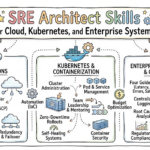
SRE Consulting Services
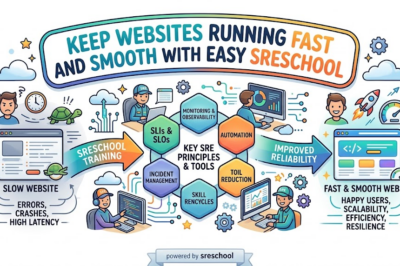
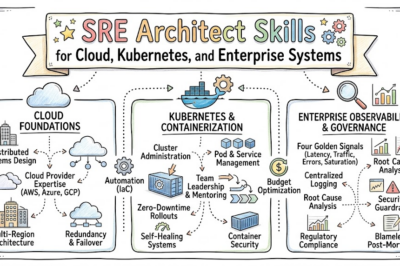
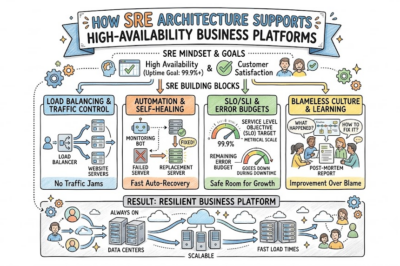
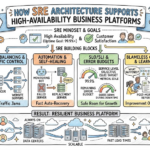
Site Reliability Engineering combines software engineering methodologies with system administration to create highly reliable distributed platforms. Instead of managing operations manually, SRE focuses on building automated, self-healing infrastructure and tracking data-driven reliability targets.
Partnering with experienced SRE Consulting Services enables organizations to define explicit Service Level Indicators and actionable Service Level Objectives. Engineering teams use error budgets to balance aggressive feature release schedules with continuous platform stability.
Furthermore, SRE teams automate chaos testing, load generation, and failover mechanisms to handle unexpected system stress. This proactive engineering discipline ensures critical digital products remain performant during extreme traffic surges or partial cloud provider outages.
Observability Is More Than Monitoring
Standard monitoring setups send simple alerts when servers crash or cross specific memory usage thresholds. In contrast, modern observability provides actionable, deep insights into why complex microservice systems experience performance degradation.
Establishing comprehensive observability requires consolidating system metrics, structured application logs, and distributed request traces into a centralized analytics platform. This detailed telemetry enables operations teams to trace cross-service calls and identify hidden latency bottlenecks immediately.
Ultimately, advanced observability transforms reactive emergency troubleshooting into proactive system performance engineering. Developers detect subtle regressions early, optimize code paths swiftly, and guarantee superior user experiences across all digital touchpoints.
DevOps Outsourcing Services
Recruiting and retaining qualified in-house cloud engineers, SRE specialists, and Kubernetes experts requires substantial time, capital, and management focus. Furthermore, intense competition in the technical labor market often delays critical infrastructure projects.
Utilizing flexible DevOps Outsourcing Services grants immediate access to pre-vetted, highly skilled cloud engineering teams. External technical experts integrate directly into your internal workflows, adopting your project management tools, communication channels, and development milestones.
Whether your organization requires temporary project assistance or permanent operational support, outsourcing provides exceptional scalability and cost efficiency. Companies execute critical technical roadmaps rapidly while retaining strategic ownership over core product vision.
How to Choose a DevOps Consulting Company India
Selecting a technical advisory firm represents a pivotal strategic decision that impacts your company’s long-term digital capabilities. Because many service providers offer similar toolsets, leadership must evaluate candidate firms based on demonstrated engineering depth and execution capabilities.
Partnering with a premier DevOps Consulting Company India provides access to exceptional technical talent with broad multi-cloud experience. However, verify that your selected partner focuses on internal team enablement and continuous knowledge transfer rather than selling vendor-specific tool licenses.
- Proven Engineering Background: Confirm a strong portfolio of building high-concurrency systems, microservices, and automated pipelines.
- Multi-Cloud Technical Mastery: Ensure expertise across major cloud platforms including AWS, Microsoft Azure, Google Cloud, and hybrid deployments.
- Integrated Security Focus: Verify that the firm integrates DevSecOps automation and compliance frameworks into pipeline designs.
- Commitment to Capability Transfer: Select partners who actively train your internal staff to operate and maintain systems independently over time.
Common DevOps Mistakes to Avoid
Many companies encounter severe setbacks during digital transformation projects by focusing exclusively on purchasing software tools while ignoring team workflows. Achieving real operational acceleration requires equal focus on organizational culture, platform architecture, and team alignment.
One major mistake involves treating automation purely as a software procurement task. Purchasing expensive platform licenses without reorganizing isolated developer and operations teams leads to persistent communication gaps and release delays.
Another common pitfall involves delaying security integration until the final release stage. Applying security checks at the end of delivery pipelines creates severe operational bottlenecks, frustrates development teams, and introduces avoidable vulnerabilities into production platforms.
| Operational Challenge | Direct Impact on Engineering | Proven Technical Solution |
|---|---|---|
| Siloed Team Structure | Communication gaps, delayed releases, higher error rates | Build cross-functional engineering units with shared goals |
| Toolchain Proliferation | Elevated maintenance costs, complex workflows | Standardize delivery pipelines using integrated platform golden paths |
| Post-Development Security | Production defects, compliance delays, costly rework | Shift security left by deploying automated DevSecOps pipelines |
| Lack of Performance Telemetry | Unseen performance bottlenecks, slow incident response | Deploy SLI/SLO tracking alongside full-stack system observability |
A Practical DevOps Transformation Roadmap
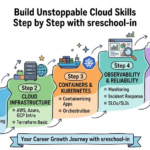
Transitioning toward an automated, resilient engineering model requires a systematic, phased implementation approach. Rather than attempting a complete architectural overhaul simultaneously, successful organizations execute incremental rollouts that deliver measurable technical improvements.
First, conduct a comprehensive audit of current software delivery pipelines, security frameworks, and cloud compute expenditures. Identifying release friction points early enables leadership to prioritize automation projects that yield the highest immediate returns for operational efficiency.
Next, standardize application containerization using specialized Kubernetes Consulting Services to deploy scalable production environments. Finally, deploy internal developer platforms and SRE disciplines to maintain developer autonomy alongside high platform availability.
When Should You Use Consulting, Managed Services, or Outsourcing?
Every technology group operates under specific team constraints, technical skill levels, and business deadlines. Selecting advisory consulting, ongoing managed operations, or resource outsourcing depends entirely on internal engineering maturity and immediate project goals.
- DevOps Consulting: Ideal when defining long-term cloud strategy, designing complex architectures, or modernizing legacy infrastructure.
- Managed DevOps Services: Optimal when your organization requires continuous 24/7 operational monitoring, patch management, and platform support.
- DevOps Outsourcing: Best when internal engineering teams require immediate specialized talent to execute urgent product roadmaps without recruitment delays.
Evaluating these engagement frameworks enables executive leadership to balance internal resource allocation with specialized external expertise effectively. Consequently, organizations maximize capital efficiency while maintaining high execution speed across all digital transformation projects.
Frequently Asked Questions About DevOpsConsulting
- How do dedicated DevOps consulting firms transform software delivery operations?
Professional consulting engagements deliver infrastructure automation, CI/CD pipeline design, cloud migration strategy, container orchestration, security automation, and enterprise observability configurations.
- How do cloud consultants accelerate software delivery speed?
Technical advisors remove manual operational roadblocks by establishing automated testing frameworks, standardized delivery pipelines, and self-service infrastructure tools that allow developers to deploy code safely.
- Why do enterprises adopt Managed DevOps Services for cloud support?
Managed services supply around-the-clock infrastructure monitoring, proactive incident response, cloud cost optimization, and ongoing security updates, enabling internal engineers to focus entirely on application features.
- What key advantages do AWS DevOps Consulting Services provide growing businesses?
AWS specialists optimize cloud architecture using native platform services like EKS, ECS, Lambda, and CloudFormation, guaranteeing maximum platform performance, automated scaling, robust security, and cloud cost efficiency.
- How does DevSecOps automate security within continuous delivery pipelines?
DevSecOps embeds static application analysis, dynamic vulnerability testing, and secrets scanning directly into CI/CD workflows, resolving security flaws long before code reaches production servers.
- What role do Kubernetes Consulting Services play in container management?
Kubernetes consultants architect, deploy, scale, and secure production-ready container clusters across AWS EKS, Azure AKS, and Google GKE, ensuring high availability and effortless application scaling.
- How do Cloud Migration Services India ensure zero business downtime during transition?
Migration specialists design and execute structured workload transfers from on-premises datacenters to cloud platforms, maintaining data integrity and application availability throughout the process.
- What primary problem does Platform Engineering solve for developer teams?
Platform engineering creates Internal Developer Platforms and standardized golden paths, empowering software engineers to provision infrastructure independently while maintaining strict enterprise compliance controls.
- How do SRE Consulting Services enhance complex system availability?
SRE experts implement SLI/SLO metrics, error budget governance, chaos testing protocols, and automated recovery systems, ensuring applications maintain peak stability during heavy traffic loads.
- When should technology leaders choose DevOps Outsourcing Services over local hiring?
Outsourcing provides the best path when businesses require immediate access to expert cloud, Kubernetes, or security engineers to scale operational capacity without long hiring cycles.
Final Thoughts
Transforming enterprise technology ecosystems demands continuous architectural innovation, proactive security automation, and strong operational discipline. Modernizing cloud platforms, streamlining release pipelines, and deploying self-service infrastructure enable organizations to deliver software features with unmatched velocity and reliability.
Partnering with experienced technical advisors empowers engineering leadership to resolve complex operational bottlenecks, optimize resource utilization, and build high-performing technical teams. Take decisive steps today to upgrade your software execution framework and secure a lasting competitive advantage in the digital marketplace.