Modern digital enterprises rely heavily on resilient distributed infrastructure to deliver continuous customer value. Therefore, IT professionals increasingly seek structured validation through accredited programs from platforms like Sreschool to prove their competence in complex cloud environments. Production systems demand robust architectural oversight that goes far beyond routine server maintenance. By pursuing professional validation, engineers master systematic techniques to eliminate systemic bottlenecks, automate deployments, and safeguard enterprise revenue around the clock.
Furthermore, distributed microservices introduce unpredictable failure modes that traditional operational workflows struggle to resolve. Certified specialists learn to replace guesswork with data-driven telemetry and algorithmic remediation. Consequently, organizations actively recruit individuals who can bridge the gap between rapid product feature delivery and rock-solid system stability. Mastering these core principles ensures your long-term relevance across high-scale engineering ecosystems.
Defining the Value of Reliability Validation
Reliability validation provides engineers with standard operational frameworks designed specifically for complex distributed architectures. Through formal study, you develop the ability to treat platform operations as pure software development challenges. This mindset shift empowers you to write reliable orchestration scripts instead of executing error-prone manual fixes. As a direct result, your team builds durable platform environments capable of scaling automatically under sudden traffic surges.
Moreover, obtaining an industry-recognized credential signals to prospective employers that you possess hands-on diagnostic competence. Validated engineers know how to identify performance regressions before they evolve into severe customer-facing incidents. This proactive capability dramatically reduces incident duration and safeguards critical business workflows. Ultimately, professional validation transforms standard IT administrators into indispensable architectural leaders.
Enhancing System Architecture and Systemic Resilience
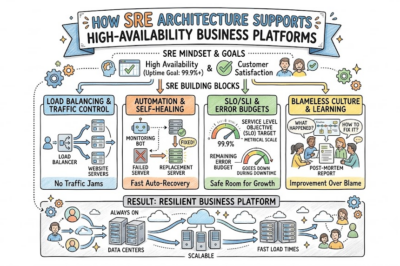
Designing reliable production architecture requires deep structural knowledge of containerization, network routing, and distributed state storage. Certified practitioners learn how to implement dynamic load balancing and fault-tolerant multi-region clusters. These architectural foundations prevent cascading failures from taking down the entire application stack during unexpected regional outages. Consequently, your digital platform maintains high availability despite underlying cloud hardware issues.
Additionally, resilient design demands automated recovery mechanisms and robust health-check loops across all service boundaries. You will gain expertise in constructing self-healing topologies that isolate faulty nodes without human intervention. By removing architectural single points of failure early, you protect user experience and reduce on-call pressure. Therefore, systemic resilience remains a primary focus of advanced platform engineering.
Scaling Infrastructure with Automated Engineering
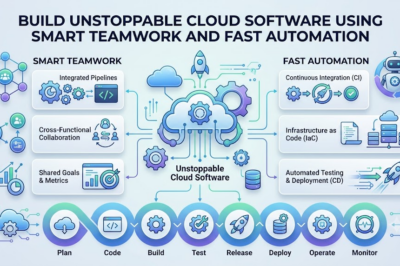
Manual platform provisioning inevitably fails when managing hundreds of microservices across hybrid cloud landscapes. Automated engineering empowers you to define complete cloud environments programmatically using declarative code. This modern methodology ensures that staging and production clusters remain perfectly synchronized, eliminating dangerous configuration drift. As a result, software developers deploy updates faster and with predictable runtime behavior.
Furthermore, strategic automation eliminates routine administrative overhead from daily operations workflows. Certified specialists configure automated scaling policies and algorithmic self-healing loops to maintain peak efficiency. This optimization saves operational expenditure while freeing valuable engineering hours for innovative platform development. In the long run, programmatic infrastructure management drives sustained business growth and system stability.
Maximizing Team Performance and Business Value
Reliability engineers serve as an essential communicative bridge connecting software development squads with enterprise infrastructure teams. By introducing unified performance metrics, you align technical engineering goals directly with organizational business targets. Certified experts lead collaborative reviews that foster shared accountability for software quality across departments. As a direct consequence, release cycles accelerate without compromising uptime or customer satisfaction.
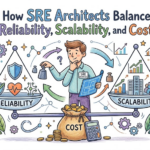
Beyond improving team dynamics, sound operational decisions directly protect company profitability. Minimizing unplanned downtime keeps high-value transaction pipelines online and generating revenue continuously. Furthermore, disciplined capacity planning eliminates costly over-provisioning across enterprise cloud accounts. Executive leaders recognize validated platform engineers as vital strategic contributors to modern corporate profitability.
Key Operational Concepts You Must Know
Service Level Objectives and Service Level Indicators
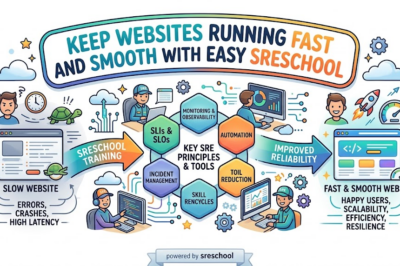
Establishing clear metrics remains essential for tracking the real-time health of modern digital platforms. Service Level Indicators measure quantitative operational attributes, such as API latency percentiles and successful request rates. Meanwhile, Service Level Objectives define target thresholds that keep users satisfied without over-engineering platform infrastructure. Understanding these metrics enables teams to make objective, data-backed decisions regarding software deployment safety.
Error Budgets and Risk Toleration Strategies
An error budget represents the acceptable margin of system unreliability that an organization tolerates over a specific timeframe. For example, a ninety-nine point nine percent availability target provides a small operational budget for system maintenance and experimental rollouts. If unexpected outages consume this safety margin, engineering squads temporarily halt feature releases to focus on stability. This mechanism balances innovative speed with operational resilience.
Blameless Post-Mortems and Root Cause Analysis
When critical production incidents inevitably happen, teams must focus on fixing structural weaknesses rather than assigning individual fault. Blameless post-mortems encourage open, transparent incident documentation without fear of retribution or blame. Performing rigorous root-cause analyses exposes hidden procedural flaws and fragile architectural boundaries. This collaborative approach converts high-stress outages into valuable institutional knowledge that permanently strengthens platform resilience.
Toil Reduction and Strategic Automation
Toil includes all repetitive, manual, and mundane tasks required to keep operational environments functioning day-to-day. Examples include running database cleanup scripts, manually restarting background workers, or provisioning access tokens. Professional reliability standards dictate that engineers spend the majority of their time building lasting architectural automation rather than performing manual toil. Eliminating operational toil preserves creative focus for developing high-impact platform tools.
Platform Implementation vs. Culture — What’s the Real Difference?
| Operational Aspect | Platform Implementation Focus | Cultural Integration Focus |
|---|---|---|
| Primary Objective | Provisioning telemetry dashboards, container orchestrators, and automated delivery pipelines. | Cultivating shared responsibility, psychological safety, and continuous learning across teams. |
| Success Metrics | Tracking resource saturation, request latency distributions, and CPU utilization rates. | Evaluating post-mortem transparency, collaborative velocity, and cross-team knowledge sharing. |
| Incident Response | Triggering automated alerting channels and executing pre-configured infrastructure failovers. | Conducting blameless retrospective reviews and refining engineering delivery protocols. |
| Day-to-Day Focus | Developing declarative infrastructure scripts and refining cloud configuration files. | Aligning product delivery priorities with established customer satisfaction baselines. |
Real-World Use Cases of Modern Operations
High-Volume E-Commerce Platforms
- Traffic Management: Dynamically expanding container pools to handle massive surge traffic during peak shopping events.
- Database Isolation: Segmenting high-demand read traffic across global caching layers to ensure fast checkout workflows.
- Graceful Degradation: Implementing circuit breakers to keep core storefronts functional even if recommendation engines experience latency.
Global Financial Services
- Data Synchronization: Maintaining real-time multi-region ledger replication with deterministic transaction guarantees.
- Continuous Compliance: Running automated policy scanners across cloud configurations to block unauthorized configuration changes.
- Chaos Engineering: Simulating sudden network partition failures to verify that automated database failovers execute without transaction loss.
Healthcare Information Systems
- Zero-Downtime Upgrades: Executing blue-green rollouts to update mission-critical clinical applications without disrupting active medical care.
- Audit Logging: Enforcing immutable distributed logging architectures for transparent regulatory record-keeping and audit validation.
- Proactive Alerting: Implementing predictive monitoring that flags memory saturation trends before critical diagnostic services degrade.
Common Mistakes in Operations Engineering
Treating Reliability Teams as a Separate Silo
Isolating operational specialists from core application developers undermines the fundamental principles of modern infrastructure engineering. When development squads simply toss unoptimized code over the wall, platform engineers become overwhelmed by preventable production bugs. This dynamic creates persistent organizational friction and delays software delivery cycles significantly. Sustainable operational resilience requires daily collaboration and shared architectural responsibility between all engineering teams.
Over-Automating Without Clear Standard Processes
Writing automated orchestration scripts for poorly understood manual workflows introduces unpredictable failure modes into production environments. Automating an unstable or undocumented process merely accelerates the rate at which system configurations break. Engineers must thoroughly document and test an operational procedure manually before constructing programmatic automation. Thorough preparation ensures your production automation remains deterministic, reliable, and easily maintainable.
Setting Overly Ambitious Availability Targets
Striving for absolute system perfection or zero annual downtime creates unsustainable operational overhead for any modern enterprise. Achieving excessive availability thresholds requires costly redundant hardware setups that deliver negligible incremental value to real users. Furthermore, strict targets stifle development velocity by making teams overly hesitant to deploy new features. Organizations must establish pragmatic reliability goals that satisfy customer expectations while sustaining innovative development.
Ignoring Chronic Alert Fatigue in On-Call Rotations
Flooding on-call staff with dozens of non-actionable notifications damages team morale and introduces massive operational risks. When engineers become overwhelmed by low-priority noise, they inevitably overlook critical alerts during genuine system emergencies. Every automated notification must represent an urgent, actionable problem requiring immediate human investigation. Streamlining your monitoring configurations prevents chronic burnout and ensures swift incident mitigation.
How to Become an Operations Expert — Career Roadmap
For Junior Infrastructure Engineers
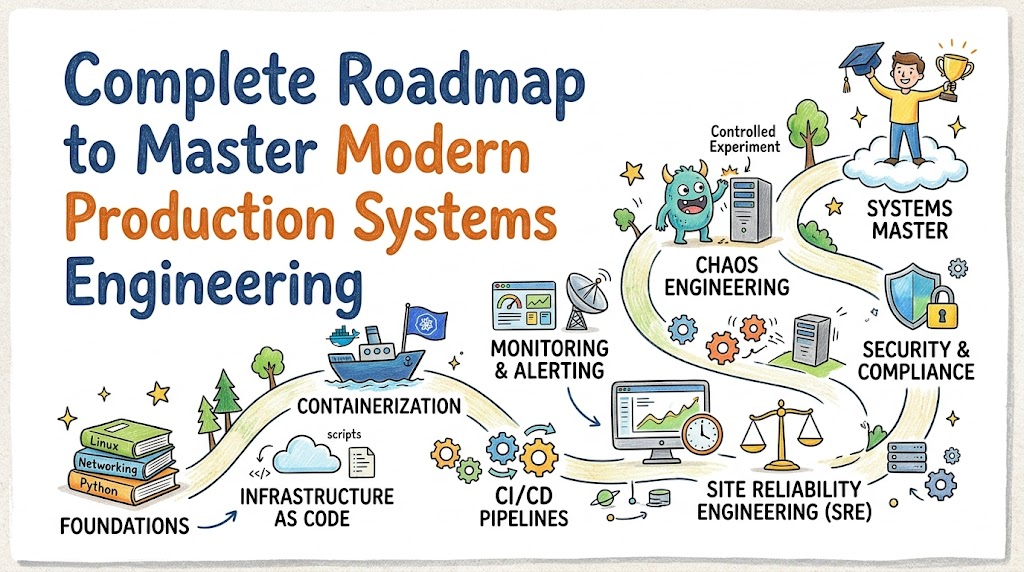
- Master Core Operating Systems: Build a strong working knowledge of Linux administration, file management, and kernel performance metrics.
- Develop Scripting Proficiency: Practice writing Python and Bash scripts to automate daily operational routines and log parsing tasks.
- Understand Networking Fundamentals: Gain proficiency in DNS routing, TLS handshakes, load balancing layers, and basic TCP/IP communications.
For Mid-Level Platform Specialists
- Adopt Infrastructure as Code: Use declarative provisioning frameworks to automate the lifecycle of multi-cloud resources safely.
- Master Container Orchestration: Learn to manage microservices using production-grade Kubernetes deployments, service meshes, and ingress controllers.
- Implement Advanced Observability: Design full-stack telemetry pipelines that correlate structured metrics, application traces, and centralized logs.
For Senior Architectural Directors
- Champion Blameless Culture: Mentor technical leads to conduct constructive incident post-mortems and embrace calculated development risks.
- Optimize Global Infrastructure Costs: Analyze cloud utilization patterns to streamline compute waste and negotiate infrastructure contracts efficiently.
- Direct Enterprise Resilience Strategy: Author comprehensive disaster recovery frameworks that ensure continuous data availability during critical disruptions.
FAQ Section
- How does professional reliability certification benefit traditional software developers?
It equips developers with deep operational insights into how distributed systems behave under production stress. This knowledge enables developers to write more resilient code, debug complex cloud interactions efficiently, and design fault-tolerant microservices architectures.
- What technical background is required before starting this certification path?
A working foundation in Linux command-line operations, basic cloud infrastructure concepts, and fundamental programming or scripting logic is recommended. Familiarity with standard networking protocols and version control tools will also accelerate your learning progress.
- Why are organizations shifting focus toward error budgets and blameless post-mortems?
These frameworks foster an engineering environment that balances fast-paced software innovation with high system stability. By removing fear from post-incident reviews, teams uncover systemic flaws quickly and prevent catastrophic repeated outages.
- How does reliability engineering differ from conventional systems administration?
Conventional administration relies heavily on manual server configurations and reactive incident firefighting. In contrast, reliability engineering applies software development principles to automate platform operations, manage infrastructure programmatically, and build self-healing environments.
- What immediate career opportunities open up after achieving reliability certification?
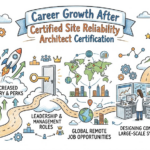
Certified professionals qualify for high-demand technical roles such as Platform Engineer, Site Reliability Engineer, Cloud Architect, and Infrastructure Operations Lead across diverse global technology enterprises.
Final Summary
Earning an advanced engineering credential transforms your approach to managing mission-critical enterprise systems. By mastering quantitative metrics like error budgets and embracing blameless operational cultures, you turn daily operational hurdles into strategic competitive advantages. This structured career path transitions your focus away from reactive manual fixes toward designing scalable, self-healing digital platforms. Consequently, certified specialists remain among the most sought-after professionals in the global technology marketplace.
Furthermore, true technical mastery requires balancing modern automation tools with open, collaborative engineering mindsets. As you progress along this career roadmap, prioritize reducing operational toil and eliminating structural silos between engineering disciplines. Investing in rigorous, industry-recognized validation gives you the authority and confidence needed to build the future of resilient infrastructure. Ultimately, these advanced engineering capabilities ensure your continuous growth as an essential technical leader.