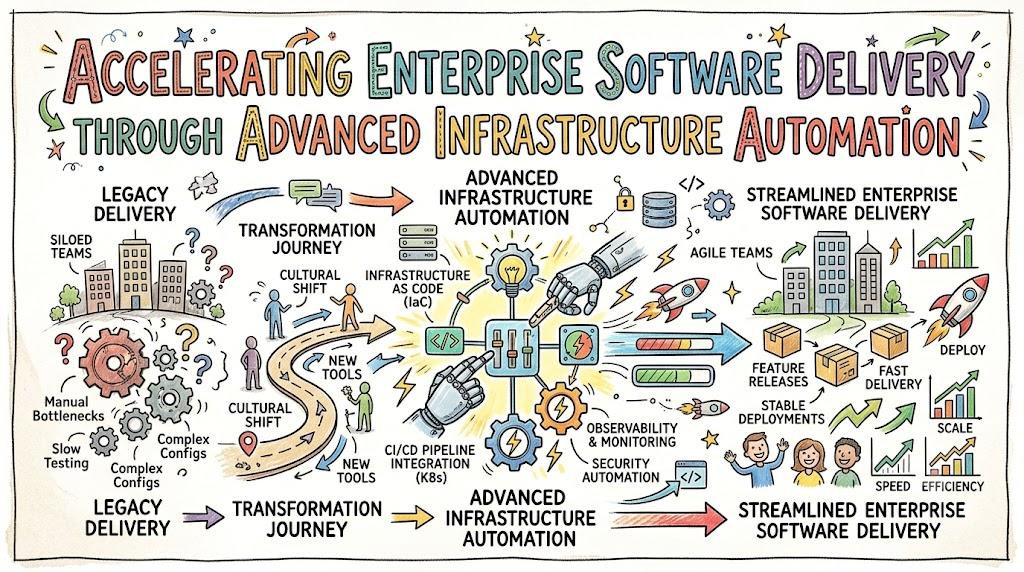
Modern business environments demand rapid digital agility, yet internal engineering groups constantly struggle to maintain stable software deployment velocities. Siloed organizational frameworks frequently separate software application developers from system operations specialists, triggering deployment delays, high configuration error rates, and delayed product releases. To break through these costly engineering bottlenecks, forward-thinking business leaders collaborate with Cotocus, an expert consulting firm that specializes in engineering fluid, multi-cloud automated ecosystems. Partnering with a premier DevOps Consulting Company allows enterprises to redesign their delivery pipelines, minimize structural inefficiencies, and sustain long-term business growth.
Orchestrating Fluent Application Delivery Frameworks
Manual infrastructure setups stall product release schedules and introduce critical human mistakes into production environments. Engineering leaders resolve these errors by executing Infrastructure Automation Consulting strategies, which turn manual build tasks into clean, repeatable code scripts. Teams provision production servers, relational databases, and secure network spaces in minutes rather than weeks.
At the same time, optimizing these delivery systems requires custom CI/CD Pipeline Consulting to validate incremental code modifications immediately upon engineer submission. This setup allows developers to merge updates frequently, run automated test beds, and deliver finalized software safely to production. High-performing corporations apply holistic DevOps Consulting Services to coordinate development and operations into a single continuous delivery machine.
Migrating Modern Enterprise Assets to Cloud Ecosystems
Rigid physical servers limit corporate scalability and increase operational overhead as transaction volumes grow. Enterprises utilize advanced Cloud Consulting Services to engineer elastic, highly resilient cloud architectures that scale on demand. Shifting legacy systems requires tactical care, making dedicated Cloud Migration Services vital for moving enterprise records into hybrid cloud platforms without halting active applications.
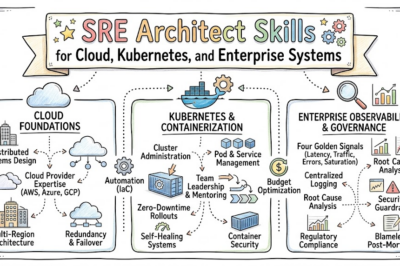
Once workloads run on cloud infrastructure, engineers require reliable orchestration mechanisms to manage microservices cleanly. Technical leaders deploy Kubernetes Consulting Services to automate container placement, scaling, and networking across large computer clusters. Furthermore, scheduling structured Kubernetes Corporate Training ensures internal engineering divisions possess the exact skills needed to manage these orchestration hubs natively.
Elevating System Resiliency with Platform Abstraction
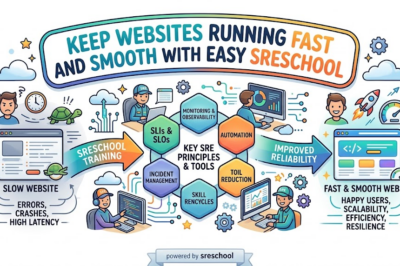
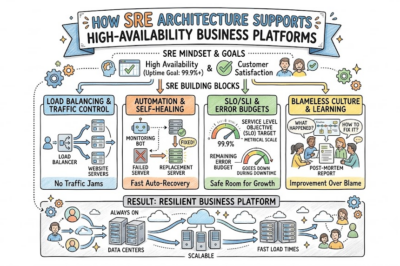
System downtime destroys customer trust and impacts bottom-line business revenue. To prevent outages, modern corporations implement Site Reliability Engineering Consulting principles that apply strict programming logic to IT operations tasks. This engineering methodology helps teams monitor precise error budgets, set availability goals, and build automated incident response mechanisms.
Engaging in targeted SRE Consulting Services enables businesses to build self-healing applications that isolate and repair infrastructure bugs before customers ever experience a service lag. To help product developers bypass infrastructure complexities, organizations adopt Platform Engineering Consulting to design intuitive internal developer portals. Git repositories then act as the single source of truth for all environment adjustments under GitOps Consulting Services.
Safeguarding Operations Through Continuous Team Upskilling
Postponing security reviews until the final phase of a software release loop exposes systems to threats and postpones vital updates. For this reason, leadership teams utilize DevSecOps Consulting Services to plant automated security guardrails directly into the initial software design phases. This configuration runs dependency checks, verifies compliance standards, and scans code vulnerabilities automatically during every build.
Instilling these protection mechanisms across a business requires targeted DevSecOps Corporate Training for all active engineers. In addition, organizations that prioritize deep workforce evolution run comprehensive DevOps Corporate Training programs to cultivate a strong culture of technical excellence. Ultimately, investing in tailored DevOps Training for Companies bridges internal knowledge gaps and enables technical staff to handle intricate cloud systems efficiently.
Injecting Intelligence into Data Streams and AI Models
Vast application networks generate immense volumes of logging data, which makes manual root-cause analysis completely ineffective. Enterprises implement AIOps Consulting Services to evaluate system logs using machine learning algorithms that identify and mitigate system failures before an outage strikes.
Similarly, launching artificial intelligence software requires unique operational lifecycles, which is why MLOps Consulting Services standardize how data science groups test, deploy, and monitor predictive models over time. Finally, specialized DataOps Consulting Services keep corporate data streams accessible and secure, automating data engineering pipelines to supply verified data across the corporate workspace.
Technical Foundations of Modern Infrastructure
Engineering executives must align their teams on core automated concepts to ensure successful infrastructure transformations:
- Infrastructure as Code (IaC) — Setting up and managing enterprise computing environments using machine-readable script files instead of manual console adjustments.
- Continuous Integration (CI) — Merging developer code variations into a central repository multiple times a day using automated verification tools.
- Continuous Delivery (CD) — Packaging code alterations automatically so teams can roll out software to production at a moment’s notice.
- Container Orchestration — Controlling the lifecycle, deployment, and network connectivity of software microservices housed inside isolated containers.
- Observability — Assessing the internal performance states of a complex system by tracking external outputs like logs, metrics, and traces.
- Immutable Infrastructure — Deploying immutable server images that teams replace entirely when updates drop, rather than modifying active servers.
- Declarative Configuration — Defining the precise target state of an IT environment and letting automation tools execute the required setup steps.
These core architectural building blocks interact to form an agile corporate culture. Infrastructure scripts feed continuous delivery tracks, while container managers ensure applications stay reliable, highly observable, and simple to expand.
Comparing Core Methodologies: DevOps vs. SRE
Organizations often confuse high-level cultural concepts with concrete implementation steps, which leads to misaligned engineering goals and poor resource utilization. While both practices aim to eliminate systemic friction, they deploy unique tactical approaches to achieve that goal.
| Performance Metric | DevOps Framework | Site Reliability Engineering (SRE) |
|---|---|---|
| Foundational Focus | Cultivates collaboration, breaking down structural walls between creators and operators. | Uses software engineering principles to solve complex infrastructure and operations puzzles. |
| Delivery Target | Maximizes the frequency and speed of software updates flowing to production. | Optimizes system availability, platform uptime, and post-deployment stability. |
| Task Ownership | Distributes operational accountability evenly among developers and infrastructure engineers. | Relies on specialized SRE squads who audit system health and manage error budgets. |
| Common Failure | Teams adopt fancy automation software without altering corporate communication habits. | Operations staff gets bogged down by manual firefighting instead of writing automation code. |
| Practical Scenario | Engineering an automated pipeline that lets creators push updates multiple times daily. | Scripting an automated routine to restart a cloud server when memory utilization hits maximums. |
Conflating these distinct paradigms stalls organizational progress and produces fragile systems. Software creators end up building features without tracking performance boundaries, while IT operations groups burn out trying to maintain uptime without system code authority. Consequently, companies fail to realize the rapid feature delivery and bulletproof reliability their users expect.
Operational Excellence Across Diverse Sectors
Modern engineering initiatives unlock substantial corporate value by scrubbing away technical debt. The table below details how various enterprises convert advanced technical methodologies into concrete business results:
| Business Segment | Primary Obstacle | Automation Strategy | Quantifiable Outcome |
|---|---|---|---|
| Retail Tech | Digital store systems crashed under sudden customer traffic spikes during major holiday sales. | Integrated auto-scaling features and managed container clusters with Kubernetes orchestration. | Maintained continuous uptime during massive traffic events, supporting a quadruple load increase. |
| Financial Services | Manual regulatory compliance audits delayed important application updates for months. | Maintained DevSecOps delivery tracks featuring continuous compliance code checking. | Cut corporate security auditing timelines from ninety days down to under fifteen minutes. |
| Healthcare Platforms | High legacy data center upkeep costs limited patient portal speed and scalability. | Executed a zero-downtime migration strategy into secure, containerized cloud environments. | Trimmed cloud hosting expenditures by forty-five percent while doubling system response speeds. |
| Enterprise SaaS | Engineers wasted hours manually tracking down, diagnosing, and patching system bugs. | Implemented end-to-end telemetry systems alongside automated SRE monitoring tools. | Slashed mean time to resolution by seventy percent, fixing errors before buyers noticed. |
Systemic Pitfalls to Avoid
- Focusing on software tools while ignoring team culture — Buying expensive application licenses without reforming how development and operations teams interact fails because software cannot fix broken communication habits.
- Treating infrastructure automation as a secondary task — Building systems manually with plans to automate later causes environmental drift, creating servers that engineers cannot duplicate accurately.
- Skipping thorough employee upskilling initiatives — Launching sophisticated platforms like Kubernetes without training staff triggers frequent outages and makes companies dependent on external assistance.
- Delaying security evaluations until final code delivery — Skipping vulnerability checks until right before an application launch exposes systems to threats and creates costly launch delays.
- Constructing overly complex architecture right at the start — Engineering dozens of microservices for a basic app introduces heavy maintenance burdens without adding immediate business value.
- Neglecting to define clear infrastructure monitoring rules — Gathering massive volumes of server log data without configuring smart alerts causes alert fatigue, leaving critical warning signs unnoticed.
Tactical Implementation Progression
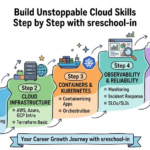
Phase 1: Basic Automation (Source Control, CI/CD, Simple IaC)
       │
       ▼
Phase 2: Container Ecosystems (Docker Packages, Kubernetes Management)
       │
       ▼
Phase 3: Resiliency & Security (DevSecOps Auditing, SRE Error Budgets)
       │
       ▼
Phase 4: Cognitive Operations (AIOps Analytics, Targeted Corporate Upskilling)
- Basic Automation — Organize core version control repositories, assemble predictable build pipelines, and write infrastructure scripts to eradicate manual configuration steps.
- Container Ecosystems — Bundle software assets inside portable containers, transition core workloads to cloud environments, and apply cluster managers to gain automated scaling.
- Resiliency and Security — Deploy real-time code scanning tools directly within delivery paths, monitor strict availability limits, and engineer self-healing recovery tasks.
- Cognitive Operations — Harness machine learning tools to evaluate operations data, automate data engineering paths, and run continuing technical education tracks to ensure absolute self-sufficiency.
Transforming IT Frameworks with Cotocus
Securing an enterprise technical partner requires verifying concrete execution records and deep architectural insight. Operating as a premier Digital Transformation Consulting Company, Cotocus delivers comprehensive strategic counseling that turns outmoded corporate systems into highly automated, nimble environments. The consulting group contributes deep multi-cloud experience to every engagement, steering corporate clients clear of common migration blunders.
Additionally, Cotocus blends technical delivery with rigorous workforce training plans. This dual focus ensures internal engineering divisions possess the exact capabilities required to run, protect, and scale cutting-edge platforms long after the consulting engagement finishes. By targeting cultural modernization alongside automated tooling, Cotocus builds sustainable operational speed that allows modern brands to grow with absolute certainty.
Answers to Key Technical Inquiries
- How do DevOps models improve on traditional IT service workflows?Legacy IT operations separate software creators from system maintainers, which sparks delivery bottlenecks, communication walls, and conflicting goals. DevOps blends these teams into a unified loop, using smart automation to build, test, and release quality features quickly.
- In what ways does infrastructure automation reduce enterprise overhead?Replacing manual configuration work with code scripts eliminates human error and accelerates environment setup times from weeks to minutes. This efficiency lowers system maintenance costs, maximizes cloud server use, and allows engineers to spend time building core business tools.
- Why must engineering teams prioritize DevSecOps over old-school security checks?Old-school security audits happen at the tail end of production cycles, creating massive release delays when developers discover vulnerabilities late. DevSecOps injects automated testing directly into early build phases, enabling teams to remediate threats instantly.
- What exact value do AIOps and MLOps provide to data-focused companies?AIOps applies machine learning to analyze system telemetry logs instantly, allowing infrastructure operators to catch and fix hardware anomalies before they cause user-facing downtime. MLOps structures the training and deployment of AI models, keeping software predictions reliable.
- What timeline should an enterprise expect when planning a full cloud migration?The migration window changes based on the scale, architecture, and age of the legacy apps moving to the cloud. Basic lift-and-shift projects wrap up in a few weeks, whereas rewriting monolithic enterprise systems into cloud-native microservices requires several months of careful execution.
Summary of Operational Agility
Sustaining high digital execution speeds requires modern companies to mesh automated delivery paths, cloud architectures, strict site reliability methods, and continuous engineering education. Removing legacy organizational barriers and using data-driven workflows allows enterprises to ship products rapidly while maintaining world-class software uptime. To explore how your company can erase technical debt and foster engineering independence, check out the Cotocus homepage and request a comprehensive infrastructure evaluation today.