Unlocking Organizational Potential
Forward-thinking companies proactively deploy intelligent software architectures to optimize core operational processes and gain sustainable market advantages. Achieving engineering excellence demands structured governance, continuous skill enhancement, and robust operational protocols. AIUniverse offers comprehensive educational resources and strategic advisory services that empower software engineers, technology managers, and corporate teams to deploy modern digital solutions with total confidence. By focusing on practical application, professionals convert complex mathematical models into resilient production platforms.
In addition, mastering modern software engineering principles enables technical teams to construct scalable, secure applications. As enterprise infrastructure grows increasingly intricate, businesses require qualified engineers who understand automated delivery pipelines, model governance, and security controls. Participating in practical learning environments allows developers to acquire critical problem-solving capabilities rapidly. Consequently, continuous technical training remains the primary engine driving enterprise innovation and long-term organizational stability.
The Evolving Landscape of Corporate Intelligence
Modern enterprises treat advanced digital platforms as the primary driver of organizational speed rather than a mere administrative support tool. Enterprise applications continuously process massive data streams to automate complex workflows and predict market shifts accurately. As a result, organizations that embrace modern software frameworks gain substantial productivity advantages over traditional competitors. However, deploying complex digital tools requires specialized expertise in system architecture, data protection, and continuous maintenance.
Furthermore, rapid technological developments require ongoing skill development across software development teams. Technical specialists must regularly master emerging software frameworks to construct secure, adaptable system architectures. Companies must also build flexible operating environments that support swift software updates while keeping operational risks low. By committing to continuous technical education, organizations convert raw data into actionable intelligence and secure lasting market leadership.
Expanding Technical Capabilities Through the AIUniverse Platform
AIUniverse acts as an all-inclusive learning ecosystem designed to guide software engineers, data analysts, and executive teams through every stage of technical development. The platform combines structured training paths, objective software evaluations, and strategic advisory services inside a single unified resource. By closing the divide between theoretical concepts and live execution, the platform accelerates practical skill acquisition. Whether engineers seek to broaden their technical capabilities or executive boards plan enterprise modernization, the platform provides tailored resources to reach core operational goals.
Moreover, the platform prioritizes practical exercises so that users build functional competencies instead of memorizing basic concepts. Comprehensive software reviews and direct platform comparisons allow engineers to test technologies thoroughly before committing to production deployments. This hands-on method eliminates operational friction and shortens software development cycles across corporate teams. Furthermore, expert mentorship from seasoned professionals encourages continuous learning through real projects, giving engineering teams the confidence to build robust, high-performing software platforms.
Acquiring Practical Skills Via Direct Coding Execution
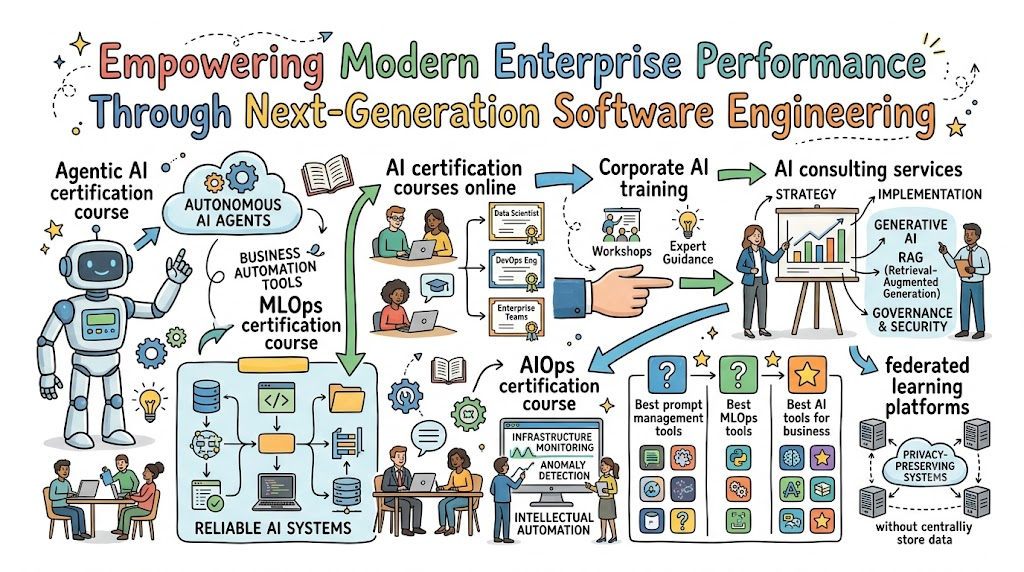
Gaining true expertise in modern software engineering requires active coding experience rather than passive instruction. Technical professionals must write clean code, debug intricate systems, and engineer scalable architectures to grasp fundamental software concepts thoroughly. Enrolling in specialized AI certification courses online delivers hands-on experience by exposing developers, data engineers, and infrastructure architects to genuine operational challenges. These structured programs guide learners through practical exercises that assemble strong portfolios and solidify foundational knowledge.
Additionally, organized learning paths help technical specialists advance systematically from basic concepts to advanced system design. Through guided projects, engineers master model evaluation, feature engineering, platform integration, and system optimization. Expert mentors provide immediate, actionable feedback on code quality and architectural decisions. This practical focus prepares engineers to resolve live production bugs, optimize execution speed, and deploy scalable enterprise software solutions.
Building Reliable Production Workflows with MLOps Practices
Deploying machine learning applications into live production environments introduces engineering complexities that traditional software methodologies cannot resolve alone. Enterprise teams must establish automated pipelines for continuous integration, delivery, monitoring, and ongoing maintenance to preserve system stability. Completing an MLOps certification course equips software engineers and data scientists with the tools to automate delivery workflows effectively. Through practical exercises, technical teams learn to track model versions, detect data drift, and trigger automated retraining without disrupting live services.
Furthermore, adopting structured machine learning operations bridges the communication divide between data science departments and system operations engineers. Standardizing build environments and release procedures enables organizations to reduce deployment cycles from months to days. Automated monitoring tools notify engineers about performance drops before end users experience system degradation. Ultimately, adopting standard operational practices minimizes downtime, controls infrastructure expenses, and allows enterprises to scale complex applications reliably.
Transforming Infrastructure Management Using AIOps Tools
Contemporary IT infrastructure generates immense volumes of telemetry data, event logs, and operational alerts every single second. Managing these vast networks manually leads to operational bottlenecks and increases the risk of costly service outages. Participating in an AIOps certification course helps system administrators and IT leaders apply intelligent algorithms to infrastructure monitoring and incident resolution. By running continuous analytics on system telemetry, operational teams automatically identify performance anomalies, perform root-cause analysis, and fix bugs before they impact user experience.
Moreover, intelligent operational tools filter out background noise so system administrators can focus on genuine security threats and system failures. Automated workflows execute corrective measures immediately, such as scaling server clusters dynamically or restarting failed services. Consequently, IT departments maintain high uptime while redirecting technical talent toward high-value strategic initiatives. Automated infrastructure management also offers clear operational visibility, helping executives make data-backed choices regarding hardware investments and resource allocation.
Upskilling Internal Talent Through Corporate AI Training
Enterprise organizations must upskill their workforce continuously to keep pace with changing market dynamics and leverage advanced digital tools. Investing in customized corporate AI training enables businesses to build strong internal capabilities tailored to their specific operational workflows. These custom educational programs align technical instruction with actual enterprise projects, ensuring employees gain skills that directly support business goals. Training teams together nurtures a culture of technical innovation and joint problem-solving, which accelerates technology adoption across all departments.
Furthermore, tailored corporate programs accommodate diverse roles within an organization, from frontline software developers to senior managers. Custom modules cover critical subjects such as automated data processing, workflow integration, model governance, and safe deployment protocols. Upskilling internal staff reduces dependence on costly external contractors and speeds up feature releases. In addition, providing continuous learning options boosts employee retention and job satisfaction across engineering teams.
Closing Enterprise Knowledge Gaps with Systematic Upskilling
Fast-paced technological change frequently creates skill gaps inside technical teams, which slows down project delivery and reduces overall operational efficiency. Without structured training programs, engineers may rely on outdated development practices or inconsistent coding standards, introducing system inefficiencies. Implementing organized training frameworks ensures that engineering teams follow uniform coding practices, security guidelines, and system architectures. As a result, systematic upskilling eliminates knowledge silos and improves technical alignment across functional units.
Additionally, organized learning paths help businesses adapt quickly to new software frameworks, industry trends, and evolving market requirements. Employees who receive regular training evaluate emerging technologies with precision and determine their practical business value accurately. This proactive mindset prevents technical debt and ensures enterprise software architectures remain flexible and modern. Furthermore, structured training provides technical staff with clear career growth opportunities, boosting team morale and operational focus.
Realizing Strategic Vision Through AI Consulting Services
While crafting an ambitious technology strategy is vital, carrying out that vision requires specialized technical skills and tested implementation frameworks. Partnering with professional AI consulting services helps enterprises navigate complex architectural choices, avoid costly execution errors, and speed up release schedules. Experienced consultants collaborate directly with internal leadership to evaluate technical readiness, pinpoint high-impact opportunities, and draft scalable system roadmaps. By introducing domain expertise, external advisors ensure technical implementations line up directly with core business objectives.
Moreover, specialized consultants support enterprises through vendor selection, software integration, and overall system tuning. They help engineering leaders establish firm governance policies, ensuring deployed applications comply with industry regulations and security standards. Expert oversight minimizes technical risks and maximizes the return on software investments. In addition, consultants transfer practical knowledge to internal teams throughout the engagement, building long-term self-sufficiency.
Key Advisory Services Provided by Strategic Consultants
Professional strategic advisory services cover a wide range of engineering disciplines, offering enterprise leaders comprehensive support for digital initiatives. Advisors assist with infrastructure audits, platform selection, custom application engineering, and real-time monitoring setups. They also guide organizations in embedding modern machine learning features into legacy software without disrupting daily business operations. By taking an end-to-end approach, consultants ensure every layer of the technology stack operates seamlessly.
Furthermore, consulting services focus heavily on key operational factors such as cost management, risk mitigation, and team alignment. Advisors help management design clear communication channels that connect data scientists, software engineers, and business leaders. They also set up monitoring frameworks to track key performance metrics and business impact over time. This broad strategy guarantees that technology investments produce measurable business returns instead of simple technical experimentation.
Automating Enterprise Processes with Autonomous AI Agents
The rise of autonomous software platforms has introduced powerful agents that handle complex business operations with minimal human input. Specialized training programs, such as an Agentic AI certification course, teach software developers how to build intelligent agents that reason, plan multi-step workflows, and interact with external software systems. These autonomous tools process incoming information, make contextual decisions, and complete tasks across third-party applications. Deploying agentic workflows eliminates manual administrative tasks and boosts operational speed.
In addition, autonomous process automation transforms traditional customer support, supply chain logistics, and internal administration. Deploying intelligent agents to handle routine inquiries and process documentation frees human staff to focus on creative, high-value tasks. These automated platforms run continuously, maintaining consistent service standards while reducing human error. Furthermore, agentic systems adapt to changing operational conditions and improve output quality over time through user interactions.
Enhancing Data Access Through RAG Architectures
Although large language models offer impressive text generation capabilities, they sometimes produce inaccurate responses or lack access to live company data. Retrieval-Augmented Generation solves this limitation by connecting language models to secure, external search systems. This architecture queries corporate databases, document repositories, and live internal networks before generating final answers. As a result, applications deliver verified, contextually accurate responses tailored to specific business requirements.
Moreover, retrieval-augmented systems improve data security by keeping proprietary enterprise records inside safe internal boundaries. Instead of retraining expensive base models using sensitive enterprise data, technical teams simply update their secure vector search indexes. This modular approach cuts computing costs while ensuring outputs reflect current internal documentation. Users can also trace output back to original source documents, ensuring total operational transparency.
Governing Corporate Applications via Ethical Principles
As intelligent applications become core components of enterprise systems, creating strict governance frameworks becomes a top operational priority. Companies must guarantee that their software acts ethically, protects user privacy, satisfies international regulations, and eliminates algorithmic bias. Setting up governance policies involves defining clear standards for data handling, model auditing, and code transparency across all development projects. Prioritizing ethical engineering protects brand reputation and earns long-term customer trust.
Furthermore, effective governance frameworks require continuous monitoring of live applications to spot model drift, security vulnerabilities, or unexpected behavioral changes. Cross-functional oversight committees must establish clear action plans to correct output errors and verify model fairness across different user groups. Teaching staff members ethical software design ensures engineering teams evaluate human impact throughout the development cycle. Proactive risk management prevents regulatory fines and operational delays.
Executing Sustainable Engineering with Modern MLOps Frameworks
Building reliable software products demands structured engineering frameworks across the entire application lifecycle. Modern operational standards stress automated test suites, continuous integration, continuous delivery, and dynamic infrastructure management. Applying these disciplined practices to data pipelines ensures model training and code deployment remain repeatable and predictable. This systematic strategy cuts manual coding errors and ensures stable performance across different operating environments.
Additionally, standardizing development workflows helps cross-functional teams collaborate smoothly and push software updates to production quickly. Automated testing environments check model accuracy and data integrity before live deployment, preventing system failures in production. Modern infrastructure practices also support effortless scaling, enabling software applications to handle heavy traffic spikes without losing responsiveness. Detailed system logs allow engineering teams to identify and resolve performance issues rapidly.
Evaluating Modern MLOps Software Platforms
Selecting the right operational tools is essential for managing machine learning lifecycles efficiently and preventing engineering bottlenecks. Engineering teams must evaluate platforms carefully based on integration capabilities, workflow flexibility, hardware scaling, and security features. Utilizing the best MLOps tools simplifies complex tasks like experiment logging, hyperparameter tuning, model registry maintenance, and real-time performance tracking. Implementing a unified toolset reduces technical debt and helps developers ship solutions faster.
| Platform Category | Core Functionality | Primary Advantage | Main User Group |
| Experiment Tracking | Logging hyperparameters, code versions, and metrics | Guarantees complete experiment reproducibility | Data Scientists & Analysts |
| Model Registry | Storing and versioning production-ready models | Simplifies software approval and release steps | MLOps Engineers & Architects |
| Pipeline Automation | Scheduling and running end-to-end data workflows | Removes manual release tasks | Data Engineers & DevOps Specialists |
| Performance Monitoring | Detecting data drift and system errors in real time | Stops unnoticed application failures | System Administrators & SREs |
Furthermore, the ideal software stack must integrate smoothly with major cloud providers, database systems, and deployment tools. Flexible management platforms support smooth orchestration across multi-cloud infrastructure, cutting resource usage and hosting costs. They also present clear dashboard visualizations, allowing engineering leads to review system health and release pipelines easily. Investing in dependable operational software creates a scalable foundation for continuous innovation.
Supporting Engineering Growth with Practical Tutorials
Empowering software engineers requires offering continuous access to high-quality technical documentation, learning materials, and practical tutorials. Access to reliable technical guides enables developers to learn new frameworks quickly, fix complex bugs independently, and apply industry best practices. Interactive coding labs, open-source repositories, and practical exercises build strong technical skills much faster than theoretical reading. Offering continuous learning support fosters an agile, self-reliant engineering culture equipped to solve difficult technical problems.
In addition, curated educational resources keep technical teams informed about new framework updates, security standards, and system designs. Access to active developer forums and expert mentorship allows engineers to discuss complex software patterns and receive constructive code reviews. This collaborative environment speeds up bug resolution and prevents project delays. Well-organized internal documentation also speeds up onboarding for new hires, ensuring smooth knowledge transfer across enterprise teams.
Optimizing Generative Platforms with Prompt Management Software
As generative applications expand in scope, organizing, versioning, and tuning text prompts becomes a crucial software engineering task. Developers need dedicated software environments to test prompt variations, monitor performance metrics, and measure output accuracy across different foundational models. Using the best prompt management tools simplifies these optimization tasks and enables effective team collaboration on prompt engineering. Structured management platforms eliminate version conflicts and keep prompt templates maintainable across large software builds.
Moreover, specialized management platforms allow developers to run automated evaluation tests, measuring prompt outputs against benchmark datasets before releasing code to production. These tools support dynamic variable injection, role-based access limits, and prompt caching to reduce API expenditures and improve response times. Centralizing prompt management helps organizations maintain brand consistency and regulatory compliance across all conversational channels. Integrated tracking features also help teams spot model degradation or unexpected behavior instantly.
Protecting Corporate Information via Federated Learning
Data privacy and regulatory compliance represent top priorities for modern enterprises, especially in highly regulated sectors like healthcare, finance, and insurance. Traditional machine learning methodologies require moving sensitive user data to a central server, creating serious privacy risks and potential legal liabilities. Deploying modern federated learning platforms allows businesses to train shared models across decentralized edge devices without extracting raw data from local environments. This privacy-first strategy guarantees complete data security while enabling collaborative model improvements.
In addition, federated architectures minimize the risk of large-scale data leaks by keeping sensitive records stored locally on user devices or edge servers. Local nodes send only encrypted model weight updates back to a central aggregation server, protecting individual identity and confidential records. This design pattern satisfies global data privacy regulations such as GDPR and HIPAA seamlessly. Decentralizing data processing also lowers network bandwidth demands and cuts centralized storage costs.
Deploying the Best AI Software Tools
The enterprise software market provides an extensive array of automated platforms designed to streamline business operations across various departments. From automated marketing suites to intelligent coding tools, choosing the right software stack requires systematic evaluation. Reviewing curated recommendations for the best AI tools for business helps managers choose platforms that offer clear operational value and integrate smoothly with existing software. Selecting tools built for specific organizational workflows improves work quality and lowers operating costs.
- For Marketing Teams: Select platforms that offer automated audience segmentation, personalized campaign generation, content optimization, and performance analytics.
- For Software Developers: Implement tools that provide intelligent code completion, real-time bug detection, automated test generation, and release tracking.
- For Customer Support Teams: Deploy conversational messaging tools capable of multi-channel integration, sentiment analysis, smart ticket routing, and instant resolutions.
- For Finance & Operations Managers: Choose software that delivers predictive revenue forecasting, automated invoice processing, resource optimization, and anomaly detection.
Evaluating software options based on user experience, vendor support, regulatory compliance, and subscription pricing guarantees a strong return on technology investments. Prioritizing platforms that connect smoothly with existing team chat applications reduces operational friction and speeds up staff adoption. Regular software reviews also allow managers to eliminate duplicate tools and optimize overall software licensing expenses.
Preparing Enterprises for Future Technological Advances
As software technology continues to advance, enterprise leaders must build flexible systems and dynamic skill sets capable of adapting to future developments. Long-term success depends heavily on an enterprise’s capacity to integrate autonomous software agents, hybrid cloud platforms, and privacy-focused data architectures smoothly. Companies must focus on modular software design, ensuring older components can be swapped out for upgraded models without rebuilding full applications. Embracing open technical standards and flexible architectures helps organizations future-proof their enterprise systems.
Furthermore, preparing for future technology shifts requires building a continuous learning culture across every level of the company. Executives, department heads, and software engineers must engage with educational materials, technical workshops, and industry conferences regularly. Building strong technical foundations today guarantees enterprise teams can assess, implement, and deploy emerging platforms safely. Combining continuous learning with strategic consulting and modern engineering practices builds lasting digital resilience.
Strategic Distinctions That Set AIUniverse Apart
AIUniverse sets itself apart as an elite resource center by combining expert educational programs, practical consulting services, and unbiased software reviews into one easy-to-use platform. Unlike standard educational outlets that focus strictly on abstract theories, this platform stresses real-world deployment and enterprise engineering standards. Industry experts with deep operational experience design the entire curriculum, infusing every course, lab, and project with real-world knowledge. Consequently, learners acquire functional skills that translate directly into enhanced career opportunities and immediate business impact.
In addition, the platform delivers personalized learning experiences tailored to the unique goals of independent developers, expanding teams, and large enterprise organizations. Combining technical certification programs with custom corporate training and strategic consulting bridges the gap between software instruction and actual project delivery. Readers also benefit from regular software evaluations, helping them make confident, data-backed decisions when purchasing modern technology. This well-rounded strategy ensures users receive complete guidance throughout their entire technical journey.
Frequently Asked Questions About AIUniverse
- What practical educational pathways does AIUniverse provide for technology specialists?Engineers and leaders access specialized learning tracks covering autonomous agents, machine learning operations, infrastructure automation, and general enterprise system implementation designed to build job-ready skills.
- In what ways does the Agentic AI certification course transform operational engineering?The program trains developers to design, construct, and release autonomous software agents that plan multi-step tasks, use external software utilities, and automate complex operational processes.
- Which technical professionals gain maximum value from enrolling in the MLOps certification course?Data scientists, software engineers, DevOps specialists, and lead architects who need to build, deploy, track, version, and maintain production machine learning models gain immense value from this program.
- What core concepts form the foundation of the AIOps certification course curriculum?The course covers using machine learning to automate IT infrastructure monitoring, intelligent incident resolution, automated root-cause analysis, anomaly detection, and self-healing system operations.
- Can businesses arrange customized corporate training programs for internal engineering teams?Yes, companies can request customized training programs built around their specific operational targets, software stacks, staff skill levels, and active software projects.
- How do specialized AI consulting services help organizations execute digital projects?Advisors assist companies by offering strategic planning, custom software engineering, retrieval-augmented generation design, agentic workflow building, governance setups, and production deployment support.
- Why should development teams adopt dedicated prompt management tools during application builds?These platforms allow developers to organize, test, version, measure, and optimize text prompts across foundation models, guaranteeing output accuracy, system security, and low latency.
- How do federated learning platforms protect user privacy during model updates?Federated platforms enable engineering teams to train shared models across decentralized devices without moving raw, private data to central servers, guaranteeing compliance with privacy laws.
- How does AIUniverse streamline software evaluation for corporate leaders?The platform releases unbiased software reviews, feature breakdowns, and buyer guides covering top platforms across marketing, customer service, software engineering, and business analytics.
- Do online training tracks include practical project work alongside theoretical concepts?Yes, every learning path combines theoretical instruction with guided coding labs, real-world case studies, project work, and mentor reviews to ensure skills apply directly to live systems.
Essential Business Takeaway
Driving modern enterprise transformation requires proactive strategic planning, continuous skill enhancement, and trustworthy technical resources. By providing specialized certification tracks, tailored corporate training, expert consulting services, and comprehensive software comparisons, AIUniverse equips software developers and organizations to achieve engineering excellence. Embracing disciplined operational frameworks, privacy-preserving architectures, and automated execution enables companies to streamline internal workflows, improve platform stability, and sustain long-term innovation. Prioritizing hands-on education and structured software execution remains the definitive path toward building resilient, future-ready enterprise systems.