Modern digital services cannot afford unexpected downtime. Today, large enterprises run thousands of business applications across complex cloud environments. Keeping these massive platforms stable requires advanced technical leadership. You can master these leadership concepts with dedicated training from Sreschool.
An SRE architect builds the digital blueprint for system safety. They combine software development skills with operational knowledge to prevent service outages. Because of their broad expertise, companies rely heavily on these technical leaders.
What Does an SRE Architect Do?
An SRE architect is not just an ordinary system administrator. Instead, they treat system stability as a primary software engineering challenge. They plan how complex business applications behave during unexpected computer crashes.
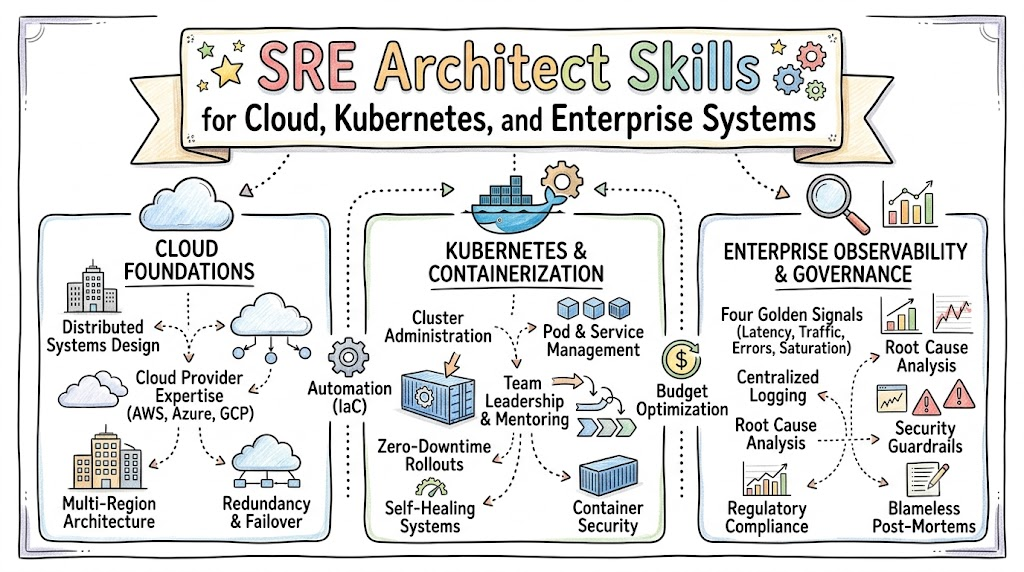
- System Blueprints: They design distributed applications that survive sudden hardware failures.
- Automation Frameworks: They write code to deploy systems without human intervention.
- Team Guidance: They coach developers to build safe, high-speed release cycles.
So, these architects bridge the gap between building features and keeping systems online.
Core Cloud Skills for High Availability
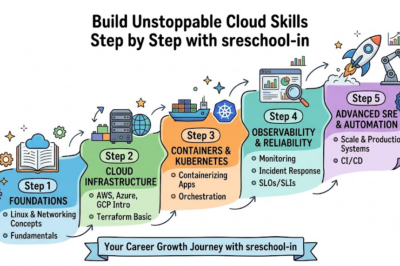
Modern enterprise systems run on public and private cloud providers. Therefore, an SRE architect must thoroughly understand cloud infrastructure patterns. They select the right cloud services to guarantee continuous uptime.
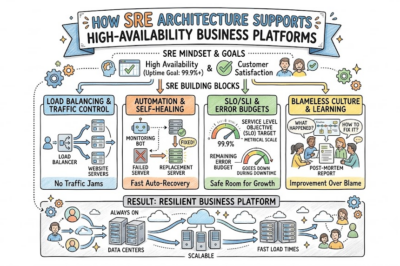
Cloud networks can fail without warning. Because of this, architects set up redundant services across multiple geographic regions. If one data center loses power, user traffic shifts instantly to another center.
Furthermore, architects keep cloud spending completely under control. Unused cloud resources waste money every minute. So, architects use auto-scaling rules to shut down idle machines automatically.
Kubernetes and Container Orchestration Mastery
Containers package software code alongside everything it needs to run. Next, Kubernetes organizes these containers across large clusters of computers. An SRE architect knows Kubernetes inside and out.
- Self-Healing Deployments: Kubernetes restarts containers that freeze or crash unexpectedly.
- Dynamic Scaling: Clusters add new application pods during busy shopping rush hours.
- Zero-Downtime Rollouts: Architects update live software without kicking off active users.
Because of Kubernetes, managing thousands of microservices becomes a simple, automated process.
Observability and System Telemetry
You cannot fix an application issue if you cannot see it. SRE architects set up observability systems to monitor live system health. Observability gathers metrics, logs, and traces from every running machine.
Next, architects build visual dashboards around the four golden signals. These signals track system latency, web traffic, error counts, and computer saturation. If errors suddenly rise, monitoring alerts notify the engineering team right away.
This quick feedback loop drastically cuts down recovery times during a crisis.
Enterprise Governance and Cultural Leadership
Enterprise platforms must follow strict government security and privacy laws. Therefore, architects weave security safeguards directly into deployment pipelines. Every update undergoes automated vulnerability checks before going live.
In addition, an SRE architect shapes organizational engineering culture. When major incidents happen, they run blameless post-mortem meetings. Instead of punishing workers, the team learns how the system failed.
Next, they update the system architecture so the same problem never happens again. This supportive approach builds reliable systems and much happier engineering teams.