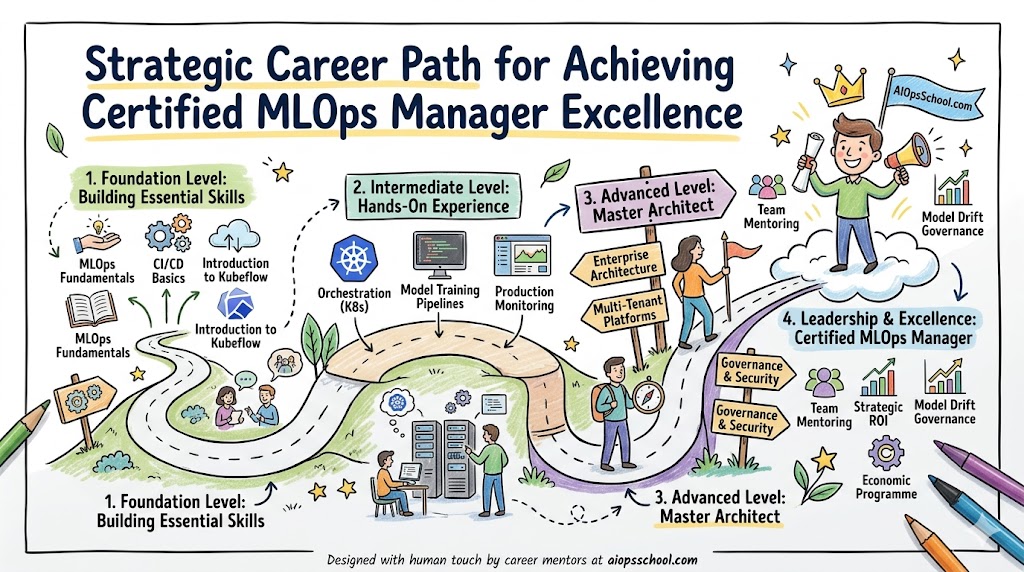
The modern engineering landscape demands professionals who can bridge the gap between machine learning development and production stability. This guide explores the Certified MLOps Manager program hosted by AIOpsSchool, designed specifically for those navigating the complexities of AI-driven infrastructure. Whether you are deep into platform engineering or leading a data science team, understanding how to manage the lifecycle of models is no longer optional. This comprehensive breakdown helps you evaluate the curriculum, assess the career impact, and determine how this credential fits into your long-term professional growth within the global tech market.
What is the Certified MLOps Manager?
The Certified MLOps Manager represents a professional standard for individuals tasked with overseeing the intersection of data science and operational excellence. It exists to solve the “last mile” problem in AI, where many models fail to reach or survive in a production environment. Instead of focusing solely on academic theory or basic coding, this program emphasizes enterprise practices and production-focused learning. It aligns perfectly with modern engineering workflows by teaching how to build resilient pipelines that treat machine learning models with the same rigor as traditional software.
Who Should Pursue Certified MLOps Manager?
Software engineers and SREs looking to specialize in the burgeoning field of AI infrastructure will find this path highly beneficial. It serves as a vital bridge for data professionals who need to understand cloud-native deployments and for security experts focusing on model integrity. Beginners gain a structured entry point into the industry, while experienced managers learn how to lead technical teams through complex digital transformations. In both the Indian market and the global tech hubs, these roles are becoming central to enterprise strategy as companies scale their automation efforts.
Why Certified MLOps Manager is Valuable and Beyond
The demand for specialized management in machine learning operations continues to grow as enterprises move past the experimental phase of AI. Longevity in a tech career requires staying relevant despite the rapid rotation of specific tools and frameworks. This certification provides a return on time by focusing on architectural principles and governance that remain constant even as software versions change. Professionals who master these skills ensure they are not just tool-operators but strategic assets capable of maintaining high-scale production systems for the long term.
Certified MLOps Manager Certification Overview
The program is delivered via the official curriculum and is hosted on the AIOpsSchool platform. It utilizes a practical assessment approach that values hands-on capability over rote memorization of definitions. The ownership of the program lies with industry experts who have structured the modules to mirror real-world enterprise environments. By focusing on practical structure, the certification ensures that a credential holder can actually execute the tasks required in a high-pressure production setting rather than just understanding the vocabulary of the field.
Certified MLOps Manager Certification Tracks & Levels
The certification structure follows a logical progression through foundation, professional, and advanced levels. The foundation level introduces the core concepts of automation and model tracking, while the professional level dives into CI/CD for ML and complex monitoring. Advanced tracks allow for deep specialization in areas like FinOps for AI or specialized SRE practices for large-scale models. This alignment ensures that as your career progresses from an individual contributor to a lead or manager, your credentials reflect your increasing level of responsibility and technical depth.
Complete Certified MLOps Manager Certification Table
| Track | Level | Who it’s for | Prerequisites | Skills Covered | Recommended Order |
| Operations | Foundation | Aspiring MLOps Engineers | Basic Linux & Python | Model Versioning, GitOps | 1 |
| Management | Professional | Team Leads & Managers | 2+ Years Engineering | Governance, ROI, Strategy | 2 |
| Engineering | Professional | SREs & Cloud Architects | Containerization Knowledge | Kubernetes, CI/CD, Scaling | 3 |
| Optimization | Advanced | Senior Architects | Professional Level Cert | Model Quantization, FinOps | 4 |
Detailed Guide for Each Certified MLOps Manager Certification
Certified MLOps Manager – Foundation
What it is
This certification validates the fundamental ability to understand the ML lifecycle and the basic automation required to move models from a notebook to a staging environment.
Who should take it
Junior engineers, recent graduates, or traditional DevOps professionals who are looking to pivot into the machine learning domain for the first time.
Skills you’ll gain
- Mastery of version control for data and models.
- Understanding of automated testing for ML pipelines.
- Ability to configure basic monitoring for model drift.
Real-world projects you should be able to do
- Setting up an automated retraining pipeline for a simple classification model.
- Implementing a centralized experiment tracking server for a small team.
Preparation plan
- 7–14 days: Review core MLOps terminology and basic Python automation scripts.
- 30 days: Complete hands-on labs focusing on Docker and basic CI/CD tools.
- 60 days: Build a full end-to-end toy project and document the deployment workflow.
Common mistakes
- Focusing too much on the math of the models rather than the infrastructure surrounding them.
- Ignoring the importance of data quality checks in the early stages of the pipeline.
Best next certification after this
- Same-track option: Certified MLOps Manager Professional.
- Cross-track option: CloudOps Foundation.
- Leadership option: Technical Team Lead Certification.
Choose Your Learning Path
DevOps Path
Engineers on this path focus on integrating machine learning into existing CI/CD workflows. They treat models like any other software artifact but add layers for data validation and model registry management. The goal is to ensure that the deployment of an AI model is as predictable and boring as a standard microservice update. This requires a deep understanding of automation and the ability to collaborate closely with data science teams to standardize their output.
DevSecOps Path
Security-focused professionals prioritize the integrity and safety of the ML pipeline. They implement automated scanning for model vulnerabilities and ensure that data privacy is maintained throughout the training process. This path is critical for industries like finance and healthcare where model bias or data leaks can have severe legal consequences. Professionals here learn to build “Guardrails” that prevent unsafe models from ever reaching a production environment.
SRE Path
The Site Reliability Engineering path emphasizes the availability and performance of model serving infrastructure. SREs in this domain manage the scaling of GPU clusters and ensure that inference APIs meet strict latency requirements. They focus on building robust monitoring and alerting systems that detect when a model is no longer performing as expected in the wild. This path is ideal for those who enjoy high-scale infrastructure and complex troubleshooting.
AIOps Path
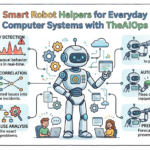
This specialization focuses on using AI to improve traditional IT operations. Professionals learn to implement machine learning models that can predict outages, automate incident response, and analyze vast amounts of log data in real-time. It is about making the infrastructure “self-healing” by applying data science to the telemetry generated by servers and applications. This represents the next evolution of automated monitoring and response.
MLOps Path
The dedicated MLOps path is for those who want to own the entire lifecycle of the model. This includes everything from data ingestion and feature engineering to model deployment and monitoring. It requires a balanced skill set that covers both data science concepts and platform engineering techniques. These professionals are the glue that holds the entire AI organization together, ensuring that value is delivered consistently and safely.
DataOps Path
DataOps focuses on the “Data” part of AI, ensuring that high-quality information is always available for training and inference. Professionals on this path build automated data pipelines that handle cleaning, transformation, and storage at scale. They treat data as code, implementing versioning and testing to prevent “garbage in, garbage out” scenarios. This path is essential for organizations dealing with massive, fast-moving datasets.
FinOps Path
FinOps professionals in the MLOps world focus on the massive costs associated with AI. Training large models and running high-performance clusters is expensive, so these experts find ways to optimize resource usage. They implement cost tracking, rightsizing, and spot instance strategies to ensure the AI program remains profitable. This role is increasingly vital as CFOs demand more accountability for cloud spending on AI initiatives.
Role → Recommended Certified MLOps Manager Certifications
| Role | Recommended Certifications |
| DevOps Engineer | Certified MLOps Manager Professional, CloudOps Professional |
| SRE | Certified MLOps Manager Foundation, SRE Practitioner |
| Platform Engineer | Certified MLOps Manager Advanced, Kubernetes Architect |
| Cloud Engineer | Certified MLOps Manager Foundation, AWS/Azure Solutions Architect |
| Security Engineer | Certified MLOps Manager (Security Track), DevSecOps Professional |
| Data Engineer | Certified MLOps Manager Foundation, DataOps Specialist |
| FinOps Practitioner | Certified MLOps Manager (FinOps Track), Cloud FinOps Certified |
| Engineering Manager | Certified MLOps Manager (Management Track), ITIL Master |
Next Certifications to Take After Certified MLOps Manager
Same Track Progression
Deep specialization involves moving into advanced architectural roles. After mastering the manager level, professionals should look toward “Chief Architect” designations or specific vendor-neutral certifications that focus on multi-cloud AI orchestration. This ensures you can handle the most complex, global-scale deployments that involve hundreds of models running simultaneously across different geographical regions.
Cross-Track Expansion
Broadening your skills often means looking toward the surrounding ecosystems. Moving into SRE or DevSecOps provides a more holistic view of the production environment. By understanding how the security layer or the reliability layer interacts with the ML pipeline, you become a much more versatile leader. This allows you to step into “Head of Infrastructure” roles where you oversee multiple different engineering disciplines.
Leadership & Management Track
For those looking to move away from individual technical tasks, the transition to leadership involves focusing on strategy and people. Certifications in Agile leadership, project management, or specialized MBA programs for technical leaders are logical next steps. This path focuses on the ROI of AI projects, team building, and aligning technical capabilities with the broader business goals of the organization.
Training & Certification Support Providers for Certified MLOps Manager
DevOpsSchool
This provider offers extensive resources for those looking to master the foundational elements of automation. Their curriculum focuses on the practical application of tools in a corporate setting, ensuring that students can handle real-world tasks immediately.
Cotocus
Focusing on high-end consulting and training, this group provides deep dives into specialized infrastructure topics. They are known for their hands-on approach and their ability to explain complex architectural concepts in a simple, digestible manner.
Scmgalaxy
As a long-standing community and training resource, they provide a wealth of knowledge on configuration management and version control. Their materials are essential for anyone looking to understand the history and evolution of modern deployment practices.
BestDevOps
This platform focuses on curated learning paths for engineers who want to stay ahead of the curve. They emphasize the latest trends and tools while maintaining a strong focus on the core principles that drive engineering success.
devsecopsschool.com
A dedicated resource for security-minded engineers. They provide specialized training on how to integrate security into every stage of the development and operations lifecycle, which is vital for modern AI applications.
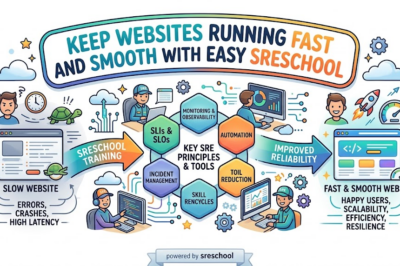
sreschool.com
This site focuses entirely on the principles of Site Reliability Engineering. Their training helps professionals build systems that are not only functional but also highly available, scalable, and resilient to failure in production.
aiopsschool.com
The primary hub for artificial intelligence in operations. This site provides the specific certifications and training needed to lead the transition into AI-driven infrastructure management and automated system monitoring.
dataopsschool.com
Focused on the data lifecycle, this provider ensures that data engineers have the skills to build reliable pipelines. Their training covers the essential intersection of data management and operational excellence.
finopsschool.com
As cloud costs continue to rise, this school provides the necessary training to manage and optimize spending. Their curriculum is essential for any professional tasked with keeping AI and cloud projects within budget.
Frequently Asked Questions
1. How difficult is the Certified MLOps Manager exam?
The exam is designed to be challenging but fair, focusing on practical application rather than theoretical memorization. If you have a solid grasp of CI/CD and basic machine learning lifecycles, you will find it manageable.
2. How much time does it take to complete the certification?
Most professionals with a technical background can complete the program within 30 to 60 days of consistent study and hands-on practice with the provided labs.
3. What are the prerequisites for the manager level?
While there are no hard barriers, it is highly recommended to have at least two years of experience in a DevOps, Data, or Software Engineering role before attempting the professional level.
4. Does this certification provide a good return on investment?
Yes, the demand for MLOps expertise is currently outstripping supply. Credential holders often see increased interest from recruiters and are eligible for higher-tier engineering and management roles.
5. Should I take the DevOps certification before MLOps?
It is helpful but not mandatory. If you already understand version control and basic automation, you can move directly into the MLOps foundation track to begin your specialization.
6. Is the certification recognized globally?
The program follows industry-standard practices that are applicable across all major tech hubs, including those in India, North America, and Europe, making it a portable credential.
7. Are there hands-on labs included in the training?
Yes, the program emphasizes production-focused learning, which includes access to environments where you can build and test real ML pipelines and infrastructure.
8. How often does the curriculum get updated?
The core architectural principles remain steady, but the specific tool integrations are reviewed and updated regularly to ensure they reflect the current state of the industry.
9. Can a manager with no coding skills pass this?
A basic understanding of scripting and logic is required. While you don’t need to be a senior developer, you must be comfortable navigating technical environments and understanding code-based workflows.
10. What is the main difference between DevOps and MLOps?
DevOps focuses on the lifecycle of traditional software code, while MLOps adds the complexities of data versioning, model training, and monitoring for statistical drift.
11. Is there a community for certified professionals?
Yes, holders of the certification gain access to exclusive forums and networking groups where they can discuss challenges and share best practices with other industry leaders.
12. Does the certification expire?
The certification remains valid for a set period, after which professionals can renew by demonstrating continued learning or by passing an updated assessment to reflect new industry standards.
FAQs on Certified MLOps Manager
1. What specific tools are covered in the Certified MLOps Manager program?
The program focuses on industry-standard tools for containerization, model tracking, and orchestration. You will gain experience with platforms that handle the end-to-end lifecycle of machine learning models in production environments.
2. How does this certification help in a transition from Data Science to MLOps?
It provides the necessary engineering context that many data scientists lack. You will learn about infrastructure as code, automated testing, and deployment strategies that turn a model into a reliable product.
3. Is there a focus on cost optimization for AI?
Yes, the management and professional tracks include modules on resource allocation. You will learn how to balance the high performance required for AI with the budgetary constraints of an enterprise.
4. Does the program cover security for machine learning?
Security is integrated into the curriculum, focusing on model integrity and data privacy. You will learn how to protect your pipelines from adversarial attacks and ensure compliance with global data regulations.
5. Are the labs based on real-world enterprise scenarios?
The labs are designed to mimic the challenges faced by large-scale organizations. You will work on problems like model scaling, handling data drift, and managing multi-stage deployment pipelines for complex models.
6. What is the assessment format for the certification?
The assessment includes a mix of scenario-based questions and practical evaluations. This ensures that you can apply your knowledge to solve real problems rather than just recalling facts from a textbook.
7. How does this certification align with SRE practices?
The program emphasizes reliability and observability. You will learn how to apply SRE principles like SLIs and SLOs specifically to machine learning services to ensure they meet performance and availability targets.
8. Can this certification help me lead a digital transformation?
As a manager, you will gain the strategic oversight needed to guide an organization through the adoption of AI. You will learn how to structure teams and processes for long-term success.
Final Thoughts: Is Certified MLOps Manager Worth It?
Investing in the Certified MLOps Manager credential is a strategic move for any professional who sees the direction the industry is moving. The reality is that the boundary between “infrastructure” and “intelligence” is disappearing. Organizations no longer need people who just know how to spin up a server; they need leaders who can manage the complex lifecycle of AI assets at scale.
This certification offers a grounded, practical path toward that expertise. It bypasses the hype of “magic AI” and focuses on the hard engineering and management work required to make these systems actually function in the real world. If you want to move into a role where you are solving the most pressing architectural problems of the next decade, this is a highly effective way to validate your skills and advance your career.