Introduction
Modern enterprise infrastructure presents unprecedented complexity that frequently overwhelms traditional monitoring tools. IT operations teams routinely face an unrelenting deluge of alerts, where critical system signals get buried under thousands of redundant notifications. Consequently, engineers experience severe alert fatigue, while businesses suffer from prolonged downtime and degraded system performance. To address these compounding challenges, forward-thinking organizations are rapidly adopting artificial intelligence for IT operations to achieve comprehensive visibility. Securing specialized AIOps Training has therefore become an absolute necessity for professionals who want to master these highly complex environments. By acquiring these advanced skills through AiOpsSchool, systems engineers can effectively transition from reactive firefighting to proactive, automated infrastructure management.
What Is AIOps?
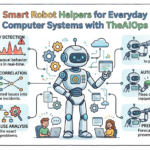
To understand this paradigm shift, one must understand exactly what is AIOps and how it transforms standard operations. In plain language, this practice combines big data, machine learning, and advanced analytics to automate the detection and resolution of IT infrastructure issues. Instead of relying on manual oversight or rigid threshold-based rules, the platform continuously analyzes massive streams of operational data to find patterns. Consequently, the technology acts as an intelligent layer above your entire infrastructure, automatically separating normal operational background noise from genuine system anomalies. This approach allows enterprise engineering teams to identify underlying infrastructure failures before they expand into widespread customer-facing outages.
Key Operational Concepts You Must Know
Navigating modern infrastructure requires a solid grasp of foundational building blocks that govern AIOps in IT operations. First, observability forms the bedrock of this practice, going beyond simple monitoring to explain the internal states of a system based on its external outputs. Engineers achieve this deeper visibility by collecting and synthesizing granular telemetry, which consists of logs, metrics, and traces. Logs provide a historical text record of discrete events, metrics deliver numerical measurements of resource utilization over time, and distributed traces track the end-to-end journey of requests across microservices.
Furthermore, event correlation plays a pivotal role by automatically grouping thousands of related individual alerts into a single, actionable incident. This correlation mechanism relies heavily on establishing a dynamic baseline vs. anomaly distinction. While traditional systems use static thresholds that trigger unnecessary alarms during normal traffic spikes, machine learning algorithms establish a fluid baseline of typical behavior. Therefore, whenever telemetry deviates significantly from this historical baseline, the system flags it as an anomaly. Finally, the ultimate objective centers on automated remediation, where pre-configured scripts and workflows automatically resolve identified infrastructure issues without human intervention.
Why Learn AIOps Now?
Aspiring engineers frequently look for accessible entry points, making AIOps for beginners an incredibly lucrative and strategic career pathway. The following points highlight why professionals must prioritize learning this discipline immediately:
- Exponential Data Growth: Modern cloud-native architectures generate vast quantities of telemetry that human operators can no longer analyze manually, creating a massive demand for automated assistance.
- Industry-Wide Adoption: Organizations across every sector are actively embedding machine learning into their operational workflows to reduce system downtime and control escalating maintenance costs.
- Career Longevity: Traditional system administration roles are rapidly shrinking, meaning that professionals who learn intelligent automation stand out as invaluable assets in the job market.
AIOps vs DevOps vs MLOps
Understanding the distinctions between these modern engineering paradigms helps clarify where each methodology applies within the technology lifecycle. The following table highlights the unique focus and core questions that AIOps vs DevOps and AIOps vs MLOps address:
| Concept | Primary Focus | Core Question It Answers |
|---|---|---|
| DevOps | Accelerating software delivery and ensuring continuous deployment pipelines. | How can teams build, test, and release software faster and more reliably? |
| AIOps | Enhancing IT operational resilience through automated data analysis and machine learning. | How can engineers automatically detect, isolate, and remediate live system incidents? |
| MLOps | Standardizing the deployment, monitoring, and management of machine learning models. | How can data science teams efficiently maintain and retrain production models? |
Platform Implementation vs. Culture — What’s the Real Difference?
Many enterprise leaders mistakenly classify artificial intelligence operations as a simple plug-and-play platform that teams can install and immediately forget. In reality, successful deployment requires a profound cultural transformation alongside the technical implementation of the platform itself. Organizations must actively foster cross-team collaboration, as intelligent automation naturally breaks down long-standing silos between traditional infrastructure, development, and security teams. Moreover, engineers must develop deep trust in automated insights and remediation actions, which requires shifting away from manual confirmation habits. Comprehensive change management frameworks must guide this transition, ensuring that teams systematically update their operational processes to leverage intelligent recommendations.
To clarify this distinction further, we must analyze the operational differences between merely purchasing a platform and embedding the methodology into company culture. The table below outlines how these two approaches differ across core organizational dimensions:
| Dimension | Platform Implementation Focus | Cultural Transformation Focus |
|---|---|---|
| Primary Objective | Installing software agents and connecting telemetry pipelines. | Building cross-team trust and aligning operational habits with automation. |
| Incident Handling | Generating automated dashboards and alert groupings. | Empowering engineers to act instantly on machine-learning recommendations. |
| Skill Development | Providing standard software configuration walkthroughs. | Delivering structured AIOps Training to reshape daily operational workflows. |
| Long-Term Value | Collecting and archiving large volumes of historical data. | Driving continuous improvement in AIOps in IT operations across the business. |
Core AIOps Use Cases
Implementing intelligent systems opens up numerous technical capabilities that dramatically optimize infrastructure health. Key AIOps use cases include the following operational advancements:
- Dynamic Anomaly Detection: Machine learning models continuously inspect system behavior to flag unusual metric deviations before they trigger traditional static alarms.
- Intelligent Event Correlation: The platform automatically groups thousands of scattered alerts into a single cohesive incident, completely eliminating redundant notifications.
- Automated AIOps Root Cause Analysis: Built-in algorithms trace dependencies across complex distributed networks to isolate the exact origin of a system failure.
- Predictive Capacity Planning: Historical data models accurately forecast future compute, storage, and memory requirements, which prevents unexpected resource exhaustion.
- Automated Remediation: Integrated orchestration engines execute pre-authorized scripts to fix known infrastructure faults instantly without requiring manual intervention.
- Optimized AIOps in IT operations: Continuous closed-loop feedback systems constantly refine alert accuracy, ensuring that engineering teams focus exclusively on high-priority threats.
Real-World Use Cases of Modern Operations
Global e-commerce corporations frequently leverage these advanced capabilities to manage sudden traffic surges during massive seasonal shopping events. For example, during a major flash sale, an intelligent platform can automatically isolate a critical database latency spike amid millions of concurrent requests. Similarly, tier-one banking institutions utilize automated systems to distinguish between legitimate transaction volume expansions and malicious distributed security anomalies. Large-scale software-as-a-service providers also rely on these predictive models to execute precise capacity forecasting, which keeps cloud infrastructure costs low while maintaining strict performance agreements. These distinct examples demonstrate how modern organizations successfully deploy AIOps use cases to preserve system integrity and enhance the efficiency of AIOps in IT operations.
AIOps Tools You Should Know
To build a highly resilient infrastructure, professionals must familiarize themselves with the leading technologies in the enterprise ecosystem. Reviewing an extensive AIOps tools list helps engineers select the ideal stack for their specific organizational needs. As a natural next step, engineers should utilize an explicit AIOps Tutorial to master the following categorized AIOps Tools:
- Monitoring and Observability Platforms: Datadog, Dynatrace, New Relic, and ScienceLogic provide deep visibility by collecting and analyzing distributed system telemetry.
- Event Correlation and ITSM Tools: BigPanda, PagerDuty, and Moogsoft excel at aggregating alerts and streamlining incident response workflows.
- Open-Source Stacks: The ELK Stack (Elasticsearch, Logstash, Kibana) combined with Prometheus and Grafana allows teams to build customizable, cost-effective analytics engines.
- Cloud-Native Services: Amazon DevOps Guru, Google Cloud Architecture Framework, and Azure Advisor deliver native, machine-learning-driven infrastructure insights.
Common Mistakes in Operations Engineering
When organizations rush to adopt intelligent automation, they frequently encounter predictable pitfalls that derail their deployment efforts. First, teams often neglect noise reduction configurations, which leads to over-alerting and forces engineers to ignore the platform entirely. To avoid this, operators must treat noise filtering as an iterative configuration process that requires continuous calibration. Second, engineers sometimes treat the deployment as a set-and-forget project, whereas machine learning models require regular tuning to stay aligned with evolving infrastructure.
Third, skipping data quality and normalization severely cripples algorithmic accuracy, as bad telemetry inevitably produces highly flawed incident conclusions. Therefore, teams must strictly standardize data ingestion formats across all systems before training their operational models. Fourth, automating remediation too early without establishing baseline trust can cause runaway scripts to accidentally shut down healthy production servers. Engineers must always validate automation rules in staging environments and mandate manual approvals during the initial deployment phase. Finally, a lack of cross-team buy-in creates severe resistance, meaning leaders must prioritize education to demonstrate how AIOps in IT operations eliminates tedious manual labor during an AIOps root cause analysis.
AIOps for SRE
Site Reliability Engineers find immense value in these automated systems because the technology directly improves their critical operational metrics. Specifically, AIOps for SRE accelerates the Mean Time to Detection by instantly spotting subtle behavioral changes in microservices. Furthermore, the platform drastically slashes the Mean Time to Resolution because automated diagnostics pinpoint the exact layer causing system degradation. By eliminating prolonged troubleshooting cycles, engineers can easily protect their established Service Level Objectives and prevent costly error budget depletion. Ultimately, integrating intelligent data analysis allows SRE teams to maintain high application availability even during highly complex continuous deployment cycles.
Seeing AIOps in Action
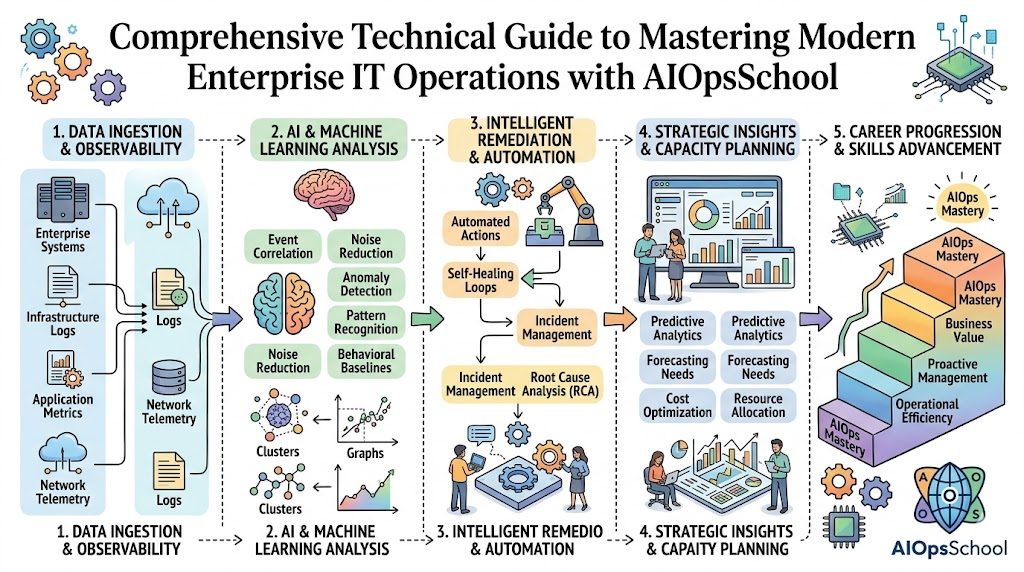
Consider a real-world scenario where a prominent financial services application experiences a sudden, catastrophic degradation in checkout transaction processing speed. Traditional monitoring setups would immediately trigger hundreds of disconnected alerts across the network, database, and application server teams, causing widespread operational chaos. However, an intelligent infrastructure setup manages the crisis through a centralized, automated response workflow:
- Detection: The system notices an anomalous breach in the transaction latency baseline and instantly opens a high-priority incident tracking ticket.
- Correlation: Algorithms analyze the infrastructure topology and suppress five hundred related microservice alerts, grouping them under a single root event.
- Root Cause Analysis: The platform performs an AIOps root cause analysis and traces the failure to a misconfigured database connection pool limit following a recent code deployment.
- Remediation: An automated script triggers an orchestrated rollback of the faulty container deployment, restoring normal connection pools within seconds.
This structured application of AIOps in IT operations saved the enterprise over two hours of manual investigation and preserved thousands of dollars in transaction revenue.
How to Become an Operations Expert — Career Roadmap
Transitioning into a high-tier infrastructure engineering role requires a structured approach to skill acquisition and practical validation. Follow this clear roadmap to achieve professional mastery:
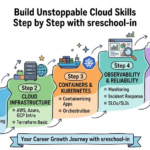
- Build Core IT Foundations: Acquire a deep understanding of Linux system administration, networking principles, and standard cloud computing architectures.
- Master Telemetry Fundamentals: Gain hands-on experience configuring distributed logging stacks, metrics collection tools, and tracing frameworks.
- Complete Advanced AIOps Training: Enroll in a comprehensive, structured AIOps Course to master machine learning principles applied directly to production infrastructure.
- Obtain Validated Credentials: Secure an official AIOps Certification to formally verify your technical capabilities before prospective enterprise employers.
- Specialize in Modern Frameworks: Apply your automated operational expertise within specialized domains like Site Reliability Engineering, DevOps, or Platform Engineering.
Frequently Asked Questions
- What is the primary difference between traditional monitoring and AIOps?Traditional monitoring simply reports when static thresholds break, whereas intelligent platforms use machine learning to predict and correlate complex anomalies.
- How does an engineering professional benefit from an AIOps Course?A structured course provides hands-on labs, deep conceptual frameworks, and real-world troubleshooting scenarios that self-study methods cannot replicate.
- Is an AIOps Certification highly valued by enterprise employers?Yes, hiring managers actively look for certified professionals because it validates an engineer’s ability to operate complex, automated infrastructure stacks.
- What topics are typically covered under an AIOps Foundation Certification?This baseline credential validates an engineer’s core understanding of data ingestion, event correlation, anomaly detection, and automated remediation workflows.
- Can a beginner transition into this field without prior machine learning knowledge?Absolutely, because the primary focus centers on applying pre-built operational tools and algorithms rather than coding complex data science models from scratch.
- How does event correlation reduce alert fatigue for on-call engineers?The platform ingests thousands of scattered notifications and deduplicates them into a single actionable incident, allowing engineers to focus on the actual root cause.
- Does implementing automated remediation create security risks for corporate networks?Organizations mitigate security risks by enforcing strict access controls, auditing all remediation scripts, and requiring manual confirmation for critical infrastructure changes.
Why Get an AIOps Certification?
Earning an official AIOps Certification provides professionals with a distinct competitive advantage in the modern technology job market. First, a validated credential establishes immediate resume credibility, proving to enterprise recruiters that you possess the technical skills required to manage complex cloud environments. Second, preparing for an AIOps Foundation Certification ensures that you complete a structured learning path, closing any hidden knowledge gaps in telemetry analysis or automated remediation. Finally, certified engineers enjoy significantly higher salary leverage and secure senior-level roles faster because organizations actively seek out qualified experts to lead their digital transformation initiatives.
Where to Learn AIOps
To successfully navigate this evolving career landscape, professionals must utilize high-quality educational frameworks designed specifically for modern infrastructure engineers. AiOpsSchool offers an unmatched, industry-validated curriculum that transforms traditional IT administrators into elite automation experts. Students gain access to comprehensive training materials, practical lab environments, and expert guidance tailored to match current enterprise demands.
Depending on your current career stage, you can leverage the following educational programs to achieve your professional goals:
- Specialized AIOps Training: Immersive, multi-week programs that focus heavily on real-world infrastructure deployment and algorithmic troubleshooting.
- Comprehensive AIOps Course: Deep-dive academic modules covering the entire lifecycle of observability, event correlation, and predictive capacity planning.
- Industry-Recognized AIOps Certification: Rigorous validation programs that certify your practical expertise to global enterprise employers.
- Practical AIOps Tutorial: Targeted, step-by-step technical guides designed to help engineers quickly master specific automation platforms and telemetry tools.
Final Thoughts
As corporate infrastructures continue to scale exponentially, traditional manual monitoring methods will inevitably become completely obsolete. Embracing automated data analysis is no longer an optional strategy, but a critical operational requirement for business survival. Engineers who proactively invest in high-quality AIOps Training position themselves at the very forefront of the modern technology industry. By earning a respected AIOps Certification, you protect your career against shifting market demands and gain the skills needed to solve complex operational challenges. Take the next definitive step in your professional journey by exploring the comprehensive learning programs available at AiOpsSchool.com today.